#WorldRadioDay 2024

World Radio Day is an observance day held annually on 13 February to celebrate radio as a medium. It was proclaimed on 3 November 2011 by UNESCO’s 36th General Conference after originally being proposed by the Kingdom of Spain.

Following a request from the Spanish Radio Academy on 20 September 2010, Spain proposed that the UNESCO Executive Board include an agenda item on the proclamation of a World Radio Day. UNESCO’s Executive Board approved the agenda item in its provisional agenda for the proclamation of a “World Radio Day” on 29 September 2011. UNESCO carried out a wide consultation in 2011 with diverse stakeholders, such as broadcasting associations, UN agencies, funds and programmes, relevant NGOs, foundations and bilateral development agencies, as well as UNESCO Permanent Delegations and National Commissions for UNESCO. Among the answers, 91% were in favour of the project, including official support from the Arab States Broadcasting Union (ASBU), the Asia-Pacific Broadcasting Union (ABU), the African Union of Broadcasting (AUB), the Caribbean Broadcasting Union (CBU), the European Broadcasting Union (EBU), the International Association of Broadcasting (IAB), the North American Broadcasters Association (NABA), the Organización de Telecomunicaciones Ibeoramericanas (OTI), BBC, URTI, Vatican Radio, etc. The results of this consultation are available in UNESCO’s document 187 EX/13. The Board recommended to the UNESCO 36th session of the General Conference that it proclaim a World Radio Day at its 36th session, and that this day be celebrated by UNESCO on 13 February, the anniversary of the day that the United Nations established the United Nations Radio in 1946.

It also invited all United Nations Member States, organizations of the United Nations system and other international and regional organizations, professional associations and broadcasting unions, as well as civil society, including non-governmental organizations and individuals, to duly celebrate World Radio Day, in the way that each considers most adequate. The board further requested that UNESCO’s Director-General bring the resolution to the attention of the Secretary-General of the United Nations, so that World Radio Day could be endorsed by the General Assembly and celebrated by the whole system. The matter was subsequently treated by UNESCO’s General Conference, which adopted resolution contained in the file 36 C/63. World Radio Day was thus unanimously proclaimed by all Member States of UNESCO in November 2011. In December 2012, The General Assembly of the UN endorsed the proclamation of World Radio Day, thereby becoming a day to be celebrated by all UN agencies, funds and programmes and their partners. File A/RES/67/124. Various radio industry bodies around the world are supporting the initiative by encouraging stations in developed countries to assist those in the developing world. At UNESCO, the consultation, proclamation and celebrations were handled by Mirta Lourenco, Chief of the Sector for Media Development.

Links:
World Radio Day

Radio: A century informing, entertaining and educating

Wereld Radio Dag 13 februari 2024

Honderd jaar radio 1924/2024 – Wereld radio dag 13 februari

ITU prefix

Radioomroep weblinks

State of the Worlds Migratory Species report – publication

The first-ever State of the World’s Migratory Species report was launched today by the Convention on the Conservation of Migratory Species of Wild Animals (CMS), a UN biodiversity treaty, at the opening of a major UN wildlife conservation conference (CMS COP14).

The report reveals:

  • While some migratory species listed under CMS are improving, nearly half (44 per cent) are showing population declines.
  • More than one-in-five (22 per cent) of CMS-listed species are threatened with extinction.
  • Nearly all (97 per cent) of CMS-listed fish are threatened with extinction.
  • The extinction risk is growing for migratory species globally, including those not listed under CMS.
  • Half (51 per cent) of Key Biodiversity Areas identified as important for CMS-listed migratory animals do not have protected status, and 58 per cent of the monitored sites recognized as being important for CMS-listed species are experiencing unsustainable levels of human-caused pressure.
  • The two greatest threats to both CMS-listed and all migratory species are overexploitation and habitat loss due to human activity. Three out of four CMS-listed species are impacted by habitat loss, degradation and fragmentation, and seven out of ten CMS-listed species are impacted by overexploitation (including intentional taking as well as incidental capture).
  • Climate change, pollution and invasive species are also having profound impacts on migratory species.
  • Globally, 399 migratory species that are threatened or near threatened with extinction are not currently listed under CMS.

Until now, no such comprehensive assessment on migratory species has been carried out. The report provides a global overview of the conservation status and population trends of migratory animals, combined with the latest information on their main threats and successful actions to save them.

Links:
Landmark UN Report Reveals Shocking State of Wildlife: the World’s Migratory Species of Animals are in Decline, and the Global Extinction Risk Is Increasing

Stop etnisch profileren – petitie

Discriminatie is verboden, toch worden mensen vanwege hun huidskleur of afkomst gecontroleerd door overheidsorganisaties, dit heet etnisch profileren.

Het mag niet en het moet stoppen. Daarom voert Amnesty International campagne. 37 keer gestopt door de politie in je leaseauto, tienduizenden euro’s kindertoeslag terugbetalen aan de Belastingdienst, altijd gecheckt op Schiphol door de Marechaussee. Je doet niks verkeerd, maar je wordt gediscrimineerd. Omdat je ouders niet in Nederland geboren zijn, je niet wit bent of een achternaam hebt die niet lijkt op De Jong of Janssen. Veel Nederlanders hebben ermee te maken: etnisch profileren. Etnisch profileren is altijd on(te)recht. Het kabinet zegt al jaren dat ze tegen etnisch profileren is, maar doet bijna niks om dit probleem tegen te gaan.

Stop NU discriminatie door de overheid, en roep het nieuwe kabinet op om eindelijk een einde te maken aan etnisch profileren.

Help je mee? Teken dan de petitie! Hoe meer handtekeningen, hoe groter de druk!

Links:
Stop etnisch profileren

Agenda – Uitspraak hoger beroepzaak etnisch profileren Koninklijke Marechaussee

Tussen hoop en vrees / Clingendael Buitenland Barometer 2024 – publicatie

Nederlanders zien de komende jaren internationaal volop bedreigingen; tegelijkertijd zijn ze opvallend optimistisch en putten ze hoop uit technologie, economische deglobalisering en internationale veiligheidssamenwerking, blijkt uit een jaarlijks onderzoek ‘Tussen hoop en vrees’ naar hoe Nederlanders naar de wereld kijken.

De Clingendael Buitenland Barometer peilt jaarlijks wat de Nederlandse bevolking als bedreigend ervaart en wat haar hoop biedt in de internationale omgeving. Hoofdbevindingen bij de opening van 2024 zijn:

  • Nederlanders vrezen door de jaren heen vooral dreigingen die direct de gemeenschap raken: een cyberaanval op vitale kritieke infrastructuur staat wederom op 1
  • De Nederlanders vrezen dat de door hen meest impactvol geachte dreigingen zich ook binnen 5 jaar zullen manifesteren
  • Migratie-gerelateerde ontwikkelingen en islamitisch terrorisme scoren hoog in de dreigingsranglijst
  • Ook oorlogsdreiging wordt duidelijk gevoeld
  • Voor overige geopolitieke ontwikkelingen is relatief weinig oog
  • Internationaal protectionisme en mogelijke ontkoppeling van China scoren zeer laag als dreiging
  • EU-uitbreiding met Oekraïne en de Westelijke Balkanlanden biedt weinig hoop
  • Het perspectief op klimaat lijkt te wijzigen. Er wordt vooral hoop gesteld in adaptatie aan klimaatverandering
  • Veel hoog scorende dreigingen kennen ook een corresponderend hoogscorende ontwikkeling in de hoopranglijst: de verwachtingen ten aanzien van het weerbaarheidsbeleid zijn hooggespannen
  • Er is minder correspondentie tussen dreiging en mogelijke oplossingen op het terrein van migratie
  • De Nederlandse bevolking is behoorlijk verdeeld. Hoop en vrees ten aanzien van internationale ontwikkelingen liggen steeds meer aan de basis van ideologische en politieke breuklijnen
  • De Nederlandse bevolking is meer één in haar hoop dan in haar dreigingspercepties

Links:
Clingendael Barometer: Van Ruslandschok naar Hamasschok

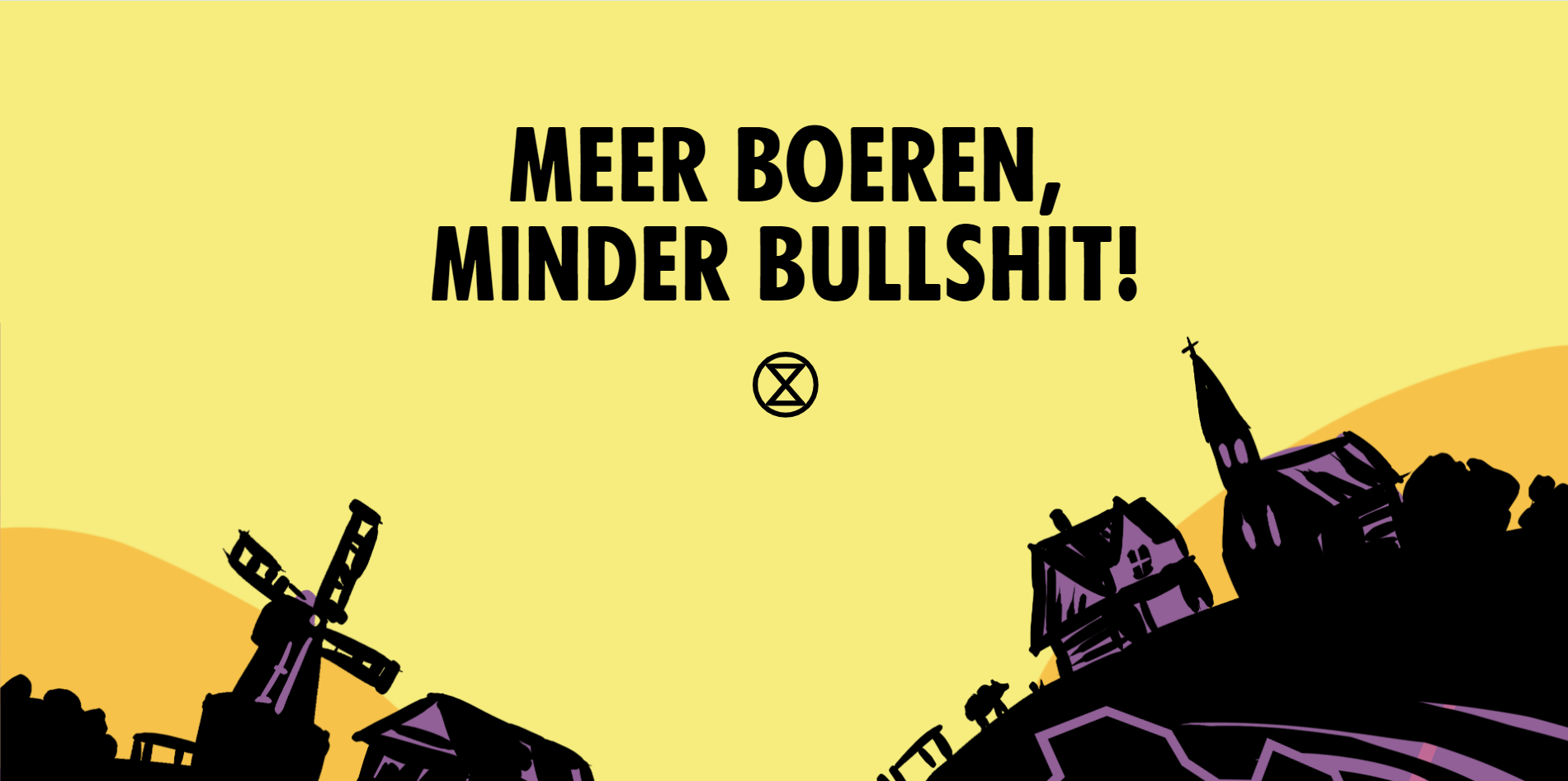
Big Agro-Estafette : Meer boeren, minder bullshit!

Met de leus ‘Meer boeren, minder bullshit!’ voert de Big Agro-Estafette van Extinction Rebellion Landbouw actie tegen de agro-industrie.

De landbouw is wereldwijd goed voor 25-30% van de totale uitstoot aan broeikasgassen. Dat komt met name doordat de industriële landbouw afhankelijk is van schaalvergroting. Naast de klimaatcrisis is er ook de stikstofcrisis, biodiversiteitscrisis, watercrisis én de boerenprotesten: onze landbouw zit overduidelijk in de knel. Als de huidige voedselproductie niet efficiënt is, boeren er nauwelijks een boterham mee verdienen, dieren op grote schaal lijden en het wereldwijd onrechtvaardigheid in de hand werkt. Waarom zo’n systeem dan nog in stand houden? Big-Agro, dat zijn grote industriële bedrijven voor materieel, kunstmest en gif in de landbouwsector. Dit zijn bedrijven die zo groot en machtig zijn dat zij een enorme invloed uitoefenen op het wereldwijde landbouwsysteem. Wat deze bedrijven verder kenmerkt is dat zij op internationale schaal opereren om hun winst te maximaliseren. Overal waar Big-Agro actief is, zien we eenzelfde patroon: uitbuiting, schaalvergroting en intensivering. Zij hebben belang bij een kapitaalintensieve landbouw die hun producten afneemt: de input van het boerenbedrijf. Die winstgedreven landbouw dwingt boeren hun bedrijf uit te breiden, terwijl intensivering en schaalvergroting de bodem uitdroogt en uitput. Omschakeling naar een verantwoord landbouwsysteem is voor de agro-industrie echter niet winstgevend. De schulden waar boeren in terechtkomen, kunnen alleen afbetaald worden door nog goedkoper op een nog grotere schaal te produceren, met grotere stallen, grotere machines, meer monocultuur en met meer gif, meer kunstmest en meer schulden.

Het wordt steeds duidelijker dat de transitie naar een rechtvaardig en duurzaam landbouwsysteem noodzakelijk is voor zowel mensen, dieren als het milieu. Maar ook voor de boeren zelf! De mythe dat de Nederlandse agro-industrie de wereld voedt, is al meerdere malen ontkracht. Sinds 1950 is de energie-input per hectare met 600% gestegen terwijl de opbrengst met slechts 12% toenam. Wereldwijd zijn het nog altijd de kleinschalige familiebedrijven die 50% van ons voedsel produceren en dat met minder landgebruik! Want voor elke Nederlandse industriële hectare, moet elders in de wereld 2 ha extra meegerekend worden. Om die miljarden winsten veilig te stellen en alles bij het oude te houden voert de agro-industrie een intensieve lobby. Zolang deze bedrijven de gang van zaken op het boerenerf bepalen én bij de politiek aan tafel zitten, zal een echte landbouwtransitie geen ruimte krijgen. Extinction Rebellion Landbouw houdt de agro-industrie verantwoordelijk voor de schade die ze op deze manier aanrichten. Tijd voor een aanpak waarbij samenleving, milieu en boeren niet opdraaien voor kosten en schade: laat de vervuiler betalen! Met een estafette aan acties door het hele land vestigt Extinction Rebellion Landbouw de aandacht op de misstanden binnen het systeem en eist een radicale transitie naar een agro-ecologisch landbouwsysteem, geworteld in sociale rechtvaardigheid, een gezond klimaat en een bloeiende biodiversiteit. Help mee, geef het stokje door!

Links:
Big Agro-Estafette

Boerenland vergroenen? Ho, ho, dat gaat zomaar niet

2024-02-12, Lief dagboek

Maandag; Gaza−Israël oorlog van 2023; Darwin; Day against the Use of Child Soldiers; Tussen hoop en vrees; Justice for Palestine; State of the Worlds Migratory Species.

Deze afbeelding heeft een leeg alt-attribuut; de bestandsnaam is dagboek.png

Wat eten we vandaag?:

Rijst & bonen, klik op afbeelding voor origineel

Knipselkrant:


Agenda:

Weer:

Deze afbeelding heeft een leeg alt-attribuut; de bestandsnaam is 50813896361_463cbfec7c.jpg

Links:
In de geschiedenis

#RedHandDay / Day against the Use of Child Soldiers 2024

On Red Hand Day or the Day against the Use of Child Soldiers, February 12 each year since 2002, pleas are made to political leaders and events are staged around the world to draw attention to child soldiers: children under the age of 18 who participate in military organizations of all kinds.

The aim of Red Hand Day is to call for action to stop this practice, and for support for children affected by it.

Links:

Red Hand Day

Day against the Use of Child Soldiers