
In de geschiedenis
Links:
Wikipedia

Links:
Wikipedia
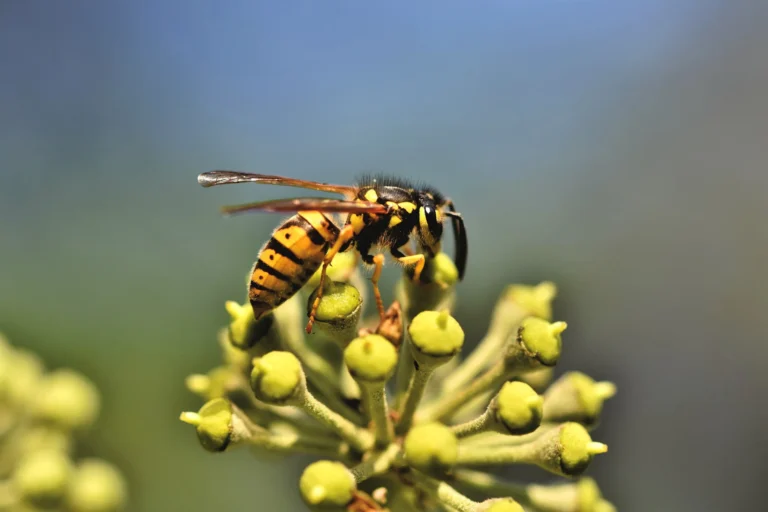
De Nationale Wespentelling is van zaterdag 17 tot en met zondag 25 augustus 2024.
Jaarlijks organiseert de Wespenstichting de Nationale Wespentelling. Iedereen in Nederland is uitgenodigd om mee te doen. Want wespen tellen ook mee! Zeker nu 2024 het Jaar van de Wesp is. Meedoen? Kies ergens een plek uit en ga 30 minuten goed kijken wat je allemaal ziet. Probeer een gevarieerd gebied te zoeken waar ook veel struiken en bomen in de buurt staan.
Links:
Wespentelling
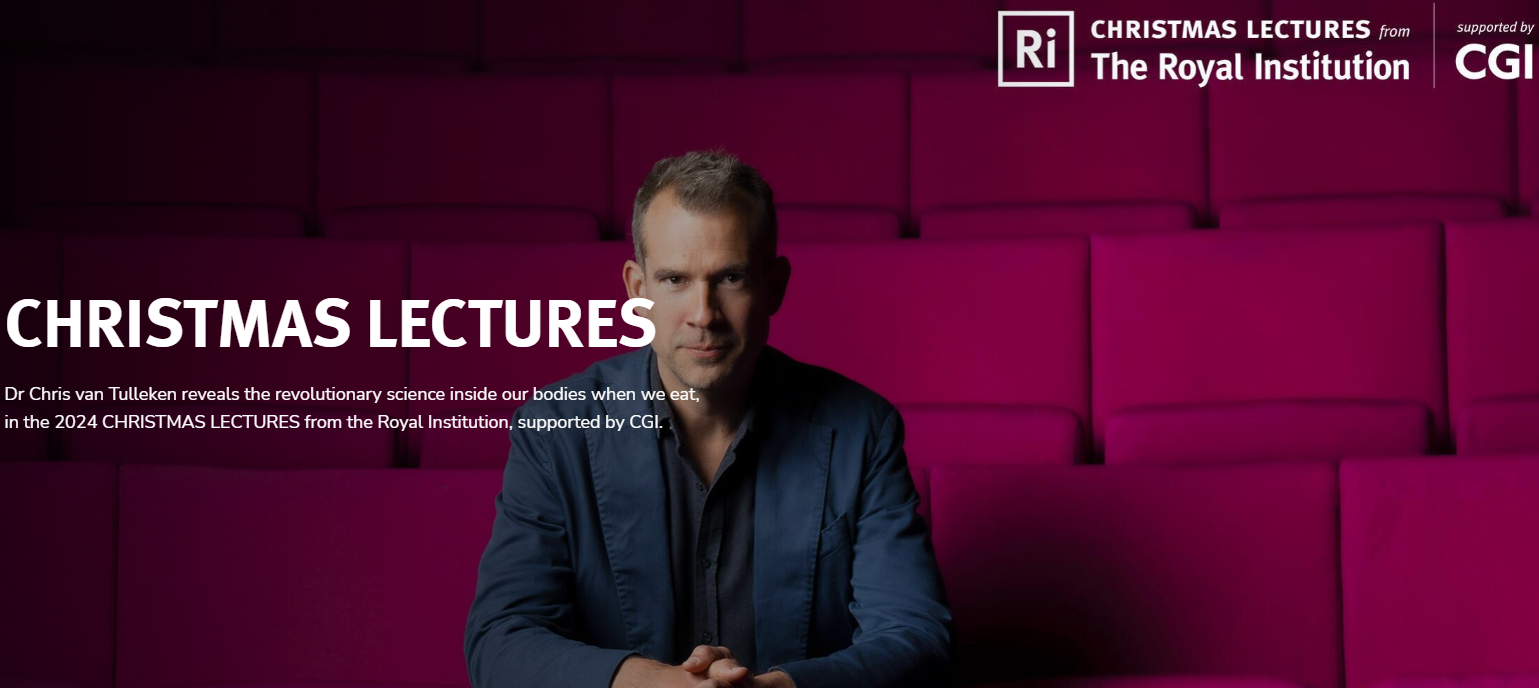
The Royal Institution Christmas Lectures are a series of lectures on a single scientific topic each, which have been held at the Royal Institution in London each year.
The lectures present subjects to a general audience, including young people, in an informative and entertaining manner. Michael Faraday conceived and initiated the Christmas Lecture series in 1825, at a time when organised education for young people was scarce. Many of the Christmas Lectures were published. In the 2024 Royal Institution Christmas Lectures, practising NHS doctor and leading science presenter Chris van Tulleken will delve deep inside our bodies to explore how the food we eat has a fundamental impact on our own health and that of our planet.
Food has fundamentally shaped human evolution – what we eat and how we eat it has had a massive effect on both the structure and functioning of our bodies and brains. In the 2024 CHRISTMAS LECTURES, infectious diseases doctor Chris van Tullekenwill be teaching us the truth about food in all its gory glory!
Lecture One: Sunday 29 December:
What actually happens when we eat? Chris opens the Lectures by literally taking us through the whole journey from tastebuds to toilet. We’ll also be welcoming our first obligatory animal guest of the lectures, but will it be the last…
Lecture Two: Monday 30 December:
99% of the atoms in our body come from just four elements: oxygen, carbon, hydrogen, and nitrogen. Chris will kick off the second Lecture by demonstrating how these elements work together to keep us alive. We’ll then explore the staggering levels of energy generated when producing the fuel of our cells: ATP.
Lecture Three: Tuesday 31 December:
In the final Lecture of our series, Chris will uncover how our modern food system has been hacked. We’ll have seen the benefits of processed food throughout the lectures, but Chris will reveal the drawbacks of processed food and what the future of the food industry could look like.

The International Lighthouse and Lightship Weekend (ILLW) is an annual event held on the third full weekend of August each year.
The event was the brainchild of John Forsyth and Mike Dalrymple who were members of the Ayr Amateur Radio Group in Scotland. The event, which started in 1998, has developed into an international gathering of amateur radio operators from an estimated 95 countries. Concurrent with this event, the Association of Lighthouse Keepers conduct their Lighthouse Heritage Weekend whereby lighthouse managers and keepers all around the world are encouraged to open their doors to the public for a viewing of their lighthouse and its history. The event is currently managed by an Australia amateur radio operator, Kevin Mulcahy (call VK2CE), who has been involved since 1998, and who now owns the domain name and web site. A small team of volunteers assist in the running of the weekend activity. Major amateur radio organizations such as the Radio Society of Great Britain, the Amateur Radio Relay League of America, and the Wireless Institute of Australia support and promote the weekend which accounts for the many participating countries each year.
Aanstaand weekeind is het International Lighthouse Lightship Weekend (ILLW)
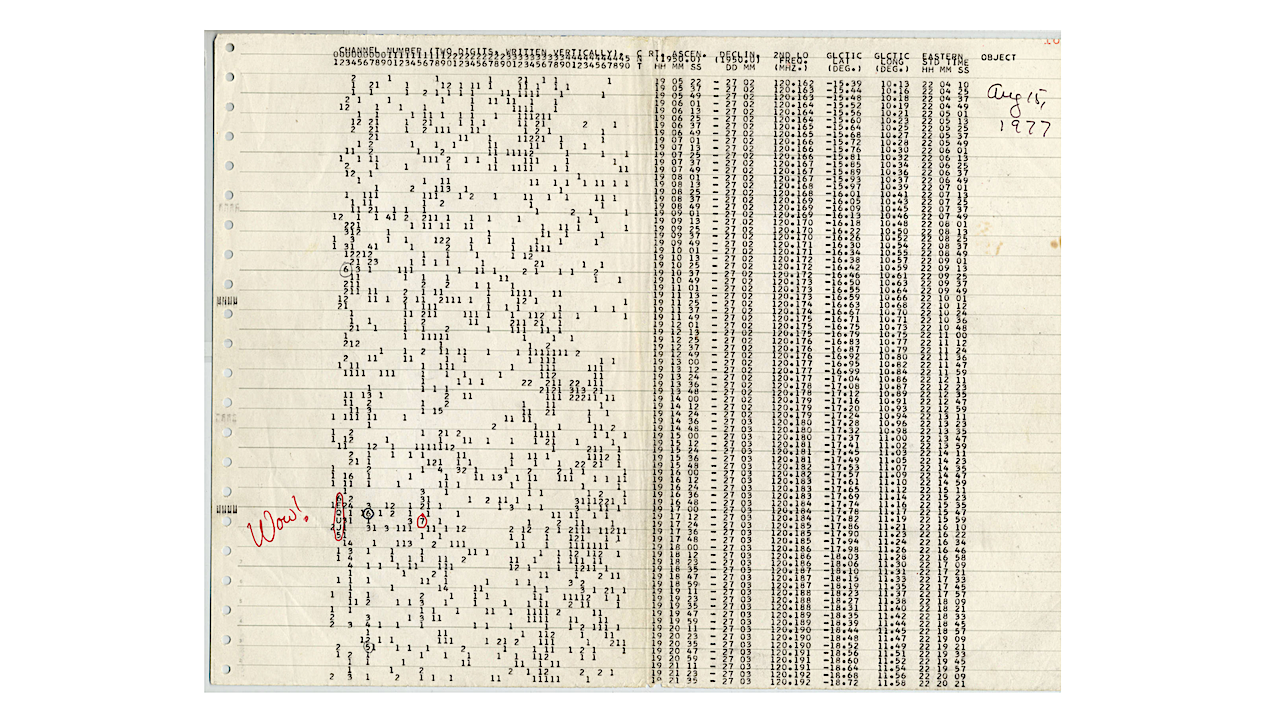
The Ohio State University Big Ear radio telescope detected in 1977 the Wow! Signal, one of the most famous and intriguing signals of extraterrestrial origin.
Arecibo Wow! is a project that aims to find similar signals in archived data from the Arecibo Observatory. From 2017 to 2020, they observed many targets of interest at 1 to 10 GHz with the 305-meter telescope. Here are the first results of drift scans made between February and May 2020 at 1420 MHz presented. The methods, frequency, and bandwidth of these observations are similar to those used to detect the Wow! Signal. However, the observations are more sensitive, have better temporal resolution, and include polarization measurements. They report the detection of narrowband signals (10 kHz) near the hydrogen line similar to the Wow! Signal, although two-orders of magnitude less intense and in multiple locations. Despite the similarities, these signals are easily identifiable as due to interstellar clouds of cold hydrogen (HI) in the galaxy. They hypothesize that the Wow! Signal was caused by sudden brightening from stimulated emission of the hydrogen line due to a strong transient radiation source, such as a magnetar flare or a soft gamma repeater (SGR). These are very rare events that depend on special conditions and alignments, where these clouds might become much brighter for seconds to minutes. The original source or the cloud might not be detectable, depending on the sensitivity of the telescope. The precise location of the Wow! Signal might be determined by searching for transient radio sources behind the cold hydrogen clouds in the corresponding region. The hypothesis explains all observed properties of the Wow! Signal, proposes a new source of false positives in technosignature searches, and suggests that the Wow! Signal could be the first recorded event of an astronomical maser flare in the hydrogen line.
An approximation to determine the source of the WOW! Signal – publication
Turns Out Wow Signal Calculation Were Wrong and It Was Even More Bizarre
Vrijdag; Wat eten we vandaag?; Antibiotica; Tech and Society Summit; Zoutmaxdag; Lowlands.

Wat eten we vandaag?:

Knipselkrant:
Agenda:
Weer:
Links:
In de geschiedenis

Vrijdag 16 augustus 2024, markeert een pijnlijke mijlpaal: de eerste Zoutmaxdag van het jaar.
Op deze dag hebben mannen in Nederland van 18 tot en met 50 jaar hun maximale zoutinname voor een heel jaar al bereikt. Dit betekent dat ze in slechts acht maanden tijd de aanbevolen maximale hoeveelheid zout hebben geconsumeerd, terwijl er nog ruim vier maanden te gaan zijn in het jaar. De meest recente Voedsel Consumptie Peiling (VCP) van het RIVM toont aan dat Nederlandse mannen in de genoemde leeftijdsgroep gemiddeld 8,0 gram zout per dag consumeren. Dit is maar liefst 60% meer dan de door de WHO aanbevolen limiet van 5,0 gram per dag. Zelfs volgens de Gezondheidsraad, die een maximum van 6,0 gram per dag hanteert, overschrijden ze de aanbevolen hoeveelheid zout met aanzienlijke marges. Hoewel zout uiteraard een essentieel element is in ons dieet, is overmatige inname schadelijk voor de gezondheid. Een te hoge zoutinname verhoogt het risico op hypertensie, wat kan leiden tot hart- en vaatziekten. Daarnaast kan te veel zout bijdragen aan maagkanker, nierschade en botontkalking.
Een groot deel van onze zoutinname komt uit voedingsmiddelen, die vaak sterk bewerkt zijn. Maar liefst 87% van het dagelijks geconsumeerde zout is toegevoegd aan voedselproducten, 13% komt uit het zoutvaatje thuis. Kijk je op de lange termijn, dan zijn we relatief gezien zelfs nog meer zout uit voedingsmiddelen gaan consumeren, en strooien we thuis minder met het zoutvaatje. Uit de voedselconsumptiepeiling over 2007-2010 kwam 79% van onze dagelijkse zoutconsumptie uit voedingsmiddelen en werd 21% thuis in de keuken en aan tafel toegevoegd. We krijgen in plaats van minder zout dus relatief meer zout binnen via producten uit de voedingsmiddelenindustrie! Door de vrijblijvendheid en magere ambities van de inspanningen vanuit het bedrijfsleven en de politiek om de zoutconsumptie te verlagen, is de absolute afname minimaal. De gemiddelde dagelijkse zoutinname is slechts met 0,7 gram gedaald, van 7,3 gram naar 6,6 gram per dag. Procentueel is dit 4,4% en daarmee een stapje in de goede richting, maar nog verre van de door de WHO aanbevolen 30% vermindering tegen 2025.
Met Zoutmaxdag vraagt Foodwatch jaarlijks aandacht voor de overmatige zoutconsumptie in Nederland en roepen we op tot dringende actie. Het huidige vrijwillige beleid en de afspraken tussen de overheid en het bedrijfsleven, zoals het Akkoord Verbetering Productsamenstelling en de Nationale Aanpak Productverbetering (NAPV), zijn onvoldoende effectief. Uit een tussenevaluatie van de NAPV door Wageningen University and Research blijkt dat deze aanpak geen leidende rol speelt in de herformulering van voedingsmiddelen. Foodwatch dringt aan op snelle en doeltreffende maatregelen om de gezondheid van de Nederlandse bevolking te beschermen en eisen wettelijk bindende maximumwaarden voor zout in voedingsmiddelen. Dit moet niet een plan voor de toekomst zijn, maar een onmiddellijke maatregel. Zoutmaxdag benadrukt de urgentie om onze zoutconsumptie te verminderen. Voorbeelden uit andere landen, zoals de zouttaks in Bulgarije en de chips-taks in Hongarije, tonen aan dat het mogelijk is om effectieve maatregelen te implementeren.
Links:
Wikipedia

Vroege Vogels is een live-radioprogr
In het radioprogramma wordt het gesproken woord omlijst door licht klassieke muziek en salonmuziek. He
Wat leeft er onder water in het nieuwe natuurgebied dat Ruurd Jelle van der Leij drie jaar geleden creëerde? Verslaggever Rob Buiter zet de duikbril en snorkel op en neemt een kijkje. Op festival Lowlands doen ze onderzoek naar de waterkwaliteit van het Lowlands-meer en we gaan in gesprek met de voorzitter van de Jonge Klimaatbeweging. En verder: praten met bomen, de wondere wereld van de dazen, Evolutiekunst en wespentelling. De column is deze week van Hans Sibbe.
39 civil society organisations, among which EDRi, will be co-hosting the “Tech and Society Summit”, this event aims to foster dialogue and debate between civil society and recently elected EU decision-makers, focusing on the intersection of technology, society, and the environment.
In June 2024, the European elections took place. The newly elected MEPs are the ones that get to decide on European policies in the coming years in Brussels, including laws about technology. In recent years, a significant part of the legislation came from the EU. The privacy law, the GDPR (AVG in Dutch), is a European law, but so are the AI Act and the new platform regulations DSA and DMA. You get the point: European policymakers are of great importance when it comes to protecting our digital civil rights. That is why it is important that the (new) policymaker gets to know EDRI and partner organizations but most importantly the issues to work on, at the beginning of their term. They are the ones who get to decide on them, so it is good if they know about the current challenges and of course the solutions we come up with.
The event is invitation only. If you have not received an invitation but would still like to attend, please sent a email. During the Tech and Society summit, EDRi facilitates panels, round tables and networking opportunities with partner organizations. In addition to policy makers, panels are filled with civil society, academics and other authorities in this field. There are a number of topics on which sessions are organized. EDRI co-organize the sessions “Limiting Big Tech power” and “From broken by design to building a better internet from the ground up”. These topics are a great fit to the work EDRI and partners will be doing in the coming year. There are also sessions on topics such as the impact of technology on climate, the European legislative process and security.
Links:
A civil society summit on tech, society, and the environment