Poëzieweek / Gedichtendag 2025

De poëzieweek is een themaweek die begint op de laatste donderdag van januari (= Gedichtendag), eindigt op de vrijdag acht dagen later en door de grootste Nederlands en Vlaamse poëzieorganisaties wordt georganiseerd.

Op 19 september 2012 maakte de Stichting Collectieve Propaganda van het Nederlandse Boek (CPNB) dat eind januari 2013 de eerste poëzieweek wordt georganiseerd om het bereik van poëzie te vergroten. De Poëzieclub, Poetry International, Iedereen Leest vzw, Stichting Lezen Nederland, Wintertuin, en het Poëziecentrum werken hier aan mee. Tijdens deze week worden er meerdere evenementen gehouden zoals de Gedichtendag, de VSB Poëzieprijs wordt uitgereikt en zal de Turing Nationale Gedichtenwedstrijd worden gehouden.

Links:
Poëzieweek

Opposite Day / Tegenovergestelde Dag 2025

Klik op afbeelding om te lezen

Opposite Day is a game usually played by children, one can declare that 25 January is Opposite Day (sometimes retroactively) to indicate something which will be said, or has just been said should be understood opposite to its original meaning (similar to the practice of crossed fingers to automatically nullify promises).

The game has also been compared to a children’s “philosophy course”. An analysis of this concept would conclude that Opposite day causes a self-referential paradox. In theory, the statement “it is opposite day”, if uttered on opposite day, should mean “it is not opposite day”. However, the statement “it is not opposite day” also does not clearly communicate the meaning of “it is opposite day”, since it must first be communicated that it is opposite day before the statement can be interpreted this way. Therefore, there is no unambiguous way to communicate that the current day is opposite day. However, this issue can be rectified by acknowledging that when the statement “it is Opposite Day” is made, it is exempt from the normal system of reversal as its purpose is to inform others of Opposite Day, and to be better at speaking.

Links:
Opposite Day

The Complete Guide to Celebrating Opposite Day on January 25, 2023

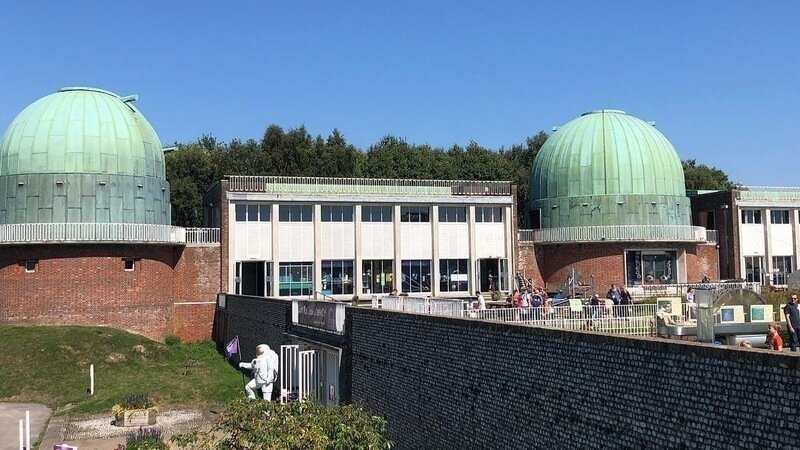
Save the Observatory Science Centre Herstmonceux – petition

The Observatory Science Centre is an educational charity which has called the Grade II listed, former home of the Royal Greenwich Observatory at Herstmonceux, East Sussex, home for the last 30 years.

The Canadian landlords, Queen’s University, who also own Herstmonceux Castle, are not renewing the Science Centre’s lease, so come the end of the 2026 season the Science Centre will be homeless. Over the years the science centre have worked tirelessly to fund and restore the site and the telescopes back to their former glory. The centre is a major venue for exhibitions, lectures and educational programmes. The renovated telescopes provide a unique setting for the general public, schools, colleges, and brownie and scout groups to learn about science, space and the world around them. Whilst the Science Centre is in search for a new site to continue operations beyond 2026, they should not have to leave the Observatory site at all and the historic site should be preserved for future generations as a great educational tool of significant historical importance. Please sign this petition for someone to step in and prevent the Science Centre from having to leave the Observatory site.

Links:
Save the Observatory Science Centre Herstmonceux

Herstmonceux Observatory Campaign Group

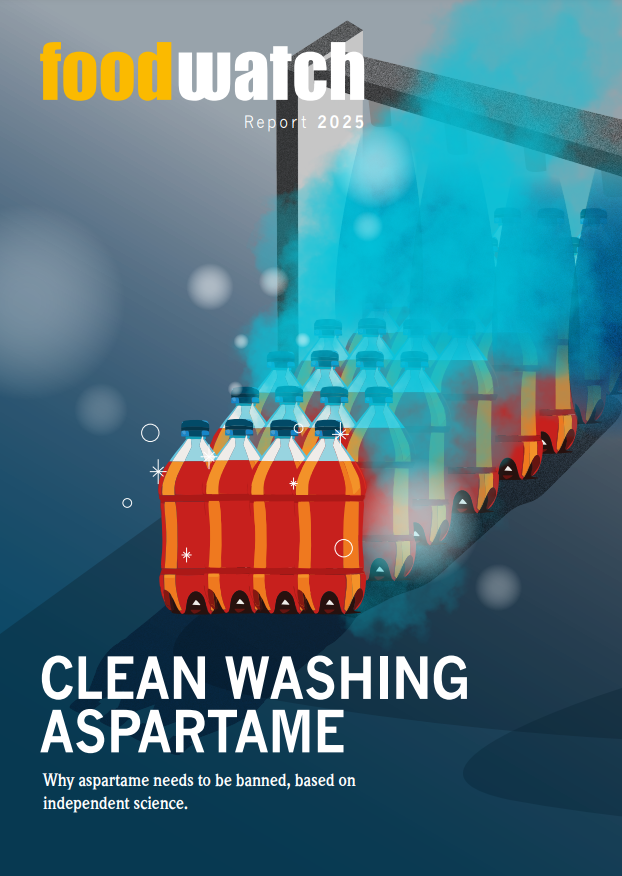
Clean Washing Aspartame: Why aspartame needs to be banned, based on independent science – publication

Clean washing aspartame

Aspartame is found in thousands of products across Europe, including popular soft drinks such as Coca-Cola Zero, Sprite Zero and Pepsi Max, this sweetener has long been controversial.

In 2023, the WHO’s International Agency for Research on Cancer classified it as possibly carcinogenic. Still, EU authorities insisted that normal consumption should be harmless. Now, the foodwatch report ‘Clean Washing Aspartame: Why aspartame needs to be banned, based on independent science‘ sheds light on the scientific discussion about the risks of aspartame and reveals the gaps and industry influence in EU risk assessment.

Links:
Clean Washing Aspartame: Why aspartame needs to be banned, based on independent science

Nieuwe studies versterken argwaan aspartaam, EU blijft muisstil

Agenda – Ban aspartaam uit voedingsmiddelen en dranken – E-mailactie & petitie / No to aspartame in our food and drinks! – petition

2025-01-24, Lief dagboek

Vrijdag; Wat eten we vandaag?; Storm Éowyn; Zorg; Open Access; Dag van het Onderwijs; Wereld Moebius Syndroom Bewustwordingsdag; Day of the Endangered Lawyer; Bewustmakingsdag voor Syndroom van Alagille.

Deze afbeelding heeft een leeg alt-attribuut; de bestandsnaam is dagboek.png

Wat eten we vandaag?:

Klik op afbeelding voor origineel

Knipselkrant:


Agenda:

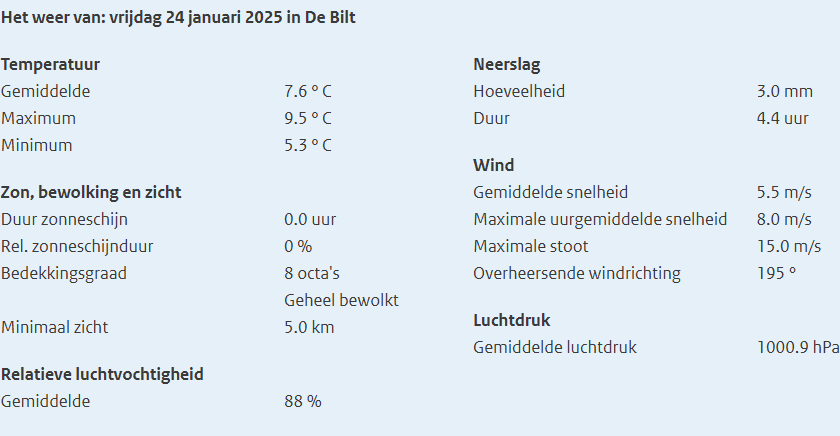
Weer:

Links:
In de geschiedenis

Bewustmakingsdag voor Syndroom van Alagille / Alagille Syndrome Awareness Day 2025

Het syndroom van Alagille (Alagille syndrome), genoemd naar Daniel Alagille, is een complexe aandoening van een aantal orgaansystemen, voornamelijk de lever, het hart, de ogen, het gelaat en het skelet.

De belangrijkste symptomen zijn die van cholestase (gepaard gaand met jeuk en geelzucht), herkenbaar aan weinig galwegen in een leverbiopt; aangeboren hartafwijkingen, vooral van de longarterieën, oogafwijkingen, een typische gelaatsvorm, en ‘vlinderwervels‘. Nierafwijkingen en afwijkingen aan het centraal zenuwstelsel komen ook voor. De mortaliteit is ongeveer 10% waarbij vaatproblemen in het centraal zenuwstelsel, hartziekte en leverziekte de belangrijkste doodsoorzaken zijn. De verschijnselen zijn ook binnen 1 familie zeer variabel. De ziekte is autosomaal dominant erfelijk. Nieuwe mutaties (sporadische gevallen) komen frequent voor. Als bekend is wat de aard van de afwijking in een familie is, is prenatale diagnostiek in principe mogelijk. Genetisch onderzoek louter om de diagnose te verifiëren bij iemand die aan de klinische criteria voldoet, heeft geen consequenties en wordt nog niet aanbevolen. Nog niet volledig opgehelderd. Bij ca 70% van de patiënten zijn afwijkingen in een gen genaamd JAG1 aantoonbaar. Het gen ligt op chromosoom 20, locatie 20p12. Het codeert voor een eiwit, Jagged 1, dat op de celmembraan van sommige cellen wordt gevonden en dat een functie heeft bij signaaluitwisseling tussen cellen zowel tijdens de embryonale ontwikkeling als daarna. Het is niet mogelijk het syndroom van Alagille te genezen. Het is echter mogelijk dat de klachten verdwijnen als het kind ouder wordt.

Links:
Alagille Syndrome Awareness Day

Day of the Endangered Lawyer 2025

Ever since lawyers Symone Gaasbeek-Wielinga and Hans Gaasbeek went onto a fact finding mission in the Philippines in 1990 (lawyers are being intimidated, threatened and even murdered because they aide their clients in politically sensitive cases) they have been active for their threatened colleagues all across the world.

The creation of this special international day is an international effort put together with like-minded colleagues. The first ever Day of the Endangered Lawyer was organized in 2009. Hans and Symone created the foundation Day of the Endangered Lawyer to strengthen the work. Together with AED and ELDH they created the Coalition for the Endangered Lawyer, which comes together every year to choose the new country and to discuss the progress. The purpose of the Day of the Endangered Lawyer is a call for attention on that day to threatened human rights lawyers with special attention to one designated country. The course of action is to draw a centralized petition in as many cities as possible, in and across Europe’s borders, which will be offered to ambassadors, consulates and other bodies of authority. The petition will call for attention to the problematic situation of endangered lawyers in that country. Another aim is to engage in a dialogue with the representatives of the government of the country. Furthermore, forum discussions are being organized with local fellow lawyers and publications are made about the lawyers’ situation.

Links:
Day of the Endangered Lawyer

#MSAD Moebius Syndrome Awareness Day / Wereld Moebius Syndroom Bewustwordingsdag 2025

Moebius Syndrome Awareness Day is an annual event celebrated globally each year on January 24th — the birth date of Professor Paul Julius Moebius, the doctor who first diagnosed the condition in 1888.

In 2011, Moebius Syndrome Awareness Day was started by the Many Faces of Moebius Syndrome, and has been embraced globally by other organizations that support efforts to raise awareness. The Moebius Syndrome Foundation recognizes the month of January as a time to raise awareness about this rare condition and educate the world about Moebius syndrome. We celebrate #MSAD by sharing information about Moebius syndrome, offering financial support and resources to approved events, encouraging people to wear purple, and raising awareness through various means and channels. “This is Moebius” is the 2024 Moebius Syndrome Foundation’s theme for Moebius Syndrome Awareness Day, and will be used to highlight the unique stories, challenges, and triumphs of individuals living with Moebius syndrome. We invite you to follow us on our social media and email platforms as we share these messages. Would you like to participate? Please email a photo, a brief write-up, or short video (less than 1 minute), and share your story with us. Individuals with Moebius of all ages, and their family members and supporters who make up our rare community are invited to contribute.

Links:
Moebius Syndrome Awareness Day

#EducationDay World Day of Education / Dag van het Onderwijs 2025

The right to education is enshrined in article 26 of the Universal Declaration of Human Rights. The declaration calls for free and compulsory elementary education.

The Convention on the Rights of the Child, adopted in 1989, goes further to stipulate that countries shall make higher education accessible to all. When it adopted the 2030 Agenda for Sustainable Development in September 2015, the international community recognized that education is essential for the success of all 17 of its goals. Sustainable Development Goal 4, in particular, aims to “ensure inclusive and equitable quality education and promote lifelong learning opportunities for all” by 2030. Education offers children a ladder out of poverty and a path to a promising future. But about 265 million children and adolescents around the world do not have the opportunity to enter or complete school; 617 million children and adolescents cannot read and do basic math; less than 40% of girls in sub-Saharan Africa complete lower secondary school and some four million children and youth refugees are out of school. Their right to education is being violated and it is unacceptable. Without inclusive and equitable quality education and lifelong opportunities for all, countries will not succeed in achieving gender equality and breaking the cycle of poverty that is leaving millions of children, youth and adults behind.

Links:
International Day of Education

Education is a basic human right

Global Education Cooperation Mechanism #Education2030