Clean Industrial Deal – presentation

The European Commission (the Commission) presents the Clean Industrial Deal, a bold business plan to support the competitiveness and resilience of our industry and will accelerate decarbonisation, while securing the future of manufacturing in Europe.

Faced with high energy costs and fierce and often unfair global competition, our industries need urgent support. This Deal positions decarbonisation as a powerful driver of growth for European industries. This framework can drive competitiveness as it gives certainty and predictability to companies and investors that Europe remains committed to become a decarbonised economy by 2050. The Commission is also taking actions to make our regulatory environment more efficient while reducing bureaucratic hurdles for businesses. Today’s measures are the results  of the active engagement with industry leaders, social partners and civil society in the context of the Antwerp Declaration for a European Industrial Deal and the European Commission’s Clean Transition Dialogues.

Links:
A Clean Industrial Deal for competitiveness and decarbonisation in the EU

Clean Industrial Deal – A plan for EU competitiveness and decarbonisation
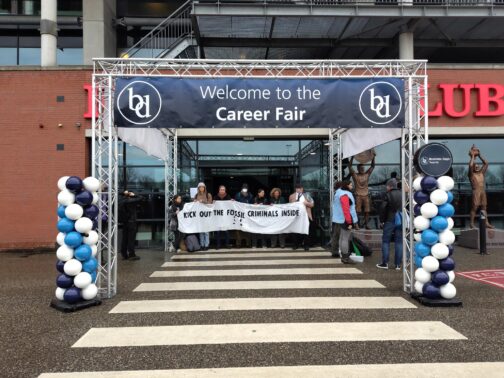
University Rebellion en Scientist Rebellion blokkeren Twentse Bedrijvendagen: Stuur fossiele criminelen weg!

University Rebellion (UR) en Scientist Rebellion (SR) blokkeren de toegang tot de bedrijvenbeurs van de Universiteit Twente in de Grolsch Veste, de bezorgde studenten en medewerkers eisen dat fossiele bedrijven per direct vertrekken omdat ze studenten proberen te werven wiens toekomst ze tegelijkertijd vernietigen.

Vooralsnog worden studenten niet naar binnen gelaten. Maar als de vertegenwoordigers van de fossiele industrie naar buiten komen en voor altijd wegblijven wordt de blokkade meteen beëindigd. De Twentse bedrijvendagen worden door en voor studenten georganiseerd. Er komen meer dan 170 bedrijven om studenten te werven voor hun organisatie, waaronder Shell, ExxonMobil and Zeeland Refinery (van het Franse Total en het Russische Lukoil). Twee keer eerder demonstreerden studenten en medewerkers al op de bedrijvendagen. Op ludieke wijze werd de kraam van Shell als ‘crime scene’ afgezet en gingen actievoerders in gesprek met bezoekers. Toch staan fossiele bedrijven ook in 2025 gewoon weer op het programma. Dus wordt de druk opgevoerd. Er is door de UR en SR eerder gesproken met het bestuur van de bedrijfsdagen. Alhoewel het bestuur de ernst van de klimaatcrisis zeggen te begrijpen, zijn ze nog altijd niet van plan om fossiele bedrijven de deur te wijzen. Ze verschuilen zich achter de wens om ‘neutraal’ te blijven. Helaas bestaat neutraliteit niet in een crisissituatie. Door deze bedrijven een podium te bieden dragen de bedrijvendagen actief bij aan het verspreiden van greenwashing.

Links:
University Rebellion en Scientist Rebellion blokkeren Twentse Bedrijvendagen: Stuur fossiele criminelen weg!

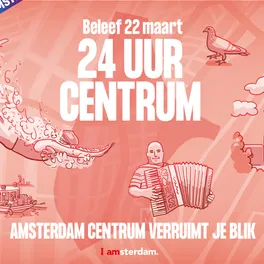
24 uur Centrum

Op zaterdag 22 maart 2025 vindt 24 uur Centrum plaats.

Speciaal voor Amsterdam750 worden maar liefst 8 edities van ’24 uur’ georganiseerd. 24 uur Amsterdam is dé manier om de stad op een nieuwe manier te ervaren. Op 22 maart is het centrum aan de beurt. Of je nu creatief of sportief bent, van muziek, architectuur of lekker eten en drinken houdt, laidback of leergierig bent, er is voor iedereen wat te beleven tijdens 24 uur.

Links:
24 uur Centrum

Speel het cookie-spel bij Bits of Freedom

Vroege vogels: fotografiewandeling met Gosse Bouma

World Day for Glaciers 2025

World Day for Glaciers aims to raise global awareness about the critical role of glaciers, snow and ice in the climate system and the hydrological cycle, and the economic, social and environmental impacts of the impending changes in the Earth’s cryosphere, as well as to share best practices and knowledge in this regard and in addressing issues related to accelerated melting of glaciers and its consequences.

Glaciers are nature’s frozen sentinels, vast rivers of ice and snow that carve the Earth, silently bearing witness to the passage of time and the shifting rhythms of our planet. They are essential to Earth’s ecosystem, acting as critical freshwater reservoirs and indicators of the planet’s health. They provide water for millions of people, regulate sea levels, and support biodiversity. Yet, these frozen giants are under threat. Rising global temperatures are causing glaciers to retreat at an alarming rate, leading to water scarcity, rising sea levels, and increasing the chances of natural disasters like floods or landslides. These cascading changes jeopardize ecosystems, human livelihoods, and economies around the world. To address this urgent challenge, ambitious action to reduce greenhouse gas emissions is essential. The first World Day for Glaciers, declared by the UN in its resolution A/RES/77/158 along with the Year of Glaciers 2025, encourage us all to act to preserve the vital role of glaciers in sustaining life on Earth for generations to come.

Links:
World Day for Glaciers

Vanishing glaciers

#WorldWaterDay / #WereldWaterDag / UN #WorldWaterReport – release 2025

Doctor Who Season 2 Premiere (TV BBC One / BBC iPlayer / Disney+)

Doctor Who is a British science fiction television series broadcast by the BBC since 1963. The series, created by Sydney Newman, C. E. Webber and Donald Wilson, depicts the adventures of an extraterrestrial being called the Doctor, part of a humanoid species called Time Lords.

The Doctor travels in the universe and in time using a time travelling spaceship called the TARDIS, which externally appears as a British police box. While travelling, the Doctor works to save lives and liberate oppressed peoples by combating foes. The Doctor often travels with companions. The Fifteenth Doctor returns for another exciting season on 12 April 2025, premiering on BBC iPlayer in the UK and Disney+ where available from 01:00 CET and BBC One at 18:50 in the UK.

Links:
Everything We Know About Doctor Who Season 2

Gallifreyan Translator

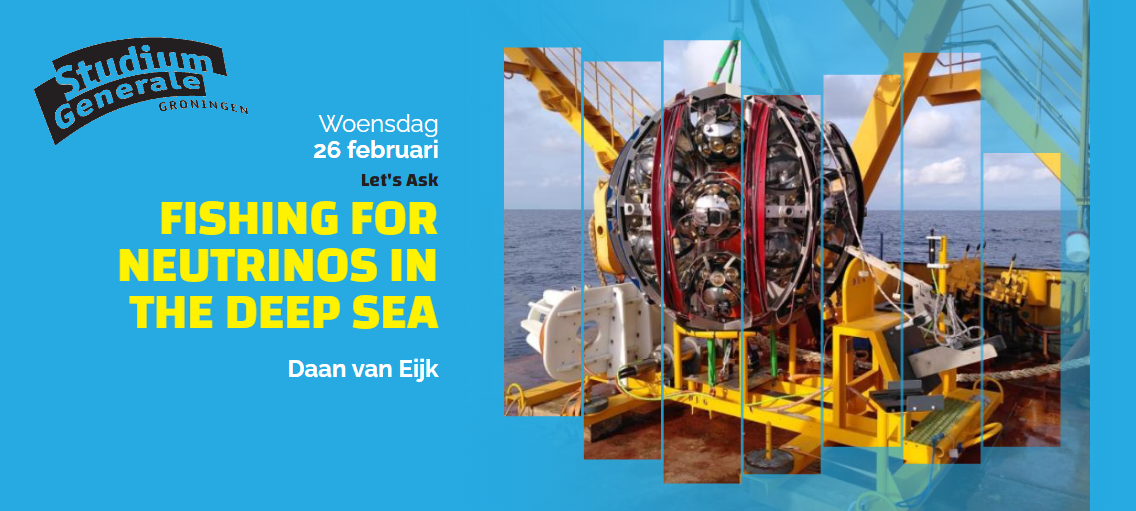
Fishing for Neutrinos in the Deep Sea (TV webcast)

At a depth of 3.5 kilometers in the Mediterranean Sea, Dutch scientists are constructing a massive neutrino detector called Kilometre Cube Neutrino Telescope (KM3NeT) spanning one cubic kilometer.

Recently KM3NeT detected an extraordinarily high-energy neutrino originating from outer space. Neutrinos are fundamental particles often referred to as “ghost particles” because they rarely interact with other matter. The energy of this cosmic neutrino was significantly greater than that of any neutrino previously detected on Earth. Is this a groundbreaking discovery? Moreover, what do we hope to learn from studying neutrinos? And why are scientists putting a telescope on the bottom of the ocean in the first place? Daan van Eijk will explain what  is detected by exploring the inner workings of the KM3NeT detector. How does the detector allow us to detect these ghostly particles? What can they reveal about the astrophysical processes in our universe that produce these elusive particles?

Links:
Fishing for Neutrinos in the Deep Sea

Observation of an ultra-high-energy cosmic neutrino with KM3NeT – publication

Wereldkoffiedag 2025

Ieder jaar op 1 oktober wordt door de leden van de Internationale Koffie Organisatie (ICO) en andere koffieliefhebbers de ‘Internationale Dag van de Koffie’ (International Coffee Day, ook Wereld Koffie Dag / Internationale Koffiedag) gehouden.

Veel horecabedrijven schenken op deze dag gratis kopjes koffie. Op deze dag staat alles wat met koffie te maken heeft centraal: van de boerderij waar de koffiebonen verbouwd worden tot aan het moment waarop het door de consument gedronken kan worden. De mannen en vrouwen die werkzaam zijn in deze industrie worden op deze dag geëerd. Met de ‘Internationale Dag van de Koffie’ wordt ook speciaal aandacht gevraagd voor fairtrade koffie, waarmee boeren een eerlijke beloning krijgen voor hun koffieoogst. In landen waar koffie verbouwd wordt, wordt deze dag uitbundiger gevierd dan in Nederland.

‘Te goedkope koffie’ – Lege koffieschappen bij Jumbo en AH: ‘Keiharde onderhandelingen met Douwe Egberts’, Klik op afbeelding voor origineel

Links:
Internationale Dag van de Koffie

Kleine koffieboer krijgt nauwelijks beloning voor zijn arbeid

Ruim 95% van de koffie in retail is ‘niet eerlijk’

We betalen veel te weinig voor onze koffie, en daar zijn de boeren de dupe van

2025-02-25, Lief dagboek

Dinsdag; Wat eten we vandaag?; Trump vs EU; Pro-Palestina studentenprotesten; Asteroid 2024 YR4; Openbaar vervoer NL; Mus Zoekt Huis; Mars; Februaristaking; Klimaatwake.

Deze afbeelding heeft een leeg alt-attribuut; de bestandsnaam is dagboek.png

Wat eten we vandaag?:

Klik op afbeelding voor origineel

Knipselkrant:


Agenda:

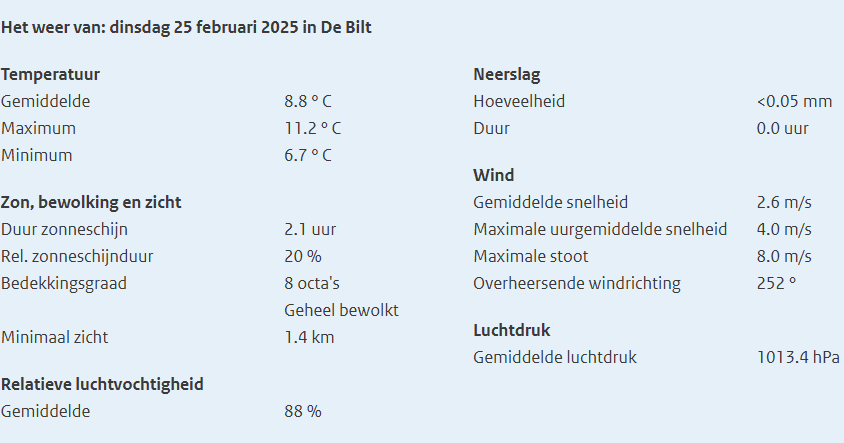
Weer:

Links:
In de geschiedenis

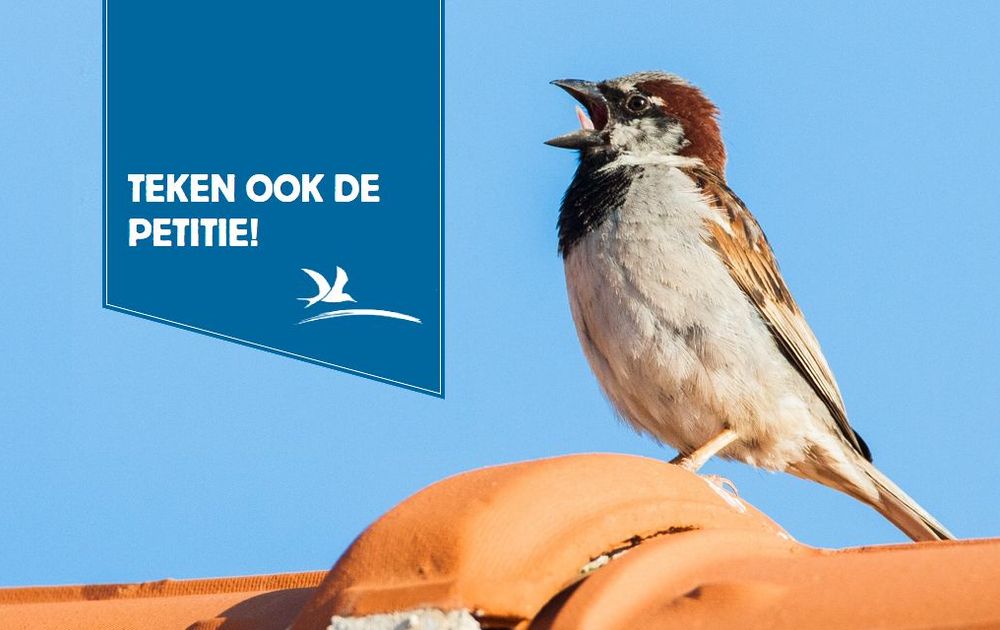
#MusZoektHuis Ja, ik wil meer neststenen voor mussen – petitie

De huismus is de bekendste vogel van ons land, toch zit de huismus in het nauw: de afgelopen decennia is het aantal gehalveerd.

Een van de oorzaken is dat ze steeds meer moeite hebben om een plekje te vinden om te broeden. Samen met bouwbedrijven heeft Vogelbescherming daarom jarenlang gewerkt aan een plan om neststenen voor vogels en andere beschermde diersoorten te verplichten bij nieuwbouw en grootschalige renovatie. Het plan is simpel qua uitvoering, geeft vogels weer een toekomst en levert geen vertraging op bij het bouwen van nieuwe woningen. Ondanks de steun van de bouwsector en de Tweede Kamer wil minister Mona Keijzer het plan niet uitvoeren. Ze schrapte de oplossing een maand voordat deze uitgevoerd zou worden. Daarom een oproep aan minister Mona Keijzer: verplicht neststenen voor vogels en andere beschermde diersoorten bij nieuwbouw en grootschalige renovatie.

  • Neem het plan voor nestvoorzieningen op in het Besluit Bouwwerken Leefomgeving (BBL).
  • Bouw aan gezonde wijken voor mensen én vogels.

Links:
Ja, ik wil meer neststenen voor mussen

Minister schoffeert Kamer en creëert woningnood voor vogels