Zet een streep door de asielwetten! – e-mailactie
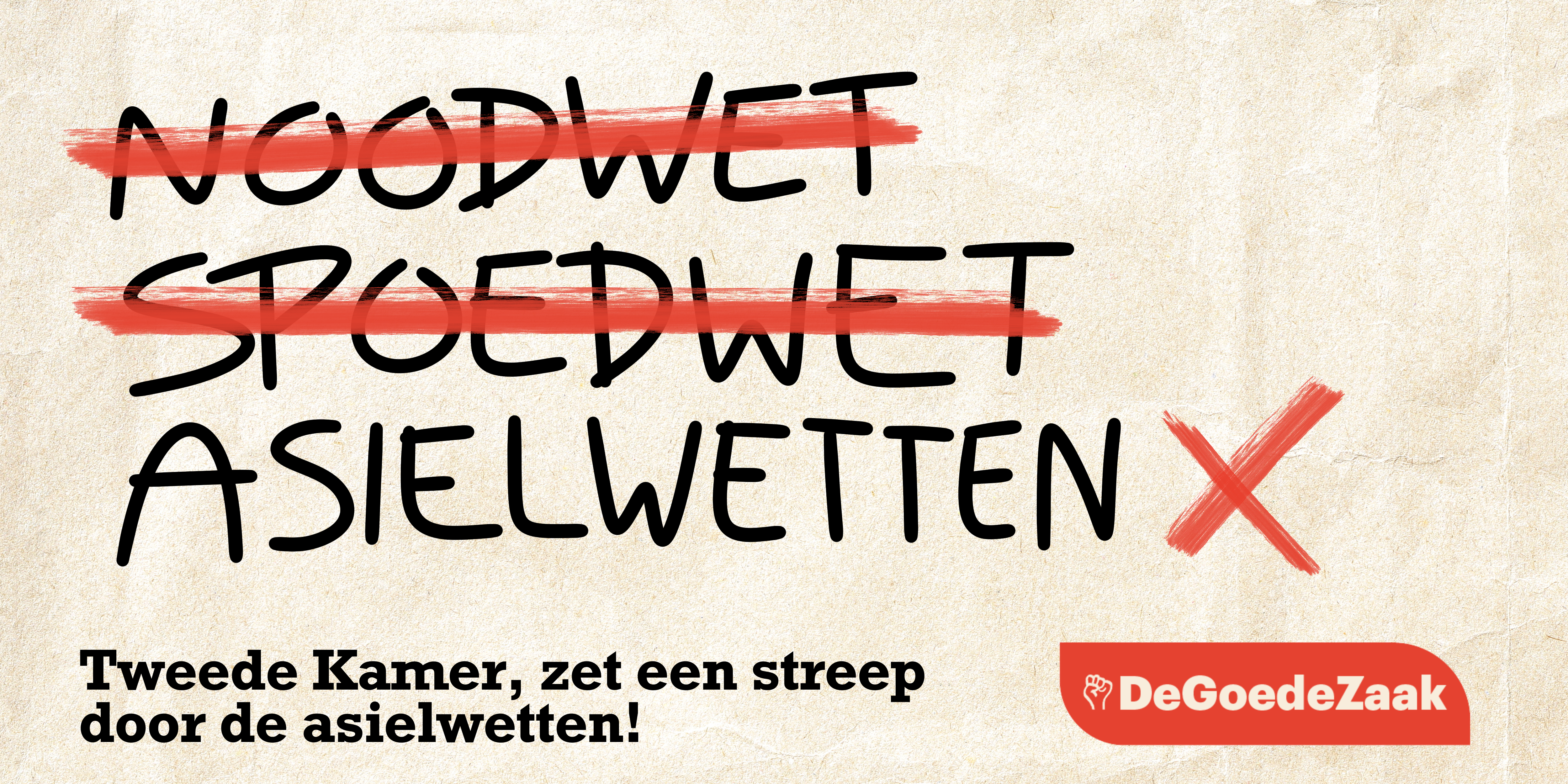
Noodwet, spoedwet of asielwet: ondanks de verzachtende woordkeuze blijven de wetsvoorstellen Asielnoodmaatregelenwet en Wet invoering tweestatusstelsel van Minister Faber kwetsbare groepen, mensenrechten en democratische principes onder druk zetten.

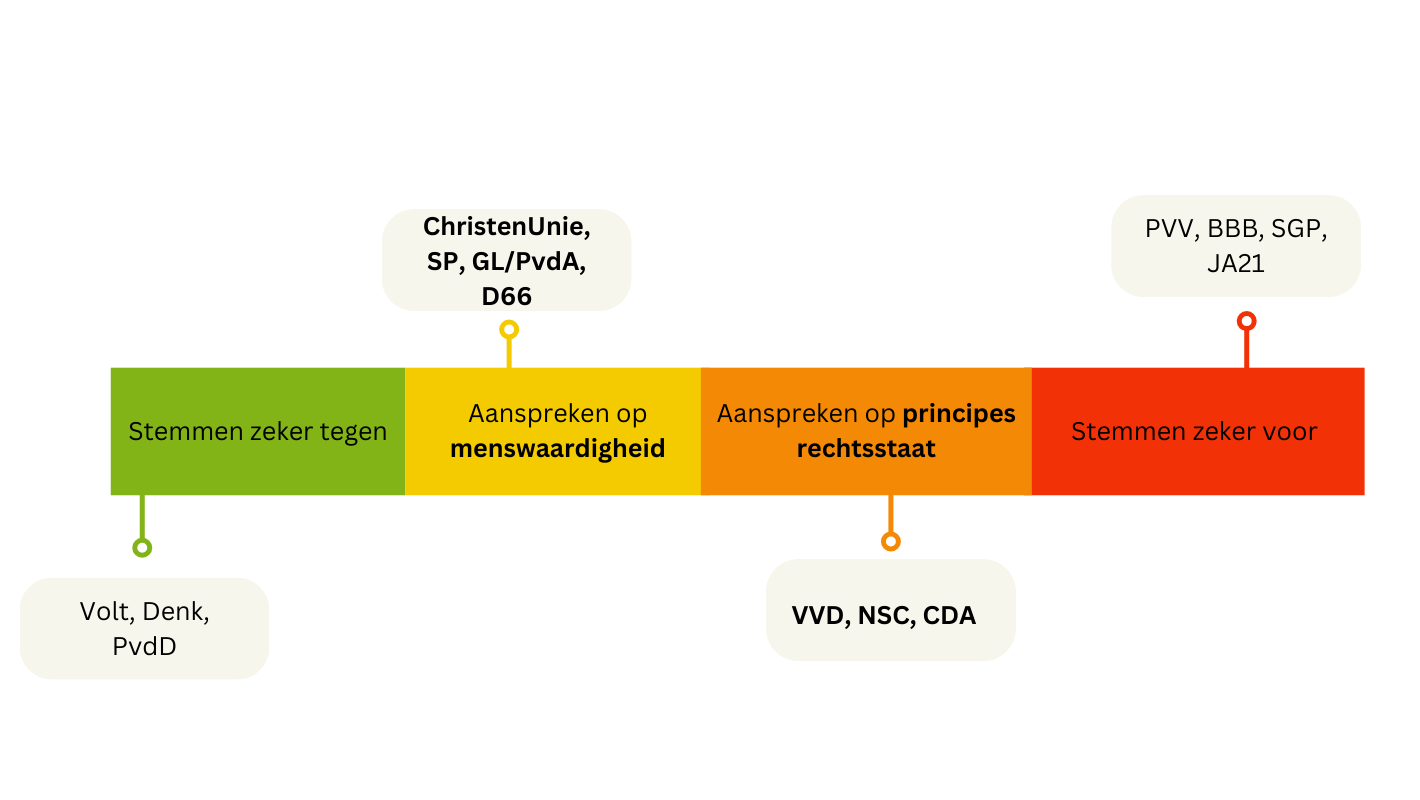
De Raad van State heeft zich uitgesproken en het advies is duidelijk: de asielwetten leiden tot mensenrechtenschendingen en zijn in strijd zijn met democratische principes. Minister Faber negeert deze duidelijke afkeuring van een van de belangrijkste adviseurs van de regering en zet haar plannen gewoon door. Meerdere partijen, waaronder de NSC, hebben beloofd de wet tegen te houden als het advies van de Raad van State negatief zou zijn. Nu is het tijd om die belofte waar te maken! Eerder hebben we de noodwet-procedure kunnen stoppen. Ook deze voorstellen mogen niet door de Tweede Kamer! Roep politici op om op te komen voor de democratie en de mensenrechten te verdedigen. Zij zijn de waakhonden van onze rechtsstaat en moeten hun moreel kompas laten zien! Wijs hen op het misbruik van spoedwetprocedures en het gevaar voor onze rechten als deze ‘crisismaatregelen’ de norm worden. Laten we druk zetten op politici om het advies van de Raad van State te volgen en deze wet te blokkeren. De gehele Tweede Kamer heeft de verantwoordelijkheid om het kabinet te controleren. Zowel op hoe democratisch het proces is, als op hoe menselijk de inhoud van de wetgeving is. Elk Tweede Kamerlid heeft beloofd om zich aan de grondwet en internationale mensenrechten te houden. Jij mag kiezen wie je wil mailen én wil overtuigen.
Links:
Zet een streep door de asielwetten!

Na advies Raad van State – NSC wil mogelijk aanpassing asielwet, Geert Wilders zwijgt

Ministerraad: groen licht voor asielplannen minister Faber

Leer meer over de afbraak van onze democratie op onze Rechtsstaatsradar

Raad van State negatief over asielwetten – NOS

Fabers eigen ambtenaren raden asielwetten af, blijkt uit interne documenten – AD

Minister Faber wil geen millimeter wijken, Kamer verbijsterd – AD

Spreek je uit tegen de asielwetten!

Stop de asielwetten!✊

2025-02-10, Lief dagboek

Maandag; Wat eten we vandaag?; deadline voor inleveren klimaatambities; Myanmar; Asielwetgeving; Week van de euthanasie; Wereld Epilepsiedag; Day of the Arabian Leopard; Wereldpeulvruchtendag; Artificial Intelligence (AI) Action Summit; 21 days of creativity for Flickr’s 21st birthday; binnenkern van de Aarde draait steeds langzamer; Mathieu Segers Lezing; Met het mes op tafel.

Deze afbeelding heeft een leeg alt-attribuut; de bestandsnaam is dagboek.png

Wat eten we vandaag?:

Klik op afbeelding voor origineel

Knipselkrant:


Agenda:

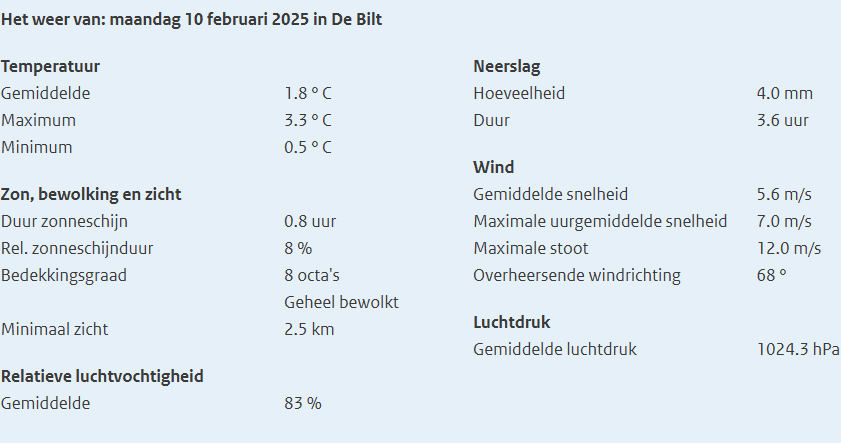
Weer:

Links:
In de geschiedenis

#LovePulses World Pulses Day / Wereldpeulvruchtendag 2025

In 2019, the General Assembly proclaimed 10 February as the World Pulses Day (resolution A/RES/73/251).

Recognizing their value, on 20 December 2013, the UN General Assembly adopted a resolution (A/RES/68/231) proclaiming 2016 as the International Year of Pulses (IYP). The celebration of the year, led by the Food and Agriculture Organization of the United Nations (FAO), increased the public awareness of the nutritional and environmental benefits of pulses as part of sustainable food production. Building on the success of the International Year of Pulses and recognizing their potential to further achieve the 2030 Agenda for Sustainable Development, with particular relevance to Sustainable Development Goals 1, 2, 3, 5, 8, 12, 13 and 15, Burkina Faso proposed the observance of World Pulses Day. Pulses, also known as legumes, are the edible seeds of leguminous plants cultivated for food. Dried beans, lentils and peas are the most commonly known and consumed types of pulses. Staples dishes and cuisines from across the world feature pulses, from hummus in the Mediterranean (chick peas), to a traditional full English breakfast (baked navy beans) to Indian dal (peas or lentils). Pulses do not include crops that are harvested green (e.g. green peas, green beans)—these are classified as vegetable crops. Also excluded are those crops used mainly for oil extraction (e.g. soybean and groundnuts) and leguminous crops that are used exclusively for sowing purposes (e.g. seeds of clover and alfalfa).

Links:
World Pulses Day

Voor Yvette van Boven is het iedere dag (Wereld) Peulvruchtendag!

Eet je vanavond rundvlees?

Day of the Arabian Leopard 2025

To raise awareness about the Arabian leopard (Panthera pardus nimr), the United Nations General Assembly has proclaimed February 10 as the Day of the Arabian Leopard in resolution 77/295.

Classified as Critically Endangered on the IUCN Red List, the rapid disappearance of the Arabian leopard represents a major setback for biodiversity conservation in its native region, underscoring the urgency of addressing the nature crisis that threatens ecosystems worldwide. By celebrating this Day, the UN ultimately seeks to restore the Arabian leopard as a flagship species for conservation and sustainability in its native region while emphasizing the critical role of biodiversity in maintaining the health and resilience of our planet’s ecosystems. The UN resolution recognizes the vital importance of the Arabian leopard to the Arabian ecosystem and welcomes cooperative regional initiatives to protect it and other threatened species. The resolution calls for enhanced conservation efforts by Arabian range states, relevant stakeholders like NGOs and communities, and UN agencies. Observing this International Day will promote much-needed attention for the Arabian leopard and galvanize public engagement in conservation initiatives aimed at restoring leopard populations and other endangered species for the benefit of ecosystems.

The Arabian leopard is a critically endangered leopard subspecies that inhabits the Arabian Peninsula, it is one of the smallest leopard subspecies, with an average weight of 30-40 kg for males and 25-35 kg for females. Its fur is pale and buff-colored with rosettes that are small and closely spaced. The Arabian leopard has a very limited distribution, being found only in a few isolated pockets of habitat in Saudi Arabia, Oman, Yemen, and the United Arab Emirates. Estimates suggest there may be fewer than 200 Arabian leopards left in the wild. Threats to the species include urbanization, farming, overgrazing by livestock, poaching, and the illegal wildlife trade. Conservation efforts focus on habitat protection, restoration of natural prey populations, and public education programs to reduce human-leopard conflict. The Arabian leopard is legally protected across its range, but greater enforcement of laws and active management of surviving populations are needed to ensure the species’ survival.

Links:
Day of the Arabian Leopard

#EpilepsyDay / Wereld Epilepsiedag 2025

International Epilepsy Day is an annual awareness-raising initiative organised by the International Bureau for Epilepsy (IBE) and the International League Against Epilepsy (ILAE).

Epilepsy is a group of non-communicable neurological disorders characterized by recurrent epileptic seizures.

Links:
Epilepsy Day

Intersectoral global action plan on epilepsy and other neurological disorders

Week van de euthanasie 2025

De Week van de Euthanasie staat in 2025 in het teken van een stapeling van ouderdomsaandoeningen.

Een combinatie van o.a. slecht zien en horen, botontkalking, slijtage van gewrichten, evenwichts- en geheugenproblemen kan zorgen voor ondraaglijk en uitzichtloos lijden en maakt daarmee euthanasie mogelijk. Met tal van activiteiten wordt dit tijdens de Week van de Euthanasie onder de aandacht gebracht. De campagnetitel is ‘Het is genoeg. Wat als ouderdom je alles ontneemt?’ 

Links:
Week van de euthanasie

Binnenkern aarde draait niet alleen langzamer, maar verandert ook van vorm / Annual-scale variability in both the rotation rate and near surface of Earth’s inner core – publication

De binnenkern van de Aarde is twintig jaar in behoorlijk vervormd en is niet zo bolvormig als eerst werd aangenomen, maar vervormt regelmatig aan de randen van de bol, schrijven wetenschappers in Nature Geoscience.

De Amerikaanse en Chinese wetenschappers deden verder onderzoek naar de veranderingen in de aardkern. In juni 2024 werd al bekend dat de aardkern langzamer is gaan draaien. Ze vonden daarvoor nog meer bewijs, maar kregen ook meer inzicht in de vorm. De binnenkern wordt altijd omschreven als een metalen bol, maar is volgens de wetenschappers zeker niet glad aan de randen. De vervorming op de grens met de buitenkern is op sommige plekken 100 meter of meer

Links:
Binnenkern aarde draait niet alleen langzamer, maar verandert ook van vorm

Artificial Intelligence (AI) Action Summit 2025

On 10 and 11 February 2025, France will host the Artificial Intelligence (AI) Action Summit, gathering at the Grand Palais, Heads of State and Government, leaders of international organizations, CEOs of small and large companies, representatives of academia, non-governmental organizations, artists and members of civil society.

Artificial intelligence (AI) is more than just an industrial and technological revolution. It has the potential to bring about a profound paradigm shift in our societies, in how we relate to knowledge, work, information, culture and even language. This technological revolution knows no borders. In this sense, artificial intelligence is a scientific, economic, cultural, political and civic issue requiring intense international dialogue involving the governments, researchers, businesses, creative professionals and civil society, to ensure the science, solutions and standards that shape artificial intelligence of the society we want to build for tomorrow are developed collaboratively. This international Summit will bring together almost 100 countries and over a thousand private sector and civil society representatives from across the world, invited on an inclusive basis in recognition of their commitment to the action promoted by the Summit and their desire to contribute actively to debate.

Links:
Artificial Intelligence (AI) Action Summit

AI Action Summit (10 and 11 February 2025)

Gaat AI helpen om de natuur beter te beschermen?

ROOST: open source AI safety for everyone