The Sky at Night – Asteroid Strike? (TV BBC Four)
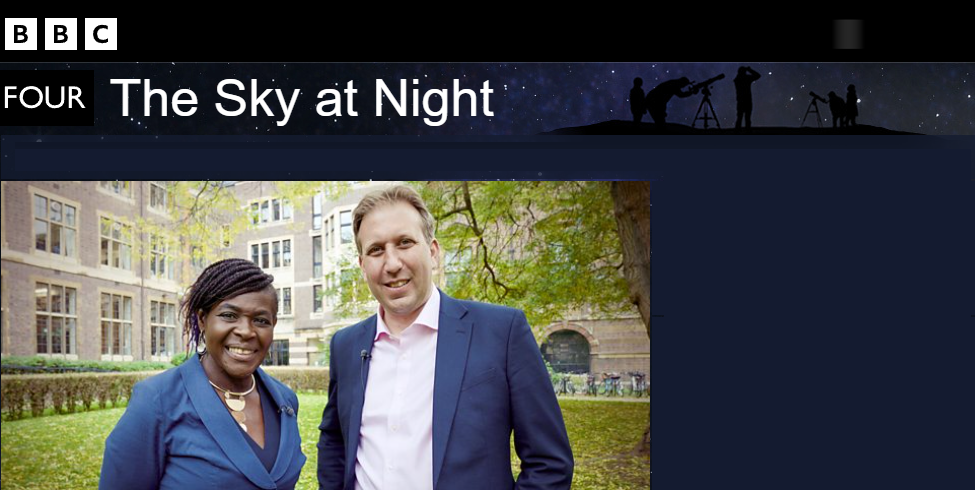
The Sky at Night is a monthly documentary television programme on astronomy produced by the BBC.

The show had the same permanent presenter, Patrick Moore, from its first broadcast on 24 April 1957 until 7 January 2013. The latter date was a posthumous broadcast, which followed Moore’s death on 9 December 2012. This made it the longest-running programme with the same presenter in television history. Many early episodes are missing, either because the tapes were wiped, thrown out, or because the episode was broadcast live and never recorded in the first place. Beginning with the 3 February 2013 edition, the show was co-presented by Lucie Green and Chris Lintott. Since December 2013 Maggie Aderin-Pocock has been a presenter. The programme’s opening and closing theme music is “At the Castle Gate”, from the incidental music to Pelléas et Mélisande, written in 1905 by Jean Sibelius, performed by the Royal Philharmonic Orchestra and conducted by Sir Thomas Beecham.

This episode:
The team explore one of the biggest stories in space news, the ‘city killer’ asteroid 2024 YR4. First observed on 27 December 2024, it soon became one of the biggest threats from an asteroid ever detected, with the potential to cause a heat blast that could vaporise solid rock, wind blasts five times the speed of the strongest hurricane and a shockwave that would flatten buildings and trees for hundreds of miles. This was a potential natural disaster we needed to respond to as a planet. So how well did we do? Our team of presenters are on hand to find out, and while YR4 was later downgraded to a near miss, what has it told us about our ability to react when an asteroid strike is on its way? George Dransfield kicks off, talking us through the damage an asteroid like YR4 could do and why some say we are overdue an asteroid strike of this size. But how will we know if it’s truly on its way? Chris Lintott meets Dr Meg Schwamb at a football pitch – which it turns out is the perfect place to explain how the probability of a strike is calculated. Following the same highs and lows they do when a ball just misses the goal, they explain why the probability of asteroid 2024 YR4 hitting earth first rose so quickly before it fell. It turns out it wasn’t the maths being wrong!

Luckily, next time the numbers say an asteroid impact is on its way, we do have ways of defending ourselves, Maggie Aderin-Pocock takes a tea break to explain some of the options, from nudging it to nuking it – they all have their pros and cons. But to know our best plan of action, we need to understand more about the asteroids, and George meets up with Dr Carly Howett to find out how Nasa’s Lucy Mission could provide us with invaluable information for any future strikes. With this wealth of information about any potential asteroids heading our way, Maggie meets Prof Hugh Lewis in Southampton to discover how the international community is set up to respond to any future threats, and to find out who will decide what action to take and the possible consequences it may have. But the skies and the asteroids in it aren’t just a scary threat to humanity; when we stop and look up, there are some beautiful sights to be seen, and Pete Lawrence is on hand to tell us what to look out for in the coming months. Join us for an exciting episode that looks beyond the headlines, to see what efforts were made to protect us from an asteroid that could have wiped out a city the size of Greater London – and beyond.

Links:
The Sky at Night

VPRO #Tegenlicht online deep dive – driedelige serie: Neo-Duitsland (TV internet)

Tegenlicht is een informatief televisieprogramma van de VPRO maandelijks op de eerste zondag op NPO 2.

Door de VPRO wordt het programma bestempeld als documentaire op het vlak van politiek, economie, sociologie en wetenschap. Het programma stelt zich ten doel inzicht in de werking van de samenleving te verschaffen.

De Duitse binnenlandse veiligheidsdienst heeft Alternative für Deutschland (AfD) officieel bestempeld als extreemrechts en een bedreiging voor de democratie. Volgens de dienst ondermijnt de partij de grondwettelijke orde en sluit ze bewust bepaalde bevolkingsgroepen uit. In de mini-serie Neo-Duitsland dook VPRO Tegenlicht dieper in de opkomst van de AfD en onderzocht waarom de partij, vooral in Oost-Duitsland, zo veel steun weet te vergaren. hoe bepaalt het Duitse verleden en heden de toekomst van Europa?

Links:
Tegenlicht online deep dive – driedelige serie: Neo-Duitsland

Praat na afloop mee tijdens de digitale Tegenlicht Meet-up

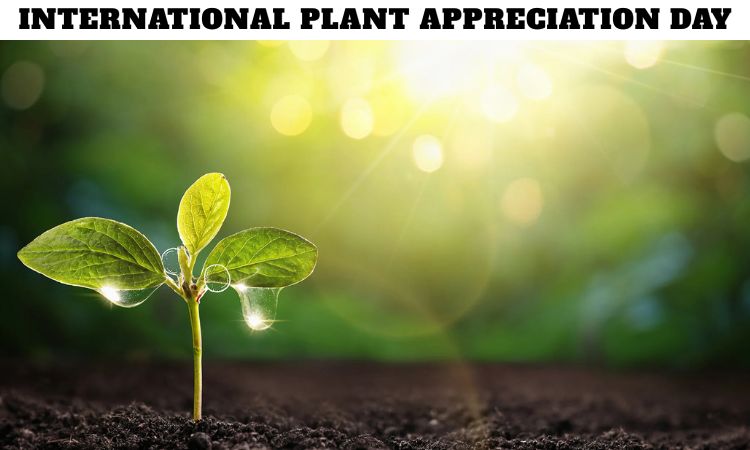
Plant Appreciation Day 2025

Plant Appreciation Day, which takes place every year on April 13th, is a day dedicated to recognizing plants’ incredible diversity, beauty, and importance.

Plants, as the foundation of life on Earth, provide us with oxygen, nutrients, and a variety of other essential resources. They not only help to sustain our ecosystems, but they also bring joy and inspiration into our lives through their beautiful colors and shapes. On this day, plant lovers, environmentalists, and garden enthusiasts come together to raise awareness about the importance of plants in our lives and the need to protect them. It is a day to reflect on our relationship with nature, develop a greater appreciation for the world’s flora, and take action to protect our planet’s green treasures.

Links:
Unlock the Secrets of International Plant Appreciation Day Coming Up

Happy International Plant Appreciation Day!

Vroege Vogels Radio | 13 april 2025 (Radio 1 NPO)

Vroege Vogels is een live-radioprogramma, tv-programma en online community van BNNVARA over natuur en milieu.

In het radioprogramma wordt het gesproken woord omlijst door licht klassieke muziek en salonmuziek. Het radioprogramma werd in 1978 voor het eerst uitgezonden door de VARA en is een van de langst lopende en best beluisterde radioprogramma’s van de publieke omroep. Het wordt elke zondagmorgen uitgezonden tussen 07:00 en 10:00 op NPO Radio 1. De beginmuziek is een bewerking van Vivaldi’s “Piccolo Concerto in C major” (RV 443).

Platanen kunnen met hun schors veel vertellen over de hoeveelheid fijnstof in hun omgeving. De breedkopeland is al zo’n 120 duizend jaar uitgestorven, maar sinds kort is hij te bewonderen. Volgens Menno Schilthuizen is de natuur in de stad het spannendst van allemaal. En verder: bont zandoogje naar je tuin, nieuwe plantje voor Nederland, biodiversiteit in kaart en roodhalsfuten. De column is deze week van Patrick Jansen.

Links:
Vroege Vogels (na afloop terugluisteren)

2025 Breakthrough Prize Ceremony “Oscars of Science” (TV YouTube live stream)


The eleventh Breakthrough Prizes awards celebrated outstanding scientific achievements, honoring scientists driving remarkable discoveries in gene editing, human diseases, the search for the fundamental laws of the Universe and pure mathematics.

The Breakthrough Prizes are a set of international awards bestowed in three categories by the Breakthrough Prize Board in recognition of scientific advances, the awards are part of several “Breakthrough” initiatives founded and funded by Yuri Milner and his wife Julia Milner, along with Breakthrough Initiatives and Breakthrough Junior Challenge.

The Breakthrough Prizes were founded by Sergey Brin, Priscilla Chan and Mark Zuckerberg, Yuri and Julia Milner, and Anne Wojcicki. The Prizes have been sponsored by the personal foundations established by Sergey Brin, Priscilla Chan and Mark Zuckerberg, Ma Huateng, Jack Ma, Yuri and Julia Milner, and Anne Wojcicki. Committees of previous laureates choose the winners from candidates nominated in a process that is online and open to the public. Laureates receive $3 million each in prize money. They attend a televised award ceremony designed to celebrate their achievements and inspire the next generation of scientists. As part of the ceremony schedule, they also engage in a program of lectures and discussions. Those that go on to make fresh discoveries remain eligible for future Breakthrough Prizes.

Links:
The Eleventh Breakthrough Prize Awards – ‘The Oscars® of Science’

2025-04-12, Lief dagboek

Zaterdag; Wat eten we vandaag?; Day for Street Children; Lutkemeer; Dag van de Ruimtevaart; Doctor Who; Marathon Rotterdam; Breakthrough Prize Ceremony.

Deze afbeelding heeft een leeg alt-attribuut; de bestandsnaam is dagboek.png

Wat eten we vandaag?:

Klik op afbeelding voor origineel

Knipselkrant:


Agenda:

Weer:

Links:
In de geschiedenis

#HumanSpaceFlightDay / Dag van de Ruimtevaart 2025

The UN General Assembly, in its resolution A/RES/65/271 of 7 April 2011, declared 12 April as the International Day of Human Space Flight “to celebrate each year at the international level the beginning of the space era for mankind, reaffirming the important contribution of space science and technology in achieving sustainable development goals and increasing the well-being of States and peoples, as well as ensuring the realization of their aspiration to maintain outer space for peaceful purposes.”

12 April 1961 was the date of the first human space flight, carried out by Yuri Gagarin, a Soviet citizen. This historic event opened the way for space exploration for the benefit of all humanity. The General Assembly expressed its deep conviction of the common interest of mankind in promoting and expanding the exploration and use of outer space, as the province of all mankind, for peaceful purposes and in continuing efforts to extend to all States the benefits derived there from.

Links:
Day of Human Space Flight 12 April

World Space Week