
In de geschiedenis
Links:
Wikipedia

Links:
Wikipedia
Though humanity has always counted its war casualties in terms of dead and wounded soldiers and civilians, destroyed cities and livelihoods, the environment has often remained the unpublicized victim of war. Water wells have been polluted, crops torched, forests cut down, soils poisoned, and animals killed to gain military advantage. Furthermore, the United Nations Environment Programme (UNEP) has found that over the last 60 years, at least 40 percent of all internal conflicts have been linked to the exploitation of natural resources, whether high-value resources such as timber, diamonds, gold and oil, or scarce resources such as fertile land and water. Conflicts involving natural resources have also been found to be twice as likely to relapse. The United Nations attaches great importance to ensuring that action on the environment is part of conflict prevention, peacekeeping and peacebuilding strategies, because there can be no durable peace if the natural resources that sustain livelihoods and ecosystems are destroyed. On 27 May 2016, the United Nations Environment Assembly adopted resolution UNEP/EA.2/Res.15, which recognized the role of healthy ecosystems and sustainably managed resources in reducing the risk of armed conflict, and reaffirmed its strong commitment to the full implementation of the Sustainable Development Goals listed in General Assembly resolution 70/1, entitled “Transforming our world: the 2030 Agenda for Sustainable Development”.
Links:
Day for Preventing the Exploitation of the Environment in War and Armed Conflict
Protection of the natural environment in armed conflict under international humanitarian law

In December 2015, the UN General Assembly designated 5 November as World Tsunami Awareness Day (WTAD).
The purpose of WTAD is to raise awareness about reducing tsunami-related risks and enhance community preparedness. The theme of World Tsunami Awareness Day 2026 will be “Be Tsunami Ready: Resilience starts with you”.
Links:
World Tsunami Awareness Day
 UNESCO riep in 2015 de Wereld Romani Taaldag uit voor het behoud van de Romaanse taal en cultuur.
UNESCO benadrukt vandaag dat uiteindelijk elke taal belangrijk is want een taal is een gemeenschappeli
Wanneer Romani in Europa integraal wordt gepromoot en gebruikt zal dit naar verwachting een bijdrage kunnen leveren aan het versterken van de Roma-identiteit
Links
World Day of Romani Language
Coopération, défense, commerce, fiscalité, climat, migrations… Découvrez les résultats du baromètre 2026 de la solidarité internationale.
Le CNCD-11.11.11 publie, en collaboration avec Le Vif, le Baromètre 2026 de la solidarité internationale, afin de sonder l’avis des Belges sur les grands enjeux internationaux. Le soutien des Belges à la justice fiscale, à la transition écologique, à la régulation du commerce international et à la régularisation des sans-papiers reste ferme ; le soutien à l’aide au développement et aux dépenses militaires est plus mitigé ; le soutien à l’immigration est en recul.

The International Day Against Violence and Bullying at School, including Cyberbullying is an United Nations Educational, Scientific and Cultural Organization (UNESCO) holiday celebrated every year on the first Thursday of November.
This International Day was designated by the member states of UNESCO in 2019 and it was first held in November 2020. According to UNICEF, one in three young people in 30 countries have been a victim of online bullying (2019 poll) and half of students aged 13 to 15 experience peer violence around school (2018 report). In 67 countries, corporal punishment is still allowed in schools. The UNESCO International day remind people that violence in schools violates the right of children and adolescents to education, health and well-being. The aim is to call on the international community, civil society (including parents, pupils and teachers), the tech industry, the education community and the education authorities to take part in the fight against violence and bullying at school.
In 2026, the Day will be observed on 5 November under the theme: Every learner safe and well: From promise to practice. The theme focuses on safety and well-being, reflecting an approach that brings the whole school together around violence prevention, mental health and psychosocial support, teacher support, inclusion and digital safety. This also calls for global commitments to be put into practice through sustained action across the education sector. The 2026 observance opens marks the beginning of the second five-year cycle of the International Day, at a moment of renewed global attention to ending violence against children. The Second Global Ministerial Conference on Ending Violence Against Children, to be held in Manila on 18-19 November 2026, will review progress following the 2024 Bogotá Ministerial, including commitments to safe and enabling schools. At this occasion, UNESCO will convene a briefing and policy dialogue for Member States at its Headquarters in Paris, presenting UNESCO’s work to support violence-free, safe, inclusive and health-promoting learning environments. It will also highlight key UNESCO resources such as Teaching with care: A practical guide for teachers to support mental health and well-being in schools and Connected and safe: Policy orientations to address online and technology-facilitated violence in education.
Links:
Day against Violence and Bullying at School, including Cyberbullying
Wekelijkse Sit-ins op Stations op donderdag voor Gaza door heel Nederland: neem een pan en lepel mee om luid te zijn, bordjes met je boodschap of beelden, en oordoppen om je gehoor te beschermen.
Sit-in door een groep Nederlandse ambtenaren die zich ernstige zorgen maakt over het aanhoudende Israëlische offensief in Gaza – dat volgens het Internationaal Gerechtshof bestempeld werd als plausibele genocide- en het Nederlandse beleid in reactie hierop.
Je kent ze misschien van de sit-ins die elke donderdag om 12:00 plaatsvinden voor het Ministerie van Buitenlandse Zaken. Als ambtenaren zijn zij doordrongen van het belang van internationaal recht. Ze legden een eed af op de Grondwet, inclusief artikel 90 waarin staat dat de regering de internationale rechtsorde bevordert. Het is aan de politiek om het beleid uiteen te zetten, dat klopt. Maar ook de politiek heeft zich te houden aan onze Grondwet en aan internationaal verdragsrechtelijke verplichtingen. Het is aan ambtenaren om de politiek erop te wijzen wanneer beleid het internationaal recht (mogelijk) schaadt. En die taak – die plicht – nemen zij zeer serieus. Zij verwachten van onze regering dat zij zich onvermoeibaar in gaat zetten voor consistente naleving van het internationaal recht. Concreet stellen zij vier eisen aan de Nederlandse regering en verwachten wij van de regering dat alle diplomatieke middelen worden aangewend om onderstaande te bewerkstelligen:
1. Maximale inzet op een onmiddellijk en permanent staakt-het-vuren en volledige humanitaire toegang tot Gaza.
2. Een eind aan alle vormen van steun voor én rechtvaardiging van Israëls huidige militaire optreden in Gaza en erkenning van het internationale humanitaire en oorlogsrecht;
3. De onmiddellijke naleving van uitspraken van het Internationaal Gerechtshof (ICJ).
4. Een strategie voor duurzame vrede, met garanties voor de mensenrechten en veiligheid van zowel Palestijnen als Israëliërs.
Links:
Ambtenaren en de Grondwet
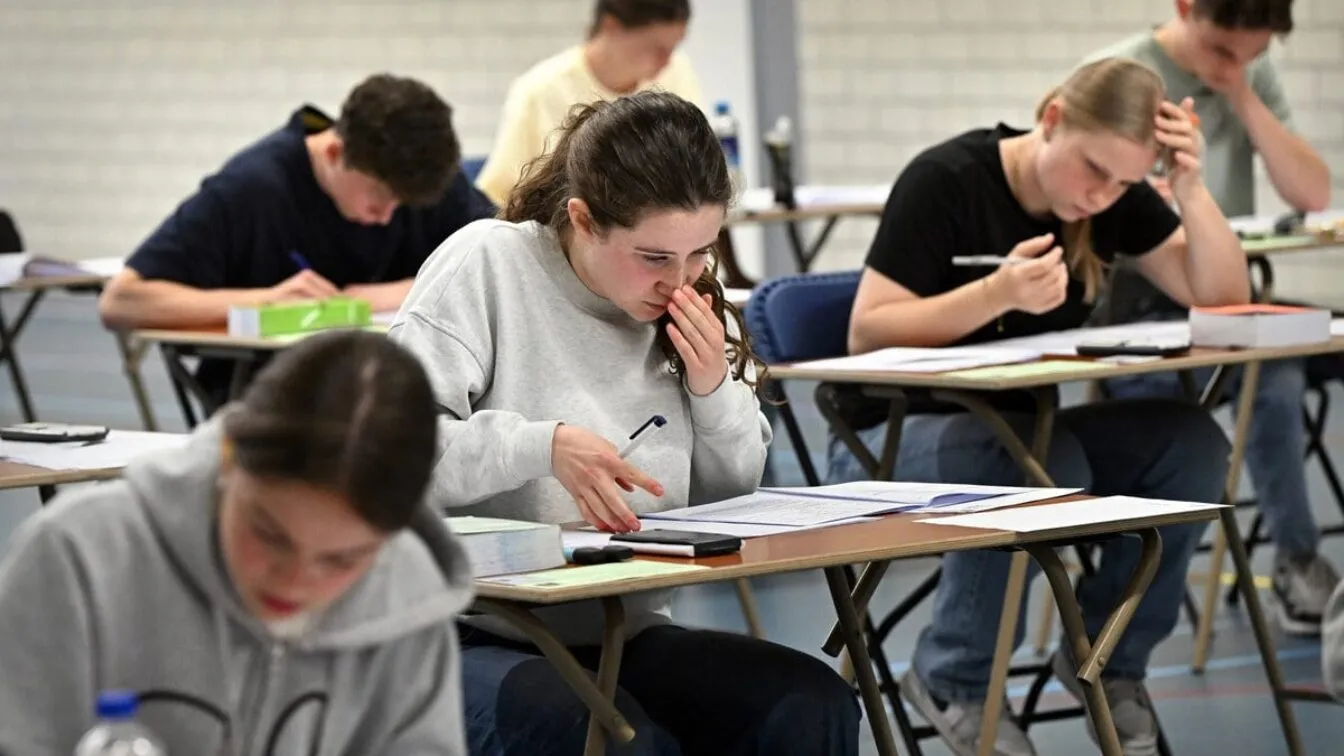 Geschiedenislessen in de bovenbouw van het middelbaar onderwijs zullen vanaf 2030 zijn gericht op het opvoeden van leerlingen tot goede burgers met bepaalde gewenste opvattingen.
Dat wil tenminste de commissie die de concept-examenprogramma’s heeft opgesteld in opdracht van het ministerie van OCW. Het vak geschiedenis dreigt hiermee te verworden tot staatspedagogiek.
Links:
Geschiedenisonderwijs dreigt staatsopvoeding te worden
Companies increasingly use personal data to set individualized prices, a practice critics call “surveillance pricing.” Researchers have found examples ranging from higher hotel rates for Mac users to steeper ride-share fares for trips ending in non-white neighborhoods. Is this smart business, or a new way of making us pay for our privacy? We’ll break down how it works, why privacy advocates like EFF say it harms privacy, equity, and competition, and what we can do to ban it. Join the livestream online followed by live Q&A.

