#17April Day of Peasant Struggles / Dag van de Boerenstrijd 2025
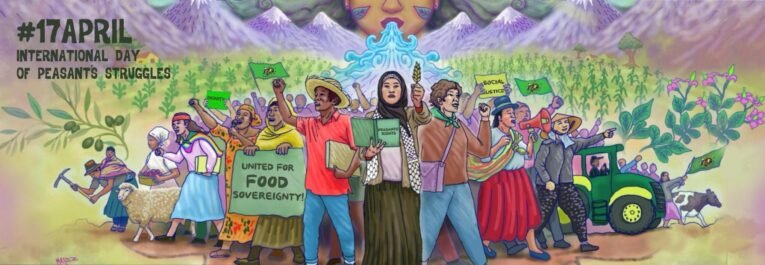
Every April 17th – the International Day of Peasant Struggle – with living memory and rebellion inherited from 19 landless Peasants murdered with impunity in the Eldorado do Carajás Massacre in Brazil, Via Campesina call upon their members, friends and allies to come together with strong actions worldwide, affirming that the only way to obtain Peasant Rights is with Agrarian Reform and Social Justice.

On 17 December 2018, the 73rd Session of the General Assembly of the United Nations in New York adopted the United Nations Declaration on the Rights of Peasants and Other People Working in Rural Areas (RES/73/165). The Declaration is an international legal instrument. Via Campesina wants to mobilize for its real implementation in our territories, and this implies that the State guarantees access to the land, the protection of seeds facing commercialization, putting a stop to evictions and deaths, as well as creating measures against agrochemicals; social justice means that those who feed the world live in dignified conditions and in peace in the countryside, without being prosecuted for defending their rights and territories. In this current context of extractivism and the alarming rate at which lands are forcefully grabbed from the Peasant people, the urgency of Agrarian Reform proves strategic. Particularly so, since the neoliberal offensive in the whole world is accompanied by the loss of the rights of the working class and consequently of the peasantry.

Links:
Day of Peasant Struggles

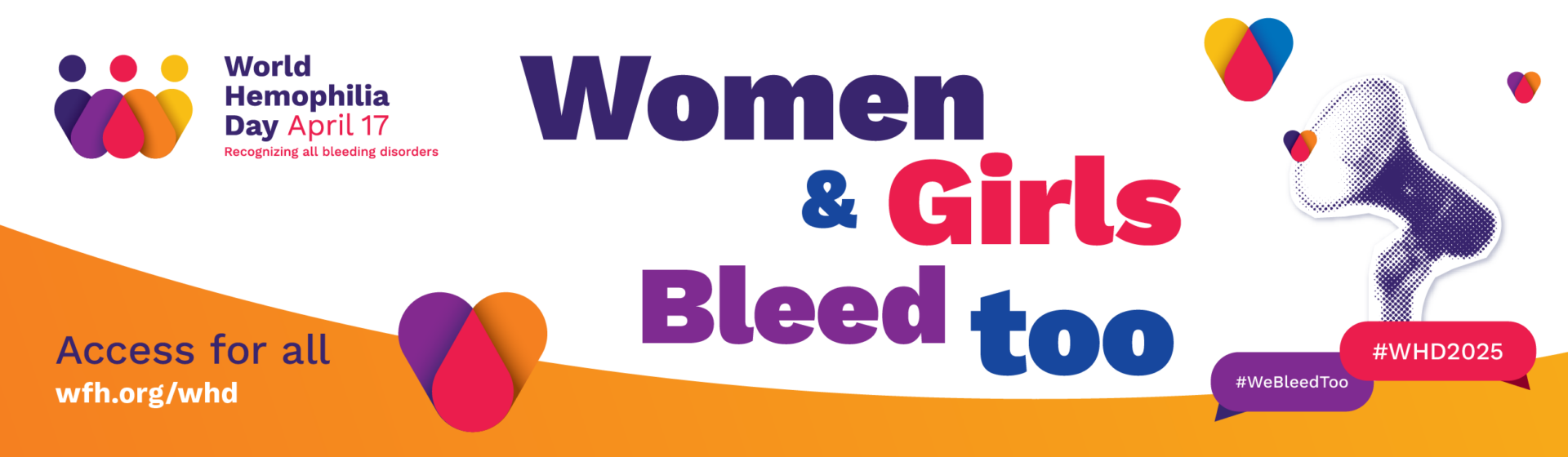
#WHD2025 Wereld Hemofilie Dag / World Hemophilia Day 2025

Sinds 1989 is het op 17 april ‘Werelddag Hemofilie’ (World Hemophilia Day) om ieder jaar extra aandacht te vestigen op de zeldzame bloedstollingsstoornis en andere bloedingsstoornissen.

De ‘Wereld Hemofilie Dag’ is een initiatief van de World Federation of Hemophilia (WFH). De datum is ter ere de geboortedag van de stichter van de organisatie, Frank Schnabel, een Canadees zakenman met hemofilie. Hemofilie is een erfelijke stoornis in de bloedstolling. Het bloed kan niet goed stollen omdat een bepaalde stollingsfactor in het bloed ontbreekt. Bij hemofilie blijft de patiënt bij een verwonding of inwendige bloeding langer bloeden dan mensen zonder hemofilie, ook bij een relatief klein ongeval zoals een sneetje of een bloedneus. Er zijn twee typen hemofilie. Bij hemofilie A heeft de patiënt onvoldoende factor VIII, bij hemofilie B is er te weinig factor IX. Een tekort van een van de andere stollingsfactoren heet niet hemofilie maar is een ander stollingsprobleem. Hemofilie is een tamelijk zeldzame ziekte, en komt ongeveer één op de tienduizend keer voor.

Links:
World Hemophilia Day

Babelsberger Sternennächte – Solar Orbiter – Röntgenblick auf die Sonne / Das Röntgenteleskop STIX | Dr. Iris Traulsen (TV webcast)

Die Leibniz-Instituts für Astrophysik Potsdam (AIP) Babelsberger Sternennächte finden online statt, in der Regel gibt es immer am 3. Donnerstag im Monat einen neuen Vortrag einer Wissenschaftlerin oder eines Wissenschaftlers des AIP, der ab 20 Uhr auf dem YouTube-Kanal von Urknall, Weltall und das Leben ausgestrahlt wird.

Röntgenblick auf die Sonne:
In diesem Vortrag geht es um wissenschaftliche Ergebnisse, die u.a. mit dem Röntgenteleskop STIX an Bord des Solar Orbiter gewonnen wurden. Die ESA-Raumsonde Solar Orbiter kreist seit 2020 um die Sonne und untersucht sie mittels zehn verschiedener Instrumente an Bord. STIX beobachtet die heißesten Regionen und energiereichsten Prozesse in Sonneneruptionen. Über die letzten Jahre hinweg ist die Sonnenaktivität stetig angestiegen, so dass Forschende bereits über 70,000 dieser Strahlungsausbrüche beobachten konnten. Ein Schwerpunkt der Forschung liegt auf der Kombination von STIX mit anderen Instrumenten. So haben die Wissenschaftlerinnen und Wissenschaftler z.B. die ersten 3D-Bilder von Sonneneruptionen im Röntgenbereich erzeugt. Mit STIX und anderen Instrumenten auf Solar Orbiter untersuchen sie außerdem das Material, das von der Sonne weggeschleudert wird, insbesondere energiereiche Teilchen und Plasmawolken, und welche Konsequenzen daraus für die Erde und das Weltraumwetter folgen.

Das Röntgenteleskop STIX:
Hier können Interessierte hinter die technischen Kulissen des Röntgenteleskops STIX schauen. Dr. Alexander Warmuth geht in diesem Vortrag auf verschiedene Fragen ein: Wie funktioniert eigentlich so ein Röntgenteleskop? Wie erzeugt es Röntgenbilder der Sonne, obwohl die Strahlung so energiereich ist, dass in dem Teleskop weder Linsen noch Spiegel verwendet werden können? Was sind die Anforderungen an ein Instrument, welches sich stärker der Sonne annähert als der sonnennächste Planet Merkur?

Links:
Babelsberger Sternennächte

Babelsberger Sternennächte – playlist

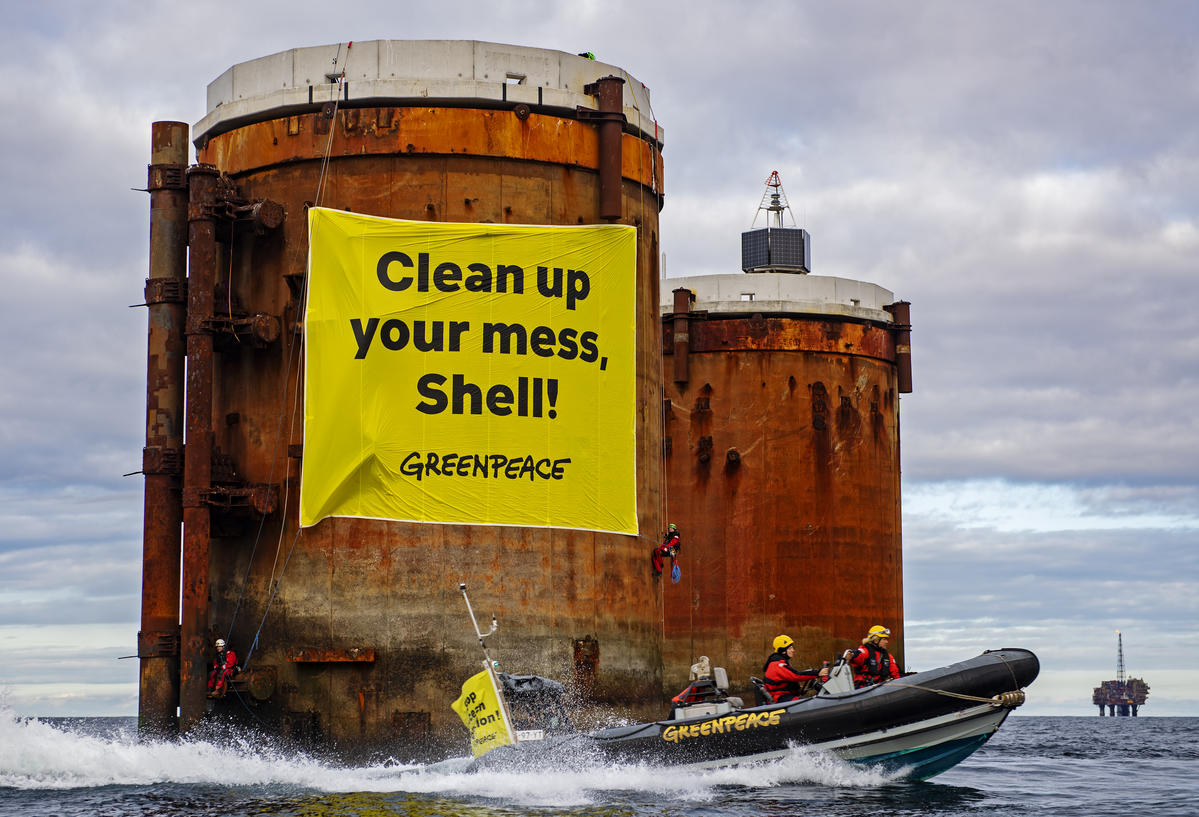
Belast grote vervuilers zoals Shell voor de toegedane schade aan het klimaat – petitie


Wie is er verantwoordelijk voor klimaatschade?

Olie- en gasbedrijven brengen onze planeet in een ernstige klimaatcrisis, al decennialang weten ze welke rampspoed het verbranden van olie en gas veroorzaakt. Ze gaan door, zelfs nu de klimaatcrisis het leven van miljoenen mensen raakt. Het afgelopen jaar verdienden olie- en gasbedrijven meer dan 2,8 miljard dollar per dag. Van die miljarden gaat geen cent naar de klimaatschade die zij veroorzaken. Terwijl mensen hun huis verliezen of hun oogst zien verdrogen, gebruikt de fossiele industrie hun megawinsten vooral om aandeelhouders rijker te maken. De kosten voor de klimaatcrisis? Die komen volledig neer op de maatschappij en worden ingeschat op 300 miljard dollar! Laten we er nu voor zorgen dat steenrijke olie- en gasbedrijven gaan meebetalen, voor de kosten nog veel verder oplopen.

Links:
Belast grote vervuilers

Belast de klimaatvervuilers! : Laat de klimaatvervuilers betalen – petitie

De kunstenaar Anish Kapoor maakte een angstaanjagend kunstwerk: BUTCHERED

Strongest hints yet of biological activity outside the solar system / New Constraints on DMS and DMDS in the Atmosphere of K2-18 b from JWST MIRI – publication

Astronomers have detected the most promising signs yet of a possible biosignature outside the solar system, although they remain cautious.

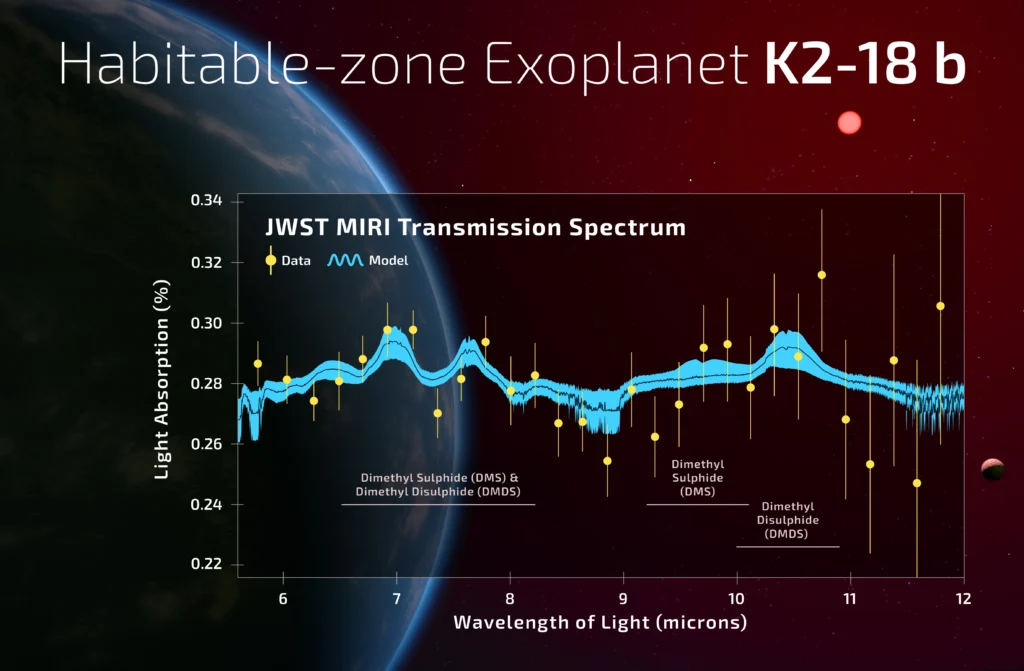
Using data from the James Webb Space Telescope (JWST), the astronomers, led by the University of Cambridge, have detected the chemical fingerprints of dimethyl sulfide (DMS) and/or dimethyl disulfide (DMDS), in the atmosphere of the exoplanet K2-18b, which orbits its star in the habitable zone. On Earth, DMS and DMDS are only produced by life, primarily microbial life such as marine phytoplankton. While an unknown chemical process may be the source of these molecules in K2-18b’s atmosphere, the results are the strongest evidence yet that life may exist on a planet outside our solar system. The observations have reached the ‘three-sigma’ level of statistical significance – meaning there is a 0.3% probability that they occurred by chance. To reach the accepted classification for scientific discovery, the observations would have to cross the five-sigma threshold, meaning there would be below a 0.00006% probability they occurred by chance. The researchers say between 16 and 24 hours of follow-up observation time with JWST may help them reach the all-important five-sigma significance. Their results are reported in The Astrophysical Journal Letters. Earlier observations of K2-18b — which is 8.6 times as massive and 2.6 times as large as Earth, and lies 124 light years away in the constellation of Leo — identified methane and carbon dioxide in its atmosphere. This was the first time that carbon-based molecules were discovered in the atmosphere of an exoplanet in the habitable zone.

Those results were consistent with predictions for a ‘Hycean’ planet: a habitable ocean-covered world underneath a hydrogen-rich atmosphere. However, another, weaker signal hinted at the possibility of something else happening on K2-18b. To determine the chemical composition of the atmospheres of faraway planets, astronomers analyse the light from its parent star as the planet transits, or passes in front of the star as seen from the Earth. As K2-18b transits, JWST can detect a drop in stellar brightness, and a tiny fraction of starlight passes through the planet’s atmosphere before reaching Earth. The absorption of some of the starlight in the planet’s atmosphere leaves imprints in the stellar spectrum that astronomers can piece together to determine the constituent gases of the exoplanet’s atmosphere. The earlier, tentative, inference of DMS was made using JWST’s NIRISS (Near-Infrared Imager and Slitless Spectrograph) and NIRSpec (Near-Infrared Spectrograph) instruments, which together cover the near-infrared (0.8-5 micron) range of wavelengths. The new, independent observation used JWST’s MIRI (Mid-Infrared Instrument) in the mid-infrared (6-12 micron) range. DMS and DMDS are molecules from the same chemical family, and both are predicted to be biosignatures.

Both molecules have overlapping spectral features in the observed wavelength range, although further observations will help differentiate between the two molecules. However, the concentrations of DMS and DMDS in K2-18b’s atmosphere are very different than on Earth, where they are generally below one part per billion by volume. On K2-18b, they are estimated to be thousands of times stronger – over ten parts per million. Madhusudhan says that while the results are exciting, it’s vital to obtain more data before claiming that life has been found on another world. He says that while he is cautiously optimistic, there could be previously unknown chemical processes at work on K2-18b that may account for the observations. Working with colleagues, he is hoping to conduct further theoretical and experimental work to determine whether DMS and DMDS can be produced non-biologically at the level currently inferred. While he is not yet claiming a definitive discovery, Madhusudhan says that with powerful tools like JWST and future planned telescopes, humanity is taking new steps toward answering that most essential of questions: are we alone? The James Webb Space Telescope is a collaboration between NASA, ESA and the Canadian Space Agency (CSA). The research is supported by a UK Research and Innovation (UKRI) Frontier Research Grant.

Links:
Strongest hints yet of biological activity outside the solar system

Wetenschappers vinden ‘sterkste tekenen tot nu toe’ van mogelijk buitenaards leven

Er is geen Planet K2-18B! bescherm het buitenaardse leven!

2025-04-16, Lief dagboek

Woensdag; Wat eten we vandaag?; PFAS; Handelsoorlog; Dag van de Fietshelm; Werelddag van de Stem; Lutkemeer; Bellingcat Open Source Challenges; Aardbeving Gaswinning.

Deze afbeelding heeft een leeg alt-attribuut; de bestandsnaam is dagboek.png

Wat eten we vandaag?:

Klik op afbeelding voor origineel

Knipselkrant:


Agenda:

Weer:

Links:
In de geschiedenis

#WorldVoiceDay Werelddag van de Stem 2025

World Voice Day (WVD) is a worldwide annual event that takes place on April 16 devoted to the celebration of the phenomenon of voice.

The aim is to demonstrate the enormous importance of the voice in the daily lives of all people. Voice is a critical aspect of effective and healthy communication, and World Voice Day brings global awareness to the need for preventing voice problems, rehabilitating the deviant or sick voice, training the artistic voice, and researching the function and application of voice. A goal of World Voice Day is to encourage all those who use their voice for business or pleasure to learn to take care of their voice, and know how to seek help and training, and to support research on the voice. Voice production is studied and applied in many disciplines such as medicine, speech-language pathology, music, physics, psychology, phonetics, art, and biology. The World Voice Day was established on April 16th with the main goals of increasing public awareness of the importance of the voice and alertness to voice problems.

Links:
World Voice Day