VPRO #Tegenlicht – AI is coming for your feelings! (TV internet)

Tegenlicht is een informatief televisieprogramma van de VPRO via het internet.

Door de VPRO wordt het programma bestempeld als documentaire op het vlak van politiek, economie, sociologie en wetenschap. Het programma stelt zich ten doel inzicht in de werking van de samenleving te verschaffen.

Wat gebeurt er als AI bewustzijn ontwikkelt? Filosoof Susan Schneider onderzoekt de toekomst van kunstmatige intelligentie, de grenzen van de geest en de ethische dilemma’s van een wereld waarin machines kunnen denken, voelen en misschien zelfs ‘zijn’. Zullen we ooit machines kunnen maken die echt bewust zijn? En kan dat met enkel siliconen, of moeten de chips uiteindelijk meer op hersenen gaan lijken, en misschien zelfs deels uit levende hersencellen bestaan? Als dat zo is, zou een hybride of synthetische intelligentie dan ook de grenzen van het menselijk bewustzijn kunnen oprekken? Voordat het zover is, moeten we ons echter realiseren dat de huidige generatie AI ook risico’s met zich meebrengt. Chatbots lijken soms bewustzijn te hebben en kunnen zich aanpassen aan ons psychologische profiel. Dat maakt ze verleidelijk, maar ook gevaarlijk.‘ We moeten dit niet op gevoel benaderen, maar met ons verstand,’ waarschuwt Schneider. De keuzes die we nu maken, zullen immers bepalen wie we straks zijn.

Links:
AI is coming for your feelings!

Kunstmatige intelligentie / Artificial intelligence : Ethiek
#GivingTuesday 2025

GivingTuesday, often stylized as #GivingTuesday for the purposes of hashtag activism, is the Tuesday after Thanksgiving in the United States.

It is touted as a “global generosity movement unleashing the power of people and organizations to transform their communities and the world”. The organization of the same name is an independent nonprofit that supports the global movement. GivingTuesday was initiated in 2012 by Henry Timms at the 92nd Street Y in New York. The co-founding organization was the United Nations Foundation, with support from BLK SHP (Black Sheep). The date range is November 27 to December 3, and is always five days after the Thanksgiving holiday. A similar concept was also floated in 2011 at the non-profit Mary-Arrchie Theater Company in Chicago by then-producing director Carlo Lorenzo Garcia, who urged shoppers via The Huffington Post to consider donating to charity after they had finished their Cyber Monday shopping. He suggested the name Cyber Giving Monday. For its first eight years, GivingTuesday was housed in the 92nd Street Y’s Belfer Center for Innovation & Social Impact. In June 2019, GivingTuesday split off from 92Y to become an independent organization, with Asha Curran serving as CEO. Among others, GivingTuesday has received support from The Bill & Melinda Gates Foundation, Craig Newmark Philanthropies, Emerson Collective, Fidelity Charitable, the Ford Foundation, the Ford Motor Company, PayPal, the William and Flora Hewlett Foundation and the David Lynch Foundation.

Links:
GivingTuesday

On Giving Tuesday, choose to localize your impact

Cities for Life Day / Cities Against the Death Penalty / Actiedag Steden tegen de Doodstraf 2025

Cities for Life Day is a worldwide festivity that supports the abolition of the death penalty, it is celebrated on November 30 of each year.

Cesare Beccaria was one of the greatest Italian Enlightenment writers, who was noted for his masterpiece Of Crimes and Punishments (1764), which was later translated into 22 languages. In it, Beccaria put forth some of the first modern arguments against the death penalty. His treatise was also the first full work of penology, advocating reform of the criminal law system. The book was the first full-scale work to tackle criminal reform and to suggest that criminal justice should conform to rational principles. As a consequence in Italy the first pre-unitarian state to abolish the death penalty was the Grand Duchy of Tuscany as of November 30, 1786, under the reign of Pietro Leopoldo, later Holy Roman Emperor Leopold II. So Tuscany was the first civil state in the world to do away with torture and capital punishment.

On this occasion the participating cities show their commitment for life and against the death penalty. The cities illuminate a symbolic monument, such as the Atomium in Brussels, the Colosseum iRome and the Plaza de Santa Ana in Madrid. Participating cities in 2009 include more than 60 capitals worldwide, and over 1,200 cities and towns around the world, such as Rome, Brussels, MadridOttawaMexico CityBerlinBarcelonaFlorenceVeniceBuenos AiresAustinDallasAntwerpViennaNaplesParisCopenhagenStockholmReggio EmiliaBogotá, Santiago de Chile. By this symbolic action, these cities demand a stay of all executions worldwide. This initiative is promoted by the Community of Sant’Egidio and supported by the main international human rights organizations, gathered in the World Coalition Against the Death Penalty (Amnesty InternationalEnsemble contre la Peine de MortInternational Penal ReformFIACAT). Cities continue to join this cause, many in countries that maintain the death penalty.

Links:
Cities for Life – Cities against death penalty

Werelddag en Europese dag tegen de Doodstraf / Werelddoodstrafdag / doodstrafdag / European and World Day against the Death Penalty

Herdenkingsdag voor alle Slachtoffers van Chemische Oorlogsvoering / Day of Remembrance for all Victims of Chemical Warfare 2025

De Organisatie voor het Verbod op Chemische Wapens (OPCW) is de initiator voor de jaarlijks terugkerende Herdenkingsdag voor alle Slachtoffers van Chemische Oorlogsvoering, tijdens de ceremonie op deze herdenkingsdag op 30 november hernieuwen de OPCW-lidstaten hun belofte om alle chemische wapens de wereld uit te krijgen.

Die belofte is vertaald naar het Verdrag tot verbod van de ontwikkeling, de productie, de aanleg van voorraden en het gebruik van chemische wapens en inzake de vernietiging van deze wapens. Verkort in Nederland tot Verdrag Chemische Wapens. In totaal hebben 193 lidstaten zich verbonden aan het Verdrag Chemische Wapens. Israël heeft er voor gekozen om dit Verdrag niet te ratificeren. Vrijwel alle voorraden uit de Koude Oorlog zijn onder toezicht van Organisatie voor het Verbod op Chemische Wapens (OPCW) vernietigd. De eerste succesvolle gasaanval (met chloorgas) vond plaats in de Eerste Wereldoorlog bij Ieper. Met die aanval lapte de Duitser het Verdrag van Den Haag uit 1899 aan hun soldatenlaars. Niet om hen goed te praten hoor maar de Fransen hadden in het begin van de oorlog al traangas (xylylbromide) op hen afgevuurd. Gedurende de Eerste Wereldoorlog maakten alle oorlogsgassen samen naar schatting 1.300.000 slachtoffers. Helaas worden ondanks het Verdrag met enige regelmaat nog steeds chemische wapens tijdens conflicten gebruikt of worden gebruikt om mensen uit de weg te ruimen.

Links:
Supporting Victims of Chemical Weapons

Day of Remembrance for all Victims of Chemical Warfare (OPCW C-20/DEC.10)

#BlueBeanieDay 2025

Blue Beanie Day is an annual international celebration of web standards which began in 2007, originated by Douglas Vos and popularized by Jeffrey Zeldman, the author of ‘Designing with Web Standards‘, it is celebrated on November 30 of each year.

The commemoration, which is accompanied by web developers sharing photographs of themselves in blue beanies, seeks to raise awareness of web design features such as progressive enhancement and accessible, semantic markup and “fight Web Standards Apathy”. Users use the hashtag #BlueBeanieDay, change their social media avatars to show themselves in blue headgear, and share information and links to content promoting the open web and online accessibility. The origin of the name of the holiday is the image of Jeffrey Zeldman on the cover of his book wearing a blue knit cap. Over the years, the Blue Beanie Day also became an action day for web accessibility, for which the correct use of web standards is a basic requirement.

Links:
Blue Beanie Day 2025

How to Join Blue Beanie Day: Wear and Share!

2025-11-29, Lief dagboek

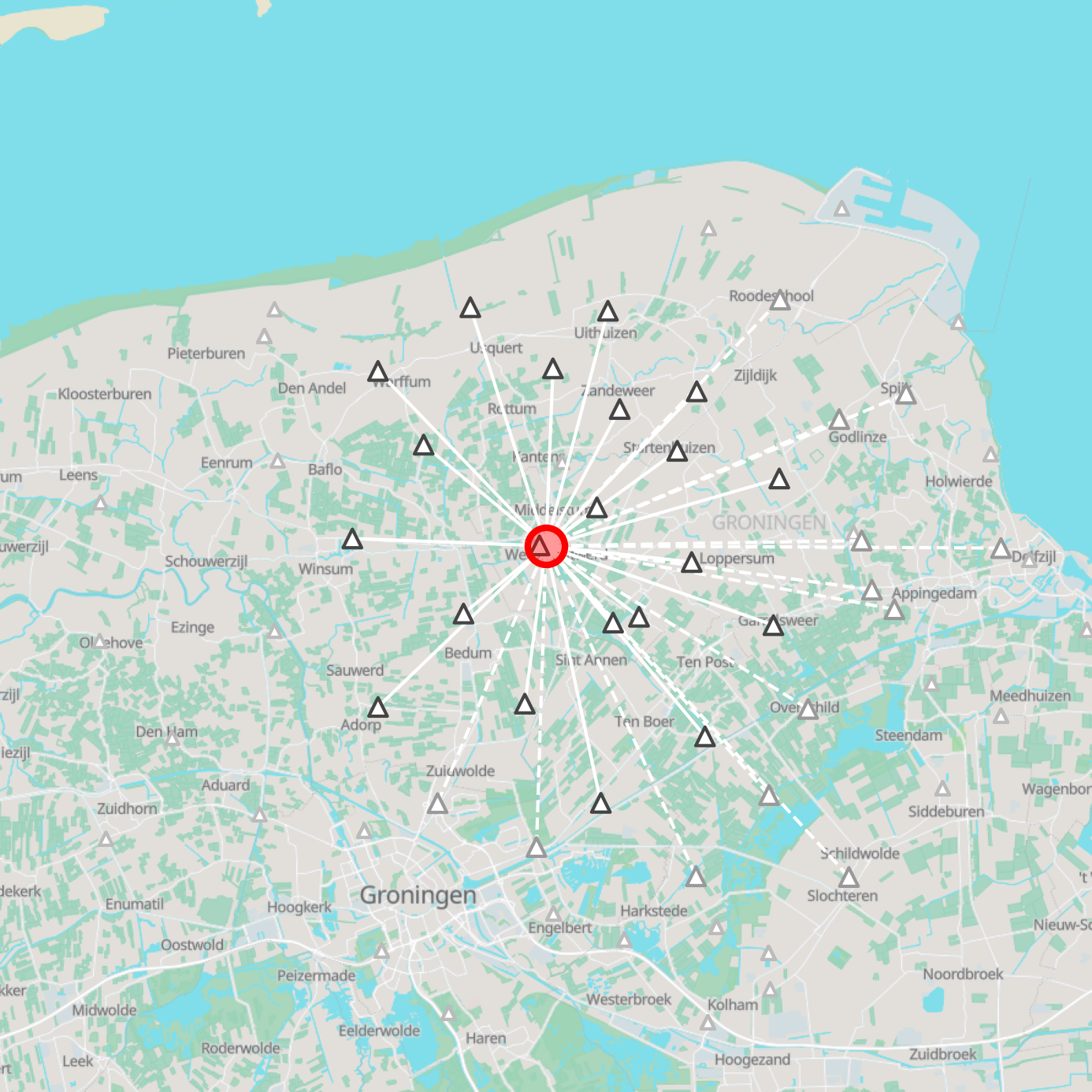
Zaterdag; ICT Belastingdienst in Amerikaanse handen; Dag van Solidariteit met het Palestijnse Volk; Sint Pannekoek; Aardbeving Gaswinning Groningen.

Deze afbeelding heeft een leeg alt-attribuut; de bestandsnaam is dagboek.png

Knipselkrant:


Agenda:

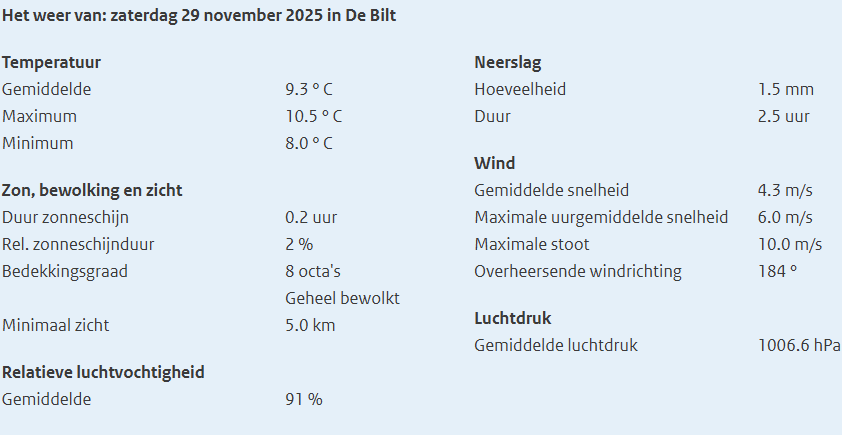
Weer:

KNMI weerrapport

Links:
In de geschiedenis

Vroege Vogels Radio | 30 november 2025 (Radio 1 NPO)

Vroege Vogels is een live-radioprogramma, tv-programma en online community van BNNVARA over natuur en milieu.

In het radioprogramma wordt het gesproken woord omlijst door licht klassieke muziek en salonmuziek. Het radioprogramma werd in 1978 voor het eerst uitgezonden door de VARA en is een van de langst lopende en best beluisterde radioprogramma’s van de publieke omroep. Het wordt elke zondagmorgen uitgezonden tussen 07:00 en 10:00 op NPO Radio 1. De beginmuziek is een bewerking van Vivaldi’s “Piccolo Concerto in C major” (RV 443).

Waar gaat de kleding uit textielbakken heen? Afspraken over de internationale handel in bedreigde dieren. Het verlies en gemis van de wintervirtuele hekken voor koeien en een duurzaam alternatief voor beton. En verder: wintervlinders, broedvogelonderzoek en wat jaarringen zeggen over het klimaat. De column is deze week van Bibi Dumon Tak. Vroege Vogels Radio wordt gepresenteerd door Menno Bentveld vanuit het Groene Huis te Amersfoort.

Links:
Vroege Vogels Radio

CITES : COP20 twentieth meeting of the Conference of the Parties

Niet-Winkeldag / The Day After Black Friday 2025

niet-winkeldag

De Niet-Winkeldag in Nederland en België wordt steeds gehouden op de laatste zaterdag van november.

Black Friday is dé feestdag van het consumentisme. Op en rondom Black Friday voeren meerdere lokale Guerrilla Fashion-groepen over de hele wereld daarom actie in hun eigen regio. Op zaterdag 29 november 2025 organiseert Guerrilla Fashion Nederland de grootste GF-actie ooit: The Day After Black Friday, waarbij ze aan iedereen vragen die niet lokaal meedoet om bij aan te sluiten in winkelcentrum Hoog Catharijne Utrecht. Het zal een In Sight-actie worden: ze geven kleren weg voor de deuren van een twintigtal grote fastfashionwinkels. Om een vuist te maken tegen de fastfashionindustrie in het algemeen en in het bijzonder tegen grote kledingketens zoals Nike, H&M en Zara en eisen dat de politiek en bedrijven de schade van fast fashion écht aanpakken: minder productie, eerlijke lonen en een einde aan misleidende reclame. Gratis kleren voor iedereen, in de strijd tegen klimaatverwoesting, uitbuiting en genocide.

Links:
Vijf XR-acties op één dag in Hoog Catharijne