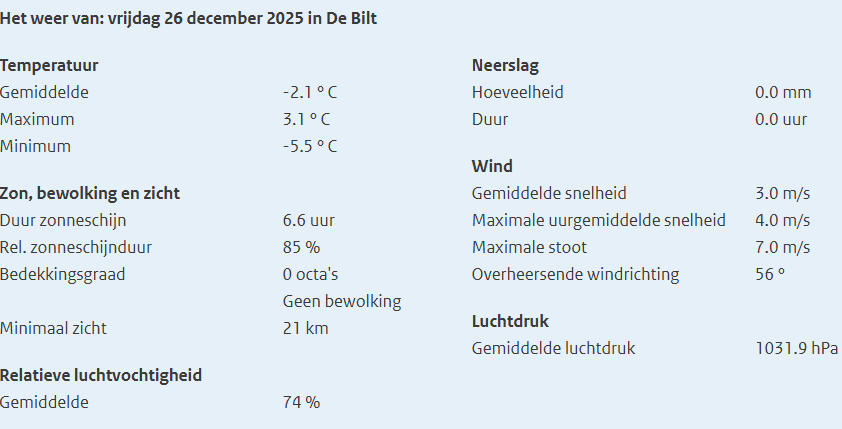
In de geschiedenis
Links:
Wikipedia

Links:
Wikipedia
Zondag; Wat eten we vandaag?; Vroege Vogels; Royal Institution Christmas Lectures.

Wat eten we vandaag?:

Knipselkrant:
Agenda:
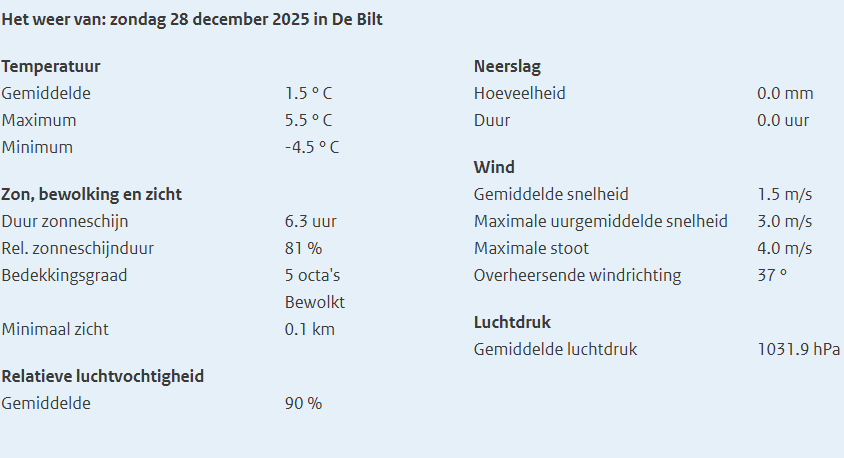
Weer:
Links:
In de geschiedenis

Vroege Vogels is een live-radioprogramma, tv-programma en online community van BNNVARA over natuur en milieu.
In het radioprogramma wordt het gesproken woord omlijst door licht klassieke muziek en salonmuziek. Het radioprogramma werd in 1978 voor het eerst uitgezonden door de VARA en is een van de langst lopende en best beluisterde radioprogramma’s van de publieke omroep. Het wordt elke zondagmorgen uitgezonden tussen 07:00 en 10:00 op NPO Radio 1. De beginmuziek is een bewerking van Vivaldi’s “Piccolo Concerto in C major” (RV 443).
Elke dag deelt internetfenomeen Malcom Jamin een fascinerende dierenverhaal vanuit een ijskoude sloot in Alkmaar. Hoe kwam het Nationaal Burgerberaad Klimaat tot haar advies voor een duurzamer Nederland? De brileider op Texel is mogelijk meest gespotte vogel in Nederland ooit. De mooiste natuurboeken van het moment en een terugblik op de beste radioreportages van het afgelopen jaar. De column is deze week van Bibi Dumon Tak. Vroege Vogels Radio wordt gepresenteerd door Menno Bentveld vanuit het Groene Huis te Amersfoort.
Links:
Vroege Vogels Radio
Links:
Wikipedia

Join EFF’s Rindala Alajaji and Alexis Hancock along with Hana Memon from Gen-Z for Change and Cynthia Conti-Cook from Collaborative Research Center for Resilience for a conversation about what we stand to lose as more and more governments push to age-gate the web.
We’ll break down how these laws work, who they exclude, and how these mandates threaten privacy and free expression for people of all ages. Age verification mandates are spreading fast, and they’re ushering in a new age of online surveillance, censorship, and exclusion for everyone—not just young people. Age-gating laws generally require websites and apps to collect sensitive data from every user, often through invasive tools like ID checks, biometric scans, or other dubious “estimation” methods, before granting them access to certain content or services. Lawmakers tout these laws as the silver-bullet solution to “kids’ online safety,” but in reality, age-verification mandates wall off large swaths of the web, build sweeping new surveillance infrastructure, increase the risk of data breaches and real-life privacy harms, and threaten the anonymity that has long allowed people to seek support, explore new ideas, and organize and build community online. The conversation will be followed by a live Q&A.
Links:
EFFecting Change: The Human Cost of Online Age Verification
Age Verification Is Coming For the Internet. We Built You a Resource Hub to Fight Back
Zaterdag; Wat eten we vandaag?; jaarwisseling; Day of Epidemic Preparedness; Oliebol Van Het Jaar-verkiezing.
Wat eten we vandaag?:

Knipselkrant:
Agenda:
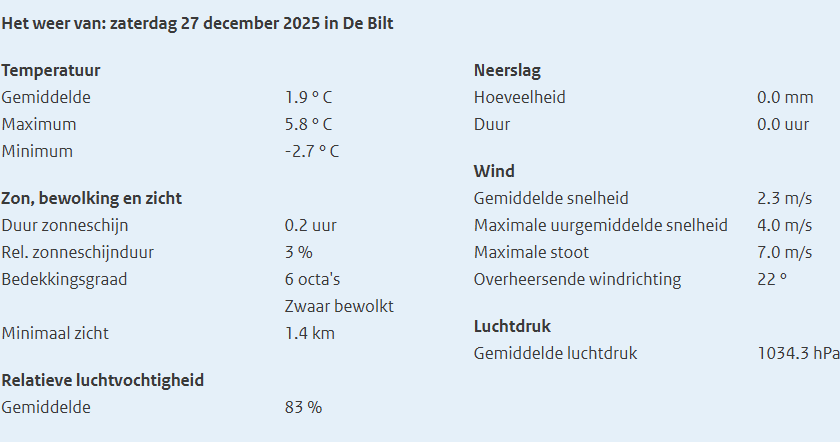
Weer:
Links:
In de geschiedenis

As exemplified by the coronavirus disease (COVID-19) pandemic major infectious diseases and epidemics have devastating impacts on human lives, wreaking havoc on long-term social and economic development.
Global health crises threaten to overwhelm already overstretched health systems, disrupt global supply chains and cause disproportionate devastation of the livelihoods of people, including women and children, and the economies of the poorest and most vulnerable countries. There is an urgent need to have resilient and robust health systems, reaching those who are vulnerable or in vulnerable situations. In the event of the absence of international attention, future epidemics could surpass previous outbreaks in terms of intensity and gravity. There is great need of raising awareness, the exchange of information, scientific knowledge and best practices, quality education, and advocacy programmes on epidemics at the local, national, regional and global levels as effective measures to prevent and respond to epidemics. It is important to strengthen epidemic prevention by applying lessons learned on epidemic management and how to prevent the stoppage of basic services, and to raise the level of preparedness in order to have the earliest and most adequate response to any epidemic that may arise, and recognizing also the value of an integrated One Health approach that fosters integration of human health, animal health and plant health, as well as environmental and other relevant sectors. International cooperation and multilateralism play an important role in the response to epidemics.
We need to stress the significance of partnership and solidarity among every individual, community and State, and regional and international organizations, in all stages of epidemic management, as well as the importance of considering a gender perspective in this regard. The United Nations system, in particular the World Health Organization, plays a pivotal role in coordinating responses to epidemics, in accordance with its mandate, and in supporting national, regional and international efforts to prevent, mitigate and address the impacts of infectious diseases and epidemics in accordance with the goal of advancing the 2030 Agenda. We need to recognize the primary role and responsibility of Governments and the indispensable contribution of relevant stakeholders in tackling global health challenges, especially women, who make up the majority of the world’s health workers. UN member states commit to ensure inclusive, equal and non-discriminatory participation, with special attention to those, who are vulnerable or in vulnerable situations with the highest chance of epidemic infection. The UN General Assembly invites all Member States, organizations of the United Nations system and other global, regional and subregional organizations, the private sector and civil society, including non-governmental organizations, academic institutions, individuals and other relevant stakeholders to observe the International Day of Epidemic Preparedness annually in an appropriate manner and in accordance with national contexts and priorities, through education and awareness-raising activities, in order to highlight the importance of the prevention of, preparedness for and partnership against epidemics.
Links:
Day of Epidemic Preparedness
Links:
Wikipedia

Greenpeace doet wat nodig is om de aarde én haar bewoners vooruit te helpen, de genomineerden voor de Oliebol van het Jaar deden dat nadrukkelijk niet.
Maar wie heeft de boel het meest lopen verzieken? Jullie nomineerden Wiersma, Yeşilgöz, Wilders, van der Plas en Hermans. Maar er kan er maar 1 de grootste oliebol zijn. Jij kiest: wie wordt de Oliebol van het Jaar?