#HumanTrafficking #EndHumanTrafficking World Day Against Trafficking in Persons / Werelddag tegen Mensenhandel 2023

Human trafficking is a crime that exploits children, men and women for numerous purposes including forced labour and sex.

Since 2003 the UN Office on Drugs and Crime (UNODC) has collected information on about 225,000 victims of trafficking detected worldwide. Globally countries are detecting and reporting more victims, and are convicting more traffickers. This can be the result of increased capacity to identify victims and/or an increased number of trafficked victims. Every country in the world is affected by human trafficking, whether as a country of origin, transit, or destination for victims. Traffickers the world over continue to target women and girls. The vast majority of detected victims of trafficking for sexual exploitation and 35 per cent of those trafficked for forced labour are female.

Conflict further exacerbates vulnerabilities, with armed groups exploiting civilians and traffickers targeting forcibly displaced people. Data also shows that trafficking happens all around us as the share of persons trafficked within their own country has doubled in recent years to 58 per cent of all detected victims, according to the 2018 UNODC Global Report on Trafficking in Persons. In 2010, the General Assembly adopted the Global Plan of Action to Combat Trafficking in Persons, urging Governments worldwide to take coordinated and consistent measures to defeat this scourge. The Plan calls for integrating the fight against human trafficking into the UN’s broader programmes in order to boost development and strengthen security worldwide. One of the crucial provisions in the Plan is the establishment of a UN Voluntary Trust Fund for victims of trafficking, especially women and children.

The Trust Fund facilitates effective, on-the-ground assistance and protection to victims of trafficking, through grants to specialized NGOs. It aims to prioritize victims coming from a context of armed conflict and those identified among large refugee and migration flows. In 2013, the General Assembly held a high-level meeting to appraise the Global Plan of Action. Member States also adopted resolution A/RES/68/192 and designated July 30 as the World Day against Trafficking in Persons. This resolution declared that such a day was necessary to “raise awareness of the situation of victims of human trafficking and for the promotion and protection of their rights.”

In September 2015, the world adopted the 2030 Sustainable Development Agenda and embraced goals and targets on trafficking in persons. These goals call for an end to trafficking and violence against children; as well as the need for measures against human trafficking, and they strive for the elimination of all forms of violence against and exploitation of women and girls. Another important development is the UN Summit for Refugees and Migrants, which produced the groundbreaking New York Declaration. Of the nineteen commitments adopted by countries in the Declaration, three are dedicated to concrete action against the crimes of human trafficking and migrant smuggling.
Links:
World Day Against Trafficking in Persons – 30 July

Day of Friendship / Dag van de Vriendschap 2023

Our world faces many challenges, crises and forces of division — such as poverty, violence, and human rights abuses — among many others — that undermine peace, security, development and social harmony among the world’s peoples.

To confront those crises and challenges, their root causes must be addressed by promoting and defending a shared spirit of human solidarity that takes many forms — the simplest of which is friendship. Through friendship — by accumulating bonds of camaraderie and developing strong ties of trust — we can contribute to the fundamental shifts that are urgently needed to achieve lasting stability, weave a safety net that will protect us all, and generate passion for a better world where all are united for the greater good.

The Day of Friendship (IDF) is an initiative that follows on the proposal made by UNESCO and taken up by the UN General Assembly in 1997 (A/RES/52/13), which defined the Culture of Peace as a set of values, attitudes and behaviours that reject violence and endeavour to prevent conflicts by addressing their root causes with a view to solving problems.

In its resolution of 1998, proclaiming the International Decade for a Culture of Peace and Non-Violence for the Children of the World (2001–2010) (A/RES/53/25), the General Assembly recognized that enormous harm and suffering are caused to children through different forms of violence. It emphasized that the promotion of a culture of peace and non-violence should be instilled in children through education. If children learn to live together in peace and harmony that will contribute to the strengthening of international peace and cooperation.

The Declaration and Programme of Action on a Culture of Peace (A/RES/53/243) adopted in 1999 set 8 areas of action for nations, organizations and individuals to undertake in order for a culture of peace to prevail:

  •     foster a culture of peace through education;
  •     promote sustainable economic and social development;
  •     promote respect for all human rights;
  •     ensure equality between women and men;
  •     foster democratic participation;
  •     advance understanding, tolerance and solidarity;
  •     support participatory communication and the free flow of information and knowledge;
  •     promote international peace and security.

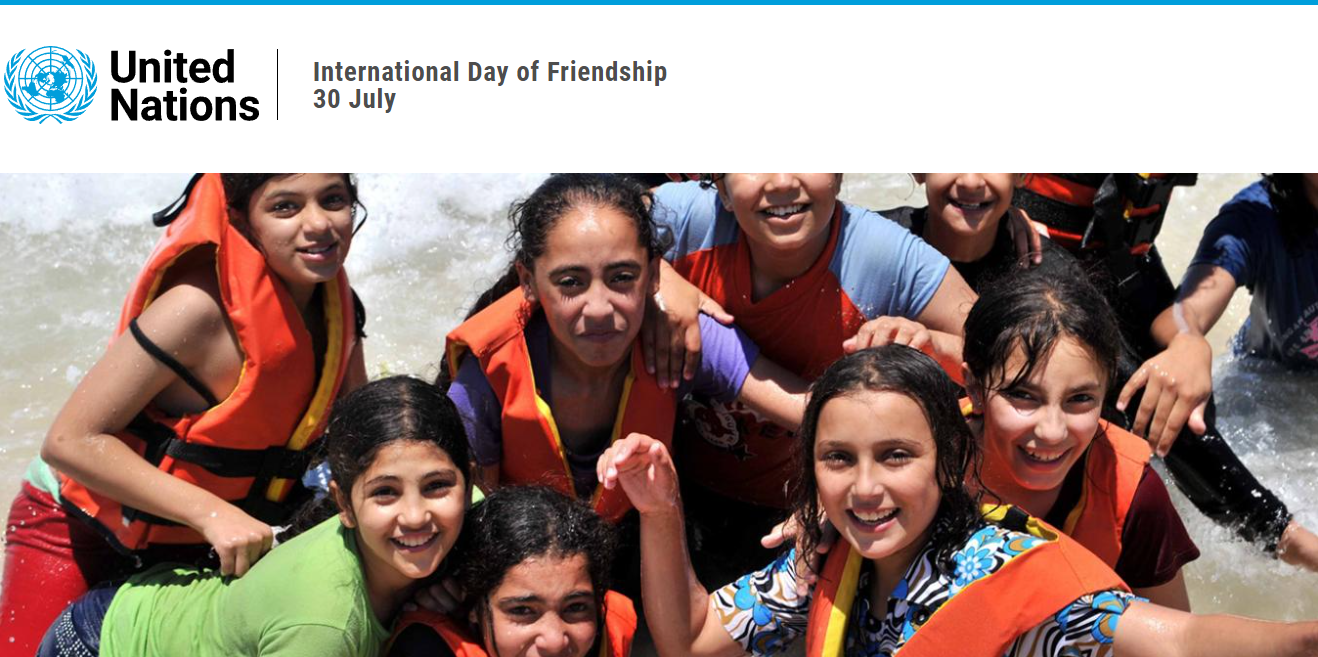
The IDF is also based on the recognition of the relevance and importance of friendship as a noble and valuable sentiment in the lives of human beings around the world. The IDF was proclaimed in 2011 by the UN General Assembly with the idea that friendship between peoples, countries, cultures and individuals can inspire peace efforts and build bridges between communities. The resolution (A/RES/65/275) places particular emphasis on involving young people, as future leaders, in community activities that include different cultures and promote international understanding and respect for diversity.

The Day is also intended to support the goals and objectives of the Declaration and Programme of Action on a Culture of Peace and the International Decade for a Culture of Peace and Non-Violence for the Children of the World (2001-2010). To mark the International Day of Friendship the UN encourages governments, international organizations and civil society groups to hold events, activities and initiatives that contribute to the efforts of the international community towards promoting a dialogue among civilizations, solidarity, mutual understanding and reconciliation.

Links:
International Day of Friendship – 30 July

#UnfoldTheUniverse #JWST James Webb Space Telescope / Henrietta Leavitt Teleskop

James Webb Space Telescope

The James Webb Space Telescope (JWST or “Webb” / called Henrietta Leavitt Teleskop by german scientists Harald Lesch and Josef M. Gaßner) is a space telescope to succeed the Hubble Space Telescope as NASA’s flagship astrophysics mission.

The JWST will provide improved infrared resolution and sensitivity over Hubble, and will enable a broad range of investigations across the fields of astronomy and cosmology, including observing some of the most distant events and objects in the universe, such as the formation of the first galaxies. The primary mirror of the JWST, the Optical Telescope Element, is composed of eighteen 1.32 metres hexagonal mirror segments made of gold-plated beryllium which combine to create a 6.5 metres diameter mirror that is considerably larger than the Hubble’s 2.4 metres mirror. Unlike the Hubble, which observes in the near ultraviolet, visible, and near infrared (0.1 to 1 μm) spectra, the JWST will observe in a lower frequency range, from long-wavelength visible light through mid-infrared (0.6 to 28.3 μm), which will allow it to observe high redshift objects that are too old and too distant for the Hubble to observe.

The telescope must be kept very cold in order to observe in the infrared without interference, so it will be deployed in space near the Earth–Sun L2 Lagrangian point, and a large sunshield made of silicon-coated and aluminium-coated Kapton will keep its mirror and instruments below 50 Kelvin (K). The JWST is being developed by NASA — with significant contributions from the European Space Agency and the Canadian Space Agency — and is named for James E. Webb, who was the administrator of NASA from 1961 to 1968 and played an integral role in the Apollo program. The prime contractor is Northrop Grumman. Development began in 1996 for a launch that was initially planned for 2007 and a 500-million-dollar budget, but the project has had numerous delays and cost overruns, and underwent a major redesign in 2005. The JWST’s construction was completed in late 2016, after which its extensive testing phase began. The launch date was Dec. 25, 2021.


Links:
James Webb Space Telescope

James Webb Space Telescope -ESA

Webb Home

Webb Space Telescope

NASA’s James Webb Space Telescope – Flickr

JADES will go deeper than the Hubble Deep Fields

James Webb Space Telescope / Henrietta Leavitt Teleskop – playlist

NASA’s Webb In Full Focus, Ready for Instrument Commissioning

Nieuwe ruimtetelescoop kijkt naar het begin van de tijd – of net ietsje later

Webb is now orbiting L2

Photons Received: Webb Sees Its First Star – 18 Times

NASA emails reveal internal discussions over calls to rename James Webb Space Telescope: report

First Images From NASA’s Webb Space Telescope Coming Soon

No, the Big Bang theory is not ‘broken.’ Here’s how we know

Webb Looks for Fomalhaut’s Asteroid Belt and Finds Much More

James Webb spot monsterachtige waterpluim op Enceladus

Webb Space Telescope’s First Year of Science Celebration

Webb Discovers Methane, Carbon Dioxide in Atmosphere of K2-18 b

NASA’s James Webb Space Telescope (Flickr)

The (Unofficial) JWST Exoplanet Dashboard

JWST facing potential cuts to its operational budget

Strongest hints yet of biological activity outside the solar system / New Constraints on DMS and DMDS in the Atmosphere of K2-18 b from JWST MIRI – publication

Meteorenzwerm δ-Aquariden in juli 2023

De meteorenzwerm δ-Aquariden bereikt op zaterdag 29 juli 2023, rond 09:00, zijn maximum.

De meteoren van de δ-Aquariden hebben lange sporen, zijn traag en helder. Wanneer de radiant in het zenit zou staan, zouden er van deze zwerm naar verwachting gemiddeld zo’n 18 meteoren per uur vallen. De radiant van de zwerm staat rond 04:00 in het hoogste punt aan de hemel, op 21° boven de horizon. Het beste moment om δ-Aquariden waar te nemen is op 30 juli rond 03:00. De radiant van de zwerm staat dan ongeveer 20° boven de zuidzuidoostelijke horizon, dus niet zeer gunstig. Er is dan bij ons ieder uur niet meer dan één meteoor zichtbaar van deze zwerm. In totaal zijn er, door meteoren van andere zwermen en sporadische meteoren, bij donkere en heldere hemel circa 11–19 meteoren per uur zichtbaar. De Maan is voor ongeveer 90% verlicht en is een flinke stoorzender; alleen de helderste meteoren zijn hierdoor dit jaar zichtbaar. De Maan gaat om 02:09 onder, en stoort daarna natuurlijk niet. Rond 05:15 gaat het schemeren en om 05:57 komt de Zon op.

Links:
Meteorenzwerm δ-Aquariden in juli 2023

Global Tiger Day / Wereld Tijgerdag 2023

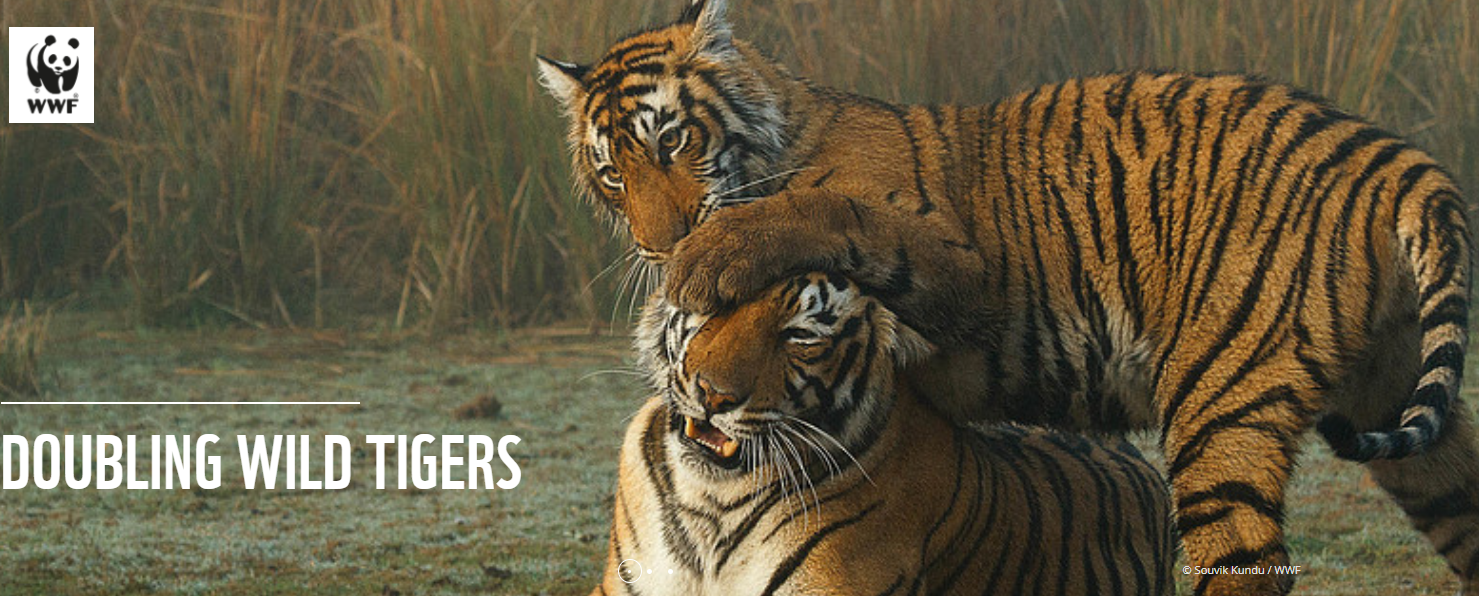
Global Tiger Day is an annual celebration to raise awareness for tiger conservation, held annually on 29 July. It was created in 2010 at the Saint Petersburg Tiger Summit.

The goal of the day is to promote a global system for protecting the natural habitats of tigers and to raise public awareness and support for tiger conservation issues. Around 3,900 tigers (in 2019) remain in the wild, but much more work is needed to protect this species if we are to secure its future in the wild. After a century of decline, overall wild tiger numbers are starting to tick upward. In some areas, including much of Southeast Asia, tigers are still in crisis and declining in number. Based on the best available information, tiger populations are stable or increasing in India, Nepal, Bhutan, Russia and China.


Links:
Global Tiger Day

Tiger summit aims to double numbers

1st Asia Ministerial Conference on Tiger Conservation

#HeteINGzomertoer

Op 21 juni 2023, de eerste dag van de zomer, maakte Money Rebellion – onderdeel van Extinction Rebellion – de HETE ING ZOMERTOER bekend, een reeks van zaterdagacties bij ING-kantoren door heel Nederland, voor de hele duur van de zomer, dus tot 21 september.

Reden voor de acties: ING blijft ondanks aanhoudend protest en een escalerende klimaat- en biodiversiteitscrisis op grote schaal (gemiddeld 9 miljard euro per jaar) de fossiele industrie financieren. “ING draagt bij aan het steeds heter worden van de aarde. Deze zomer maken wij daarom voor ING zelf extra heet.” Honderden rebellen hebben zich aangesloten bij de Hete ING Zomertoer. Elke zaterdag is in één of meer steden een hinderlijke maar altijd vreedzame actie bij of in een ING-kantoor. “We maken niet bekend waar we op welke zaterdag actie voeren, en ook niet wat de actie inhoudt. Dat kan verschillen. Maar de toer gaat wel door heel het land”, zegt woordvoerder Yolande Schuur. “We willen dat ING het onaangenaam heet krijgt, net zoals onze planeet, onze oceanen en onze bossen. We willen dat ING zich realiseert dat nu al mensen sterven door de opwarming van de aarde. Daarom komen we steeds terug, net zo lang tot ING stopt met aanjagen van de klimaatcrisis.”

Links:
Hete ING zomertoer