Monitor Duurzaam Leven 2023 – publicatie

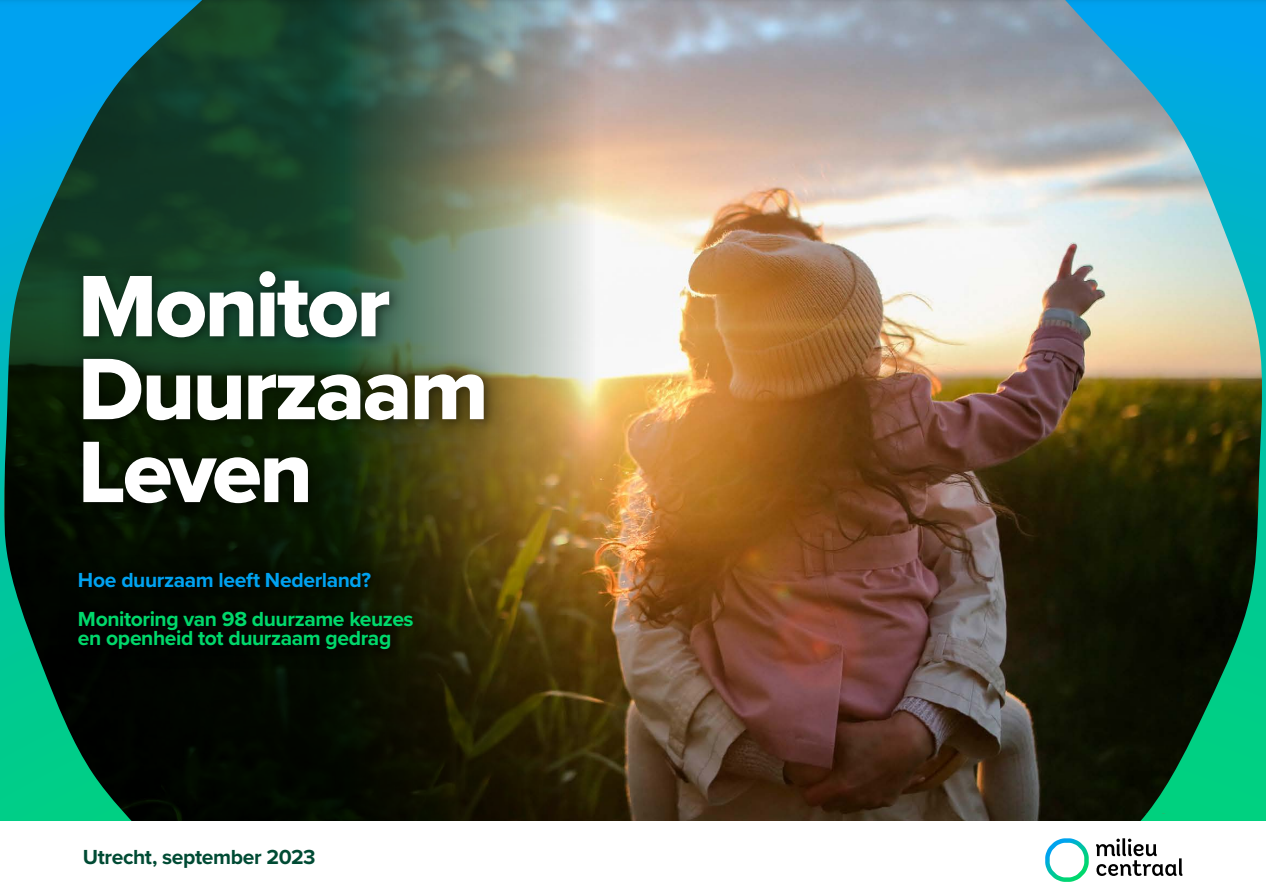
Echt duurzaam leven is in de praktijk nog een te grote opgave voor veel mensen, blijkt uit het consumentenonderzoek Monitor Duurzaam Leven van voorlichtingsorganisatie Milieu Centraal.

De Monitor Duurzaam Leven schetst een uniek beeld van de stand van duurzaam Nederland. Het onderzoek combineert gedetailleerde informatie over 98 duurzame gedragingen die mensen al wel of niet vertonen, hun houding ten opzichte van duurzame gedragingen die ze nog niet vertonen én de milieu-impact van dat gedrag. De monitor wordt iedere twee jaar herhaald, waardoor trends gemonitord kunnen worden. Milieu Centraal onderzocht het duurzame gedrag en de openheid tot het duurzame gedrag van 98 gedragingen. Ruim 4000 respondenten hebben de vragenlijst ingevuld, verdeeld over 8 ‘blokken’ waarbij elk blok staat voor een set aan duurzame gedragingen. Het werd uitgezet door middel van een online vragenlijst onder het StemPunt-panel van Motivaction in mei 2023. De resultaten zijn na weging representatief voor Nederland. De resultaten uit de vragenlijst zijn gecombineerd met impactberekeningen die onder andere door Milieu Centraal zijn uitgevoerd. De gemonitorde thema’s zijn de volgende:
  • Wonen (energiegebruik, woonoppervlakte en duurzaam bouwen)
  • Mobiliteit (vakantie en dagelijkse mobiliteit)
  • Circulaire omgang met spullen (circulaire economie)
  • Voeding

Links:
Monitor Duurzaam Leven 2023

Actie om de zorgverzekeraar Zilveren Kruis Achmea op te roepen de afbraak van de zorg te stoppen

Tweederde van de jongeren tussen de 18 en 29 jaar mijden zorg of stellen zorg uit om kosten te kunnen besparen, ze gaan massaal niet meer naar de fysiotherapeut en niet meer naar de tandarts.

Een Nationaal Zorgfonds zonder eigen risico, met fysiotherapie en mondzorg in het basispakket – het is harder nodig dan ooit. De afgelopen periode werd weer duidelijk hoe failliet dit zorgsysteem is. De zorg is uit handen gegeven aan de zorgverzekeraars en de zorgverzekeraars breken ondertussen de ziekenhuiszorg af. Door het hele land is de strijd gestart voor het behoud van streekziekenhuizen. Terwijl mensen zorg dichtbij nodig hebben, vinden zorgverzekeraars de streekziekenhuizen niet ‘rendabel’ genoeg.

In Zoetermeer dreigen de afdelingen geboortezorg en de spoedzorg te verdwijnen. En ook het Gelre ziekenhuis in Zutphen wordt slachtoffer van dit systeem. De verloskunde is gesloten, cardiologie en andere zorg volgt. Zorgverleners zijn samen met bewoners in actie voor behoud van hun ziekenhuis en tegen het besluit van de zorgverzekeraar om de zorg uit te kleden. Het Nationaal Zorgfonds steunt hun strijd van harte.

We weten dat verschillende Tweede Kamerleden en de Provinciale Staten van Gelderland zich tegen de afbraak van het Gelre ziekenhuis en andere ziekenhuiszorg hebben uitgesproken en zich verzetten tegen bijvoorbeeld het besluit van Zilveren Kruis Achmea om het Gelre ziekenhuis uit te kleden. We roepen de andere partijen op om dit ook te doen, en zich uit te spreken vóór een Nationaal Zorgfonds.

Wil je de actievoerders uit Zutphen en Zoetermeer meehelpen voor het behoud van hun ziekenhuis? Op 12 juni is er een actie bij het hoofdkantoor van Zilveren Kruis Achmea. De actievoerders komen daar, samen met de SP in actie om de zorgverzekeraar op te roepen de afbraak te stoppen. Verzamelen om 14.00 uur bij de vooringang van het treinstation op Leiden Centraal. Samen laten we zien dat het anders kan, en dat het tijd is voor een Nationaal Zorgfonds. Ben je erbij?

Links:
Nationaal ZorgFonds

De strijd voor het Nationaal Zorgfonds gaat door

Informatie over ongecontracteerde zorg schiet tekort, risico op hoge zorgrekening / Rapport zorgverzekering kiezen

Day for the Total Elimination of Nuclear Weapons 2023

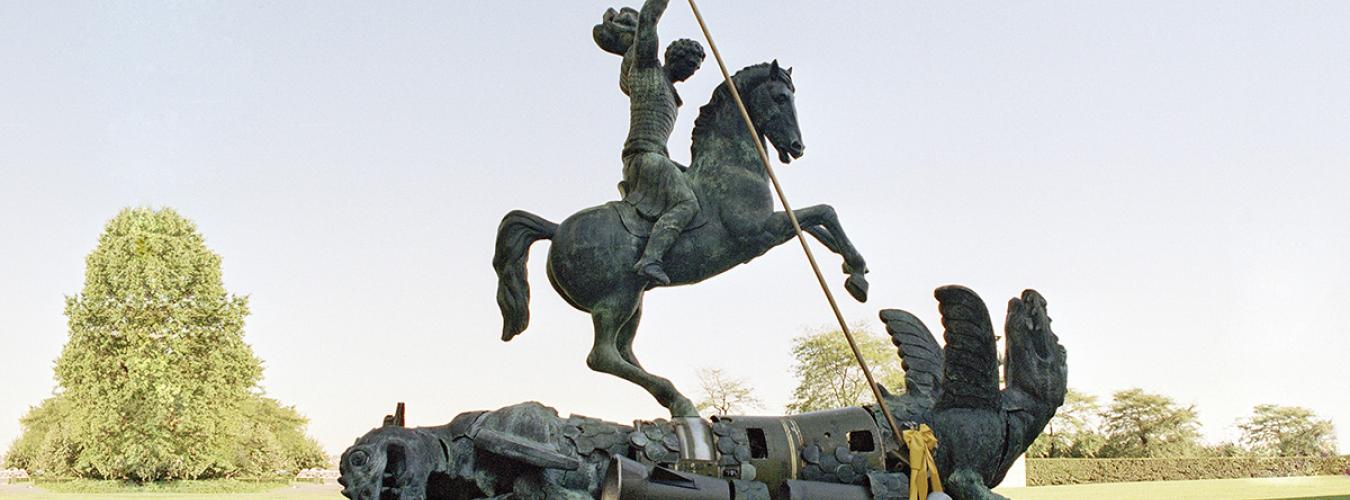
The General Assembly commemorates 26 September as the International Day for the Total Elimination of Nuclear Weapons, this Day provides an occasion for the world community to reaffirm its commitment to global nuclear disarmament as a priority.

It provides an opportunity to educate the public – and their leaders – about the real benefits of eliminating such weapons, and the social and economic costs of perpetuating them. Achieving global nuclear disarmament is one of the oldest goals of the United Nations. It was the subject of the General Assembly’s first resolution in 1946, which established the Atomic Energy Commission, which was dissolved in 1952, with a mandate to make specific proposals for the control of nuclear energy and the elimination of atomic weapons and all other major weapons adaptable to mass destruction. The United Nations has been at the forefront of many major diplomatic efforts to advance nuclear disarmament since. In 1959, the General Assembly endorsed the objective of general and complete disarmament. In 1978, the first Special Session of the General Assembly Devoted to Disarmament further recognized that nuclear disarmament should be the priority objective in the field of disarmament. Every United Nations Secretary-General has actively promoted this goal.

Yet, today nearly 14,000 nuclear weapons remain. Countries possessing such weapons have well-funded, long-term plans to modernize their nuclear arsenals. More than half of the world’s population still lives in countries that either have such weapons or are members of nuclear alliances. While the number of deployed nuclear weapons has appreciably declined since the height of the Cold War, not one nuclear weapon has been physically destroyed pursuant to a treaty. In addition, no nuclear disarmament negotiations are currently underway. Meanwhile, the doctrine of nuclear deterrence persists as an element in the security policies of all possessor states and many of their allies. The international arms-control framework that contributed to international security since the Cold War, acted as a brake on the use of nuclear weapons and advanced nuclear disarmament, has come under increasing strain. Most recently, on 2 August 2019, the United States’ withdrawal spelled the end of the Intermediate-Range Nuclear Forces Treaty, through with the United States and the Russian Federation had previously committed to eliminating an entire class of nuclear missiles.

Frustration has been growing amongst Member States regarding what is perceived as the slow pace of nuclear disarmament. This frustration has been put into sharper focus with growing concerns about the catastrophic humanitarian consequences of the use of even a single nuclear weapon, let alone a regional or global nuclear war. Commemorating this Day at the United Nations is especially important, given its universal membership and its long experience in grappling with nuclear disarmament issues. It is the right place to address one of humanity’s greatest challenges; achieving the peace and security of a world without nuclear weapons.

Links:
Day for the Total Elimination of Nuclear Weapons

Tons of uranium missing from Libyan site, IAEA tells member states

Spinocerebellar Ataxia Awareness Day / Ataxie Voorlichtingsdag 2023

Spinocerebellar Ataxia Awareness Day (IAAD) is on September 25th of each year.

It is a coordinated effort from individuals and Spinocerebellar Ataxia (Ataxia, SCA) organizations around the world to help shed light on this rare disease. Ataxia, is a progressive, degenerative, genetic disease with multiple types, each of which could be considered a neurological condition in its own right. SCA is hereditary, progressive, degenerative, and often fatal. There is no known effective treatment or cure. SCA can affect anyone of any age. The disease is caused by either a recessive or dominant gene. In many cases people are not aware that they carry a relevant gene until they have children who begin to show signs of having the disorder.

Links:
Ataxia Awareness Day

Spinocerebellaire ataxie

Ataxie – Hersenstichting