World #DrowningPrevention Day 2026

World Drowning Prevention Day, declared through the April 2021 UN General Assembly Resolution A/RES/75/273 “Global drowning prevention”, is held annually on 25 July.

Every year, an estimated 236,000 people drown, making drowning a major public health problem worldwide. Drowning is one of the leading causes of death globally for children and young people aged 1-24 years. Drowning is the 3rd leading cause of unintentional injury death, accounting for 7% of all injury-related deaths. The global burden of death from drowning is felt in all economies and regions, however:

  • low- and middle-income countries account for over 90% of unintentional drowning deaths;
  • over half of the world’s drowning occurs in the WHO Western Pacific Region and WHO South-East Asia Region;
  • drowning death rates are highest in the WHO Western Pacific Region, and are 27-32 times higher than those seen in the United Kingdom or Germany, respectively.

Links:
World Drowning Prevention Day

WHO’s work on drowning prevention

A guide to preventing drowning

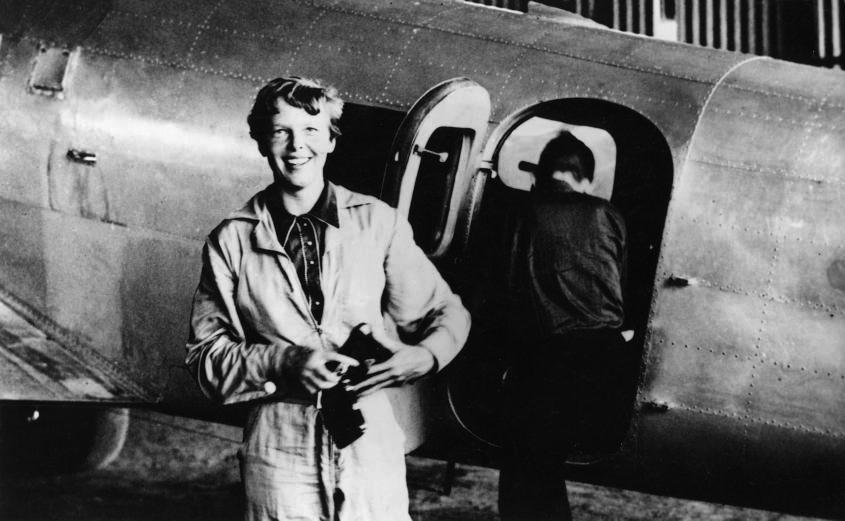
Amelia Earhart Day 2026

Amelia Earhart (Atchison, 24 juli 1897 – Grote Oceaan?, vermist sinds 2 juli 1937, doodverklaard op 5 januari 1939) was een beroemde Amerikaanse vliegenierster.

In januari 1935 werd ze de eerste persoon die solo de Grote Oceaan overvloog, maar ze werd vooral bekend doordat ze als eerste vrouw in 1932 als piloot de Atlantische Oceaan overstak. Die tocht legde ze eveneens solo af. In 1928 was ze die oceaan al als passagier overgestoken. Ook daarin was ze de eerste vrouw. Begin juli 1937 begon ze samen met navigator Fred Noonan aan wat de langste vlucht ter wereld moest worden. De eindbestemming van de 47.000 kilometer lange vlucht werd echter nooit bereikt. Wat er zich precies heeft afgespeeld, is tot op heden onbekend.

Links:
Exclusief: de zoektocht naar het vliegtuig van Amelia Earhart

Wrak vliegtuig waarmee luchtvaartpionier Amelia Earhart bijna 90 jaar geleden verdween mogelijk gevonden

Vroege Vogels Radio | 26 juli 2026 (Radio 1 NPO)

Vroege Vogels

Vroege Vogels is een live-radioprogramma, tv-programma en online community van BNNVARA over natuur en milieu.

In het radioprogramma wordt het gesproken woord omlijst door licht klassieke muziek en salonmuziek. Het radioprogramma werd in 1978 voor het eerst uitgezonden door de VARA en is een van de langst lopende en best beluisterde radioprogramma’s van de publieke omroep. Het wordt elke zondagmorgen uitgezonden tussen 07:00 en 10:00 op NPO Radio 1. De beginmuziek is een bewerking van Vivaldi’s “Piccolo Concerto in C major” (RV 443).

Bioloog Kees Moeliker combineert al jaren droge humor met scherpe kennis over de natuur. Nu hij afscheid neemt als directeur van Het Natuurhistorisch te Rotterdam gaan we met hem de diepte in. Friesland is de eerste provincie die de geur van het landschap heeft opgenomen in haar Erfgoed. Maar hoe ruikt Friesland? De lage waterstanden maken duidelijk dat we rekening moeten houden met zowel overstromingen als droogvallende rivieren. Verder in de uitzending: veschillende vogelapps, succesverhaal van de houting, natuurboeken met Alexander Reeuwijk en de natuur rondom Saba. De column is van Bibi Dumon Tak. Vroege Vogels Radio wordt gepresenteerd door Jan van Poppel vanuit het Groene Huis in Amersfoort.

Links:
Vroege Vogels Radio

The Astronomer Royal on alien oceans | with Michele Dougherty (TV RI)

The Astronomer Royal on alien oceans | with Michele Dougherty

Could there be oceans (and even life) hiding beneath the icy surfaces of the moons of Jupiter and Saturn?

For most of the history of planetary science, the search for habitable worlds focused on planets close to the Sun, where surface water can stay liquid. But data from NASA’s Cassini spacecraft at Saturn and the Galileo spacecraft at Jupiter has overturned that assumption, revealing that several icy moons may be hiding vast oceans of liquid water beneath their frozen crusts. In this Discourse, Michele Dougherty — the first female Astronomer Royal — takes us through the Cassini mission’s most extraordinary discovery: a plume of water vapour erupting from the south pole of Saturn’s tiny moon Enceladus, and what it revealed about the possibility of life beyond Earth. She then looks ahead to ESA’s JUICE mission, launched in 2023, which is now on its way to spend years studying Jupiter’s giant moons Ganymede, Callisto and Europa — all suspected to hide oceans of their own.

Links:
Astronomer Royal Michele Dougherty asks whether other bodies in the solar system could support life

Earth Overshoot Day 2026

Earth Overshoot Day

Earth Overshoot Day (EOD) 2026 lands on July 30, the date when humanity will have used up nature’s entire annual budget of ecological resources and services, according to Global Footprint Network, the international sustainability organization that pioneered the Ecological Footprint, and York University, which now produces the National Footprint and Biocapacity Accounts under the governance of FoDaFo.

Currently, humanity is using nature 73% faster than Earth’s ecosystems can regenerate, meaning this overshoot is equivalent to using 1.73 Earths. It is the highest level of global overshoot in human history. This level of overuse is possible because one can deplete natural capital. Such depletion compromises long-term resource security. The consequences are visible in deforestation, soil erosion, biodiversity loss, and the accumulation of CO₂ in the atmosphere, contributing to more frequent extreme weather events and declining food production. EOD is the calculated calendar date on which humanity’s resource consumption for the year exceeds Earth’s capacity to regenerate those resources that year. The term “overshoot” represents the level by which human population’s demand overshoots the sustainable amount of biological resources regenerated on Earth. When viewed through an economic perspective, the annual EOD represents the day by which the planet’s annual regenerative budget is spent, and humanity enters environmental deficit spending. EOD is calculated by dividing the world biocapacity (the amount of natural resources regenerated by Earth that year), by the world ecological footprint (humanity’s consumption of Earth’s natural resources for that year), and multiplying by 365 (366 in leap years), the number of days in a year:

EOD is calculated by Global Footprint Network and is a campaign supported by dozens of other nonprofit organizations. Information about Global Footprint Network’s calculations and national Ecological Footprints are available online.

Links:
Earth Overshoot Day 2026 falls on July 30

Klimaatverschuivingsdag

2026-07-23, Lief dagboek

Donderdag; Wat eten we vandaag?; AI; Kwaku; Klimaatopwarming; Wereld Sjögren’s Dag; Sit-in van Rijksambtenaren; EFFecting Change Livestream; Sit-ins op stations; Comic-Con.

Deze afbeelding heeft een leeg alt-attribuut; de bestandsnaam is dagboek.png

Wat eten we vandaag?:

Klik op afbeelding voor origineel

Knipselkrant:


Agenda:

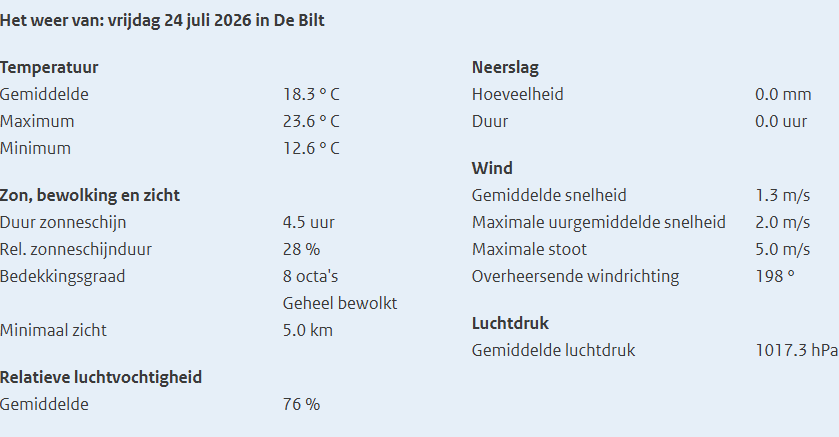
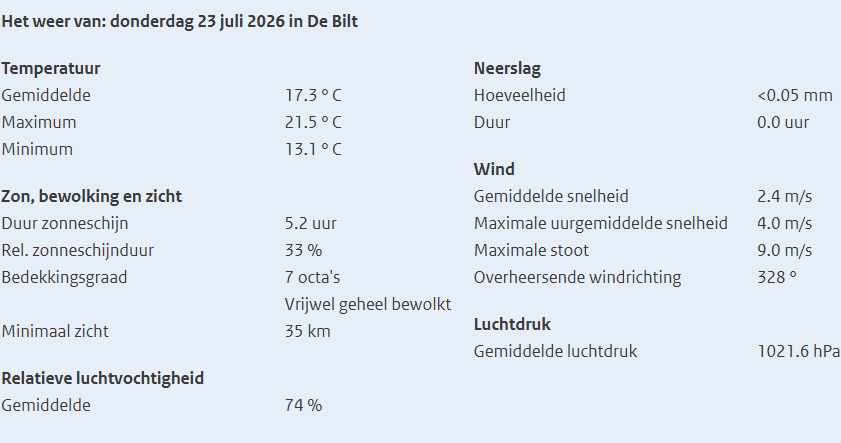
Weer:

Links:
In de geschiedenis