#WWD2024 United Nations World Wildlife Day 2024

United Nations World Wildlife Day (WWD) is celebrated every year on 3 March to celebrate wild animals and plants.

On 20 December 2013, at its 68th session, the United Nations General Assembly (UNGA), in its resolution UN 68/205, decided to proclaim 3 March, the international day of the adoption of the Convention on International Trade in Endangered Species of Wild Fauna and Flora (CITES) on the planet raise awareness and benefits fauna and flora in 1973, as World Wildlife Day. The commemoration was proposed by Thailand to celebrate and raise awareness of the world’s wild fauna and flora. Theme 2024: “Connecting people and planet: exploring digital innovation in wildlife conservation”

Links:
World Wildlife Day

United Nations World Wildlife Day

De wereld van de Chinezen – start serie (TV NPO 2 / NPOstart)

De wereld van de Chinezen is een Nederlands reportageprogramma van de VPRO, waarin Ruben Terlou onderzoekt welke invloed China heeft buiten de eigen landsgrenzen en hoe geopolitieke relaties individuele levens kunnen beïnvloeden.

China en de Chinezen veroveren de wereld. Niet met een leger maar met investeringen, infrastructurele projecten en met heel veel Chinezen die buiten China wonen en werken. Of het nu in Azië, Oceanië of Latijns-Amerika is, overal drukken Chinezen hun stempel op de wereld. In het tweede seizoen van ‘De wereld van de Chinezen’ zet Ruben Terlou zijn zoektocht naar de invloed van China voort.

Links:
De wereld van de Chinezen – alle afleveringen

De wereld van de Chinezen – over de serie

Waarschuwingsstelsel sirene test / #Luchtalarm – dit is een noodgeval! / #AlarmEuropa / #Ballenalarm


In heel Nederland klinkt op elke eerste maandag van de maand om 12:00 het luchtalarm, in juni en december wordt tevens een NL-Alert testbericht verstuurd naar mobiele (GSM) telefoons.

Het luchtalarmsysteem werd oorspronkelijk tijdens de Koude Oorlog opgezet in het kader van de civiele verdediging. In Nederland werd in 1993 besloten het te vervangen door een moderner systeem. Het principe bleef echter gelijk: sirenes die in een bepaald gebied de bevolking konden waarschuwen bij grote calamiteiten. Ook de maandelijkse testen, die aanvankelijk na de val van de muur in 1989 waren stopgezet, werden hervat. Verspreid over het hele land staan er ongeveer 4278 sirenes, die draadloos en onafhankelijk van elkaar aangezet kunnen worden vanuit de alarmcentrale van de regionale brandweer. De bevolking is van tevoren geïnstrueerd om in het geval dat de sirene afgaat naar binnen te gaan, ramen en deuren te sluiten en radio of televisie aan te zetten. Op de aangewezen calamiteitenzenders kan de overheid verdere aanwijzingen geven, bijvoorbeeld dat een gebied geëvacueerd zal worden.

Extinction Rebellion maakt er met de actie Luchtalarm – dit is een noodgeval! telkens met kleurrijke vlaggen en banners een mooi maar bloedserieus moment van. Met deze actie wil Extinction Rebellion NL aandacht vragen voor de klimaatcrisis en de biodiversiteitscrisis en duidelijk maken dat het al vijf over twaalf is. Sluit je voor een paar minuten aan bij deze actie en laat zien dat je ook vindt dat de overheid in actie moet komen om een leefbare toekomst voor ons en onze kinderen te waarborgen. Kom langs en doe mee! Iedereen is welkom. Neem borden mee, we delen tijdens de actie ook patches uit waarmee we onze boodschap kunnen uitdragen.

‘Het Ballenalarm‘ is een ludieke actie waarmee de Stichting Zaadbalkanker vraagt om extra aandacht voor zaadbalkanker, ook wel teelbalkanker genoemd. Het idee is dat mannen op de eerste maandag van de maand om 12:00 – als de maandelijkse alarmsirenes loeien – hun teelballen checken, en dit elke maand opnieuw. Dit moet leiden tot de vroegtijdige ontdekking van zaadbalkanker, de meest voorkomende kanker bij mannen tussen de 15 en 40 jaar.

Links:
crisis.nl

Naar een nieuwe toekomst voor waarschuwing en alarmering

Hoe verder met de Aziatische hoornaar? – Beleidsadvies – publicatie

Hoe verder met de Aziatische hoornaar? – Beleidsadvies

De Aziatische hoornaar / geelpoothoornaar is een invasieve exoot, die zich sinds 2003 vanuit Zuidwest-Frankrijk snel over grote delen van Europa verspreid heeft.

De soort heeft in 2017 ook Nederland via Vlaanderen bereikt. Het aantal nesten in Nederland en Vlaanderen stijgt nog steeds explosief, jaarlijks met een factor zeven, wat in 2023 resulteerde in meer dan 500 nesten in Nederland en meer dan 6400 in Vlaanderen. De soort vangt ook honingbijen en leidt daarom tot grote zorgen onder imkers. Daarom staat de soort op de Europese Unielijst van te bestrijden invasieve exoten. Nut en noodzaak van bestrijding zou heroverwogen moeten worden. De provincie Zeeland loopt hierin voorop. EIS Kenniscentrum Insecten adviseert in het rapport ‘Hoe verder met de Aziatische hoornaar? – Beleidsadvies‘ overheden na te denken over een toekomst met de Aziatische hoornaar, in plaats van luchtkastelen van totale uitroeiing na te jagen en daar tientallen miljoenen in te investeren. Goede voorlichting aan de bevolking (inclusief imkers) over de redenen van de gemaakte keuzes is hierin van groot belang.

Links:
Stop de hetze tegen de Aziatische hoornaar

Strijd tegen Aziatische hoornaar is schadelijk voor biodiversiteit

Vroege Vogels Radio | 3 maart 2024 : Frater Willibrordus Prijs (Radio 1 NPO)

Vroege Vogels is een live-radioprogramma, tv-programma en online community van BNNVARA over natuur en milieu.

In het radioprogramma wordt het gesproken woord omlijst door licht klassieke muziek en salonmuziek. Het radioprogramma werd in 1978 voor het eerst uitgezonden door de VARA en is een van de langst lopende en best beluisterde radioprogramma’s van de publieke omroep. Het wordt elke zondagmorgen uitgezonden tussen 07:00 en 10:00 op NPO Radio 1. De beginmuziek is een bewerking van Vivaldi’s “Piccolo Concerto in C major” (RV 443).

Deze week een speciale uitzending vanuit Landgoed Oostbroek voor uitreiking van de Frater Willibrordus Prijs! Onze prijs voor de mooiste natuurwaarneming op de #fenolijn. En verder: sneeuwklokjes, zingende merels, Natuurherstelwet, de visdeurbel, vrouwtjesdieren, varens in putten en de grote lijster. De column is van Dolf Jansen.

Links:
Vroege Vogels (na afloop terugluisteren)

NPO Radio 1 live stream

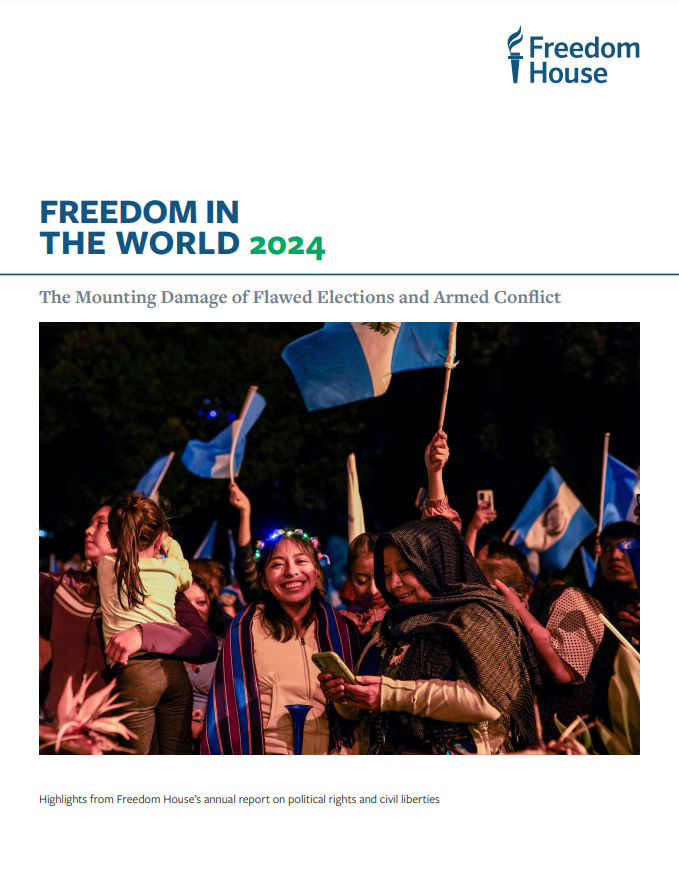
Freedom in the World 2024 – publication

Flawed elections and armed conflict contributed to the 18th year of democratic decline, but by drawing strength from diversity, protecting dissent, and building international coalitions to support their own norms and values, democratic forces can still reverse the long decline in global freedom, according to the report ‘Freedom in the World 2024‘ by Freedom House.

Global freedom declined for the 18th consecutive year in 2023. The scope and scale of deterioration were extensive, affecting one-fifth of the world’s population. Almost everywhere, the downturn in rights was driven by attacks on pluralism—the peaceful coexistence of people with different political ideas, religions, or ethnic identities—that harmed elections and sowed violence. These intensifying assaults on a core feature of democracy reinforce the urgent need to support the groups and individuals, including human rights defenders and journalists, who are on the front lines of the struggle for freedom worldwide.

A total of 52 countries suffered declines over the past year, while only 21 improved. The manipulation of elections was among the leading causes of global erosion in freedom. In Cambodia, Guatemala, Poland, Turkey, and Zimbabwe, incumbents took steps to prevent the political opposition from competing on an even playing field. Leaders in El Salvador and Venezuela bent the rules to ensure their own victories in planned contests. Ecuador’s elections were marred by widespread violence, including the murders of several state officials and political candidates. As a result, that country declined from Free to Partly Free status. Thailand inched up from Not Free to Partly Free thanks to highly competitive national elections, but a military-drafted constitution allowed unelected forces to distort the government-formation process and box out the leading opposition party. Coups continued to obliterate democratic institutions and strip away people’s right to choose their leaders. In July, Niger became the sixth country in the Sahel region of Africa—after Burkina Faso, Chad, Guinea, Mali, and Sudan—to experience a coup since 2020. A military junta ousted the democratically elected government, resulting in an 18-point decline on Freedom in the World’s 100-point scale. Freedoms also continued to deteriorate in Burkina Faso, which suffered two coups in 2022.

Armed conflict over disputed territories unleashed devastating violence and further degraded political rights and civil liberties. Nagorno-Karabakh experienced the most precipitous score decline of the year, losing 40 points after nearly its entire population of 120,000 ethnic Armenians was forced to flee the enclave under intense pressure from Azerbaijan’s military. Hamas’s massive terrorist raid into Israel on October 7 killed some 1,200 people and destroyed Israelis’ sense of safety in their own homes. Israel’s ensuing military campaign in the Gaza Strip, already among the least free places in the world, had resulted in the deaths of an estimated 22,000 people by year’s end, according to Gaza’s Hamas-run health ministry, as well as the internal displacement of 1.9 million others. The global struggle for freedom faces a crucial test in 2024, during which about half of the world’s population will head to the polls and conflicts will continue to rage in Myanmar, Sudan, Ukraine, and elsewhere. Ongoing attacks on pluralism have the potential to fuel voter apathy, further division, and even violence, as they undercut the promise that democracy can deliver for everyone and that diversity of political ideas, belief, and ethnicity is a source of strength. If democracies do not respond to these challenges, more of the world’s people will be denied fundamental freedoms in 2025.

There is still a path toward stronger democracies and greater freedom for all. Recognizing that threats to an election can emerge before, during, and even after the day of voting, democratic governments should redouble their commitment to holding free and fair elections at home and supporting the same abroad. Rigged balloting, military coups, and political or disinformation campaigns that promote exclusion should be quickly and widely condemned. Those who claim or come to power through these means should not be recognized as legitimate leaders. On the international stage, democracies should build broad partnerships based on shared principles, and reaffirm the norms of sovereignty and self-determination that are being subverted by authoritarian aggression from China, Iran, Russia, and others. As it has for decades, the United States can play a vital role in the expansion of global freedom. But much depends on whether the November 2024 presidential election reinforces or weakens America’s democratic values, processes, and institutions, along with its will to uphold the cause of democracy around the world.

Links:
The Mounting Damage of Flawed Elections and Armed Conflict

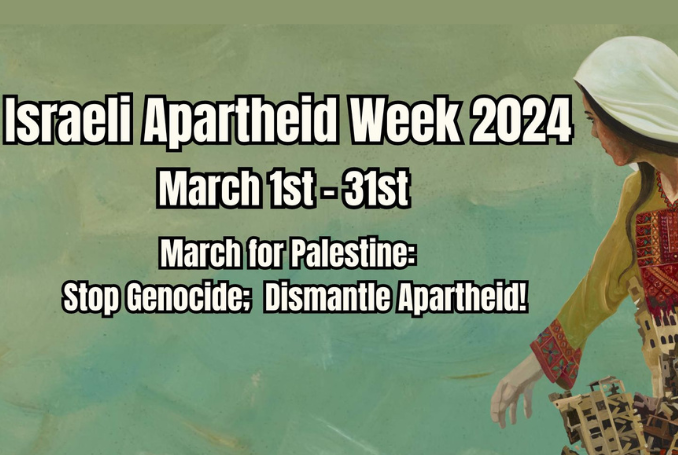
From South Africa to Palestine: Israeli Apartheid Week 2024

In 2024, the Boycott, Divestment, Sanctions Movement (BDS) has extended Israeli Apartheid Week (IAW) over the entire month of March.

Labeled the most important IAW since the campaign was launched 20 years ago, this year’s event occurs during a time when Israel is carrying out a live-streamed genocide against the Palestinian people. While Gaza is the main target, Israeli violence has also escalated in the West Bank, aided by settlers who help the state in its raids on local villages. In 2019, there were at least 200 anti-apartheid events around the world with the prophetic theme “Stop Arming Colonialism.” At the 6th annual BDS conference in Ramallah, Palestine, Ms. Baleka Mbete, speaker of the National Assembly of the Republic of South Africa, delivered the keynote address. In South Africa, a country that witnessed its own successful anti-apartheid movement, there were dozens of events that highlighted opposition to Israeli apartheid. Comic Mashabela Galane performed in five cities as part of the comedy tour “Apartheid Ain’t Funny.” Ali Abunimah appeared on SABC TV News. Since October 7th, several well-known brands have reported a decline in sales due to their perceived support of Israel. McDonald’s, Starbucks, Coca-Cola, and Domino’s Pizza, among others, all have seen a noticeable drop in profits. This year the theme is “March for Palestine: Stop Genocide: Dismantle Apartheid!” Ending apartheid and settler colonialism appear to be the goal, but is that enough given the dire situation now in Gaza? Involved with BDS from its inception, Haidar Eid had already expressed concern about the movement’s limitations.

Links:
From South Africa to Palestine: Israeli Apartheid Week

Too late to act? Europe’s quest for cloud sovereignty – publication

As European governments start adopting cloud services, the notion of cloud sovereignty is still largely underexplored; the future of the governments’ information technology landscape lies in hybrid cloud solutions, but the European cloud market is dominated by American providers, according to the publication ‘Too late to act? Europe’s quest for cloud sovereignty‘ by Clingendael.

European alternatives are scarce in quantity and in what they can offer. Cloud sovereignty requires quality technology, but also trust, security and diversification – three elements that are not necessarily ensured by the current American offers. Making proper data classification and finding talent to manage such landscapes are other important challenges. Reducing cloud vulnerabilities requires giving European providers the ability to grow and develop fitting and specialised solutions, including via tailored public procurement that can, over time, contribute to building minimum viable clouds in EU Member States.

Links:
Too late to act? Europe’s quest for cloud sovereignty

Amerikaanse overheid kan bij e-mail van Nederlandse overheden en kritieke bedrijven

CIRA en SIDN gaan partnerschap aan om nieuw registratieplatform te bouwen : SIDN migreert .nl naar nieuw, gezamenlijk ontwikkeld platform – publicatie

Overheid leunt veel meer op Amerikaanse clouds dan bekend: ‘Meelezen is makkelijk’

2024-03-01, Lief dagboek

Vrijdag; Wat eten we vandaag?: Luchtalarm; Nareizigers; EU Green Deal / Natuurherstelwet; uitvaart Navalny; Zero Discrimination Day; Wheelchair Day; nep-posters van de Belastingdienst; Meteorologische lente; World Seagrass Day; cloud sovereignty; Freedom in the World.

Deze afbeelding heeft een leeg alt-attribuut; de bestandsnaam is dagboek.png

Wat eten we vandaag?:

Tomatenmaaltijdsoep, klik op afbeelding voor origineel

Knipselkrant:


Agenda:

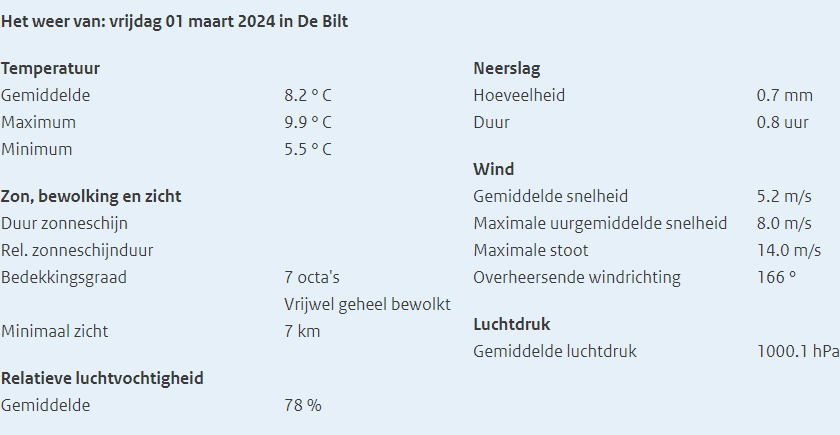
Weer:

Deze afbeelding heeft een leeg alt-attribuut; de bestandsnaam is 50813896361_463cbfec7c.jpg

Links:
In de geschiedenis

Extinction Rebellion vervangt in twaalf steden honderden ABRI-posters voor nep-posters van de Belastingdienst

De overheid geeft de fossiele industrie jaarlijks kortingen ter waarde van €5.000 per belastingbetaler. Extinction Rebellion roept belastingbetalers op om ook belastingkorting te eisen.

Vanaf vandaag doet Nederland belastingaangifte. Daarom vervangt Extinction Rebellion in twaalf steden honderden ABRI-posters in bus- en tramhokjes door nep-posters van de belastingdienst. Belastingbetalers worden erop gewezen dat zij ongewenst betrokken zijn bij de verstrekking van de fossiele subsidies: ‘U draagt eerlijk bij, terwijl grote, vervuilende bedrijven amper belasting betalen. Wij geven hen 39,7 – 46,4 miljard euro aan belastingkortingen cadeau – gemiddeld €5,000 euro per belastingbetaler. Zo houden zij wèl de miljardenwinst, maar niet de lasten. Leuker kunnen we het niet maken, wel oneerlijker.’

Links:
Extinction Rebellion vervangt in twaalf steden honderden ABRI-posters voor nep-posters van de Belastingdienst