EFFecting Change Livestream Series: How to Build a Decentralized Web That Truly Works for All (TV webcast)

EFF

Freedom, openness, interoperability, and the ability to connect without a single gatekeeper defined the internet’s core promise 25 years ago.

Today, most of our online life happens on centralized platforms that control our data, shape our experiences, and set the rules for communication. This monopolization brings real risks: digital surveillance, censorship, and a loss of user agency. The Fediverse offers a different model. Instead of a single platform, it’s a network of independent, interoperable services that connect using open protocols like ActivityPub. Like email, people can choose different providers yet still communicate across the network. Users can build online spaces that reflect their communities’ needs and values. Organizations can host their own services or partner with trusted providers, gaining control over their data, reducing reliance on corporate platforms, and fostering more localized approaches to online community. Join Babette Ngene of EFF, in conversation with renowned PIT technologist Bruce Schneier, and Social Web Foundation Executive Director Mallory Knodel about what the Fediverse can and cannot offer users. Rather than asking if decentralized platforms can replace today’s dominant social networks, we’ll focus on a deeper question: What would it take to build an internet where people and communities have real choices about participation, data control, and governance of their digital spaces?

Links:
How to Build a Decentralized Web That Truly Works for All
The Sky at Night – Engineering the Universe (TV BBC Four / BBC iPlayer)

The Sky at Night

The Sky at Night is a monthly documentary television programme on astronomy produced by the BBC.

The show had the same permanent presenter, Patrick Moore, from its first broadcast on 24 April 1957 until 7 January 2013. The latter date was a posthumous broadcast, which followed Moore’s death on 9 December 2012. This made it the longest-running programme with the same presenter in television history. Many early episodes are missing, either because the tapes were wiped, thrown out, or because the episode was broadcast live and never recorded in the first place. Beginning with the 3 February 2013 edition, the show was co-presented by Lucie Green and Chris Lintott. Since December 2013 Maggie Aderin-Pocock has been a presenter. The programme’s opening and closing theme music is “At the Castle Gate”, from the incidental music to Pelléas et Mélisande, written in 1905 by Jean Sibelius, performed by the Royal Philharmonic Orchestra and conducted by Sir Thomas Beecham.

This episode:
Chris Lintott and the team explore the extraordinary engineering, both on Earth and millions of kilometres above it in space, that is transforming modern astronomy and revealing parts of the cosmos once thought forever beyond our reach. George Dransfield travels to Marseille to investigate KM3NeT, one of the most ambitious scientific instruments ever constructed. Covering more than a cubic kilometre of the Mediterranean Sea, this vast underwater observatory is searching for neutrinos, elusive ‘ghost particles’ that pass through planets, stars and even our own bodies almost entirely unnoticed. By detecting these cosmic messengers, astronomers hope to uncover the origins of some of the most violent and energetic events in the universe, from exploding stars to the environments around supermassive black holes. The programme also explores gravitational-wave astronomy and the remarkable international network of detectors capable of measuring distortions in space-time smaller than an atom. These instruments have opened an entirely new way of observing the cosmos, allowing scientists to detect collisions between black holes and neutron stars across the Universe.

In Cambridge, Chris visits a team attempting to tackle one of cosmology’s biggest mysteries using a tabletop experiment. By cooling atoms to almost absolute zero and manipulating them with ultra-precise lasers, researchers are building a laboratory system that could one day probe some of the quantum physics thought to have shaped the universe in its earliest moments. Finally, Maggie Aderin explores Nasa’s Nancy Grace Roman Space Telescope, a new observatory designed to search for distant worlds beyond our solar system. Its revolutionary coronagraph will suppress the overwhelming glare of distant stars, potentially allowing astronomers to directly image planets orbiting them and paving the way for future missions that could search Earth-like worlds for signs of life. From particle detectors deep beneath the Mediterranean to ultra-cold quantum experiments and next-generation space telescopes, this programme reveals how human ingenuity is creating entirely new ways to explore the cosmos and uncover its deepest secrets.

Links:
Engineering the Universe

VPRO #Tegenlicht – Kweekvlees vs. de bioindustrie: Is echt vlees eten zonder dierenleed binnen handbereik? (TV internet)

Tegenlicht is een informatief televisieprogramma van de VPRO via het internet.

Door de VPRO wordt het programma bestempeld als documentaire op het vlak van politiek, economie, sociologie en wetenschap. Het programma stelt zich ten doel inzicht in de werking van de samenleving te verschaffen.

De publieke belangstelling voor kweekvlees is in Nederland groot, maar de mogelijkheid om het ook in Nederland op de markt te brengen blijkt vooralsnog zeer ingewikkeld. Missen we de boot? Jaarlijks worden zeker 50 miljard dieren geslacht om aan ons verlangen naar vlees te voldoen. Bijna een vijfde van de CO2-uitstoot op aarde is afkomstig uit die veeteelt. Het blijkt uiterst lastig om minder vlees te gaan eten: veel mensen vinden vlees gewoon lekker en de mondiale vraag ernaar neemt nog steeds toe. Dat was voor ondernemer en kweekvleespionier Willem van Eelen de reden om ‘in vitro vlees’ te bedenken. Na zijn overlijden kreeg dochter Ira vorig jaar een telefoontje uit Silicon Valley. CEO Josh Tetrick van het jonge bedrijf Just nodigde haar uit om kweekvlees te komen eten in de keuken van hun laboratorium in San Francisco. Het bedrijf kocht de patenten van haar vader en staat nu in de startblokken om daadwerkelijk kweekvlees te gaan produceren en verkopen. Maar het Ministerie van Volksgezondheid, Welzijn en Sport beschouwt kweekvlees als een zogenoemd ‘novelfood’ en vertraagt hiermee de introductie van kweekvlees. Met deze weerstand wordt het veranderen van onze mondiale vleesproductie- en consumptie een race tegen de klimaatklok. Daar staat tegenover dat vlees uit opgekweekte stamcellen ultiem duurzaam is, en dat er voor de productie minder grond, water en energie nodig is. Ook is het volkomen voedselveilig volgens de makers en hoeven er geen dieren voor te worden geslacht. Kortom: kweekvlees is werkelijkheid. Het is er en we kunnen het maken. De vraag is: willen we het ook? Deze aflevering werd voor het eerst uitgezonden in 2018.

Links:
VPRO Tegenlicht

Amazon River & Forest Day / Rise for the Amazon Day 2026

Every year on 5 September, the World Wide Fund for Nature (WWF) marks Amazon Day, and wants to use this moment to remind you of the magnificence of the Amazon rainforest.

The Amazon contains 10 per cent of our entire planet’s wildlife. But there are many other reasons why the rainforest is so important, including:

  •     Roughly 100 billion tonnes of carbon are locked up in its plants and trees, making it vitally important in our global efforts to tackle climate change.
  •     The Amazon is home to more than 30 million people living across a vast region, many of whom rely on the forest for their livelihoods.
  •     The Amazon River flows for more than 6,600 km, and contains the largest number of freshwater fish species in the world.

The Amazon is one of the most extraordinary places on Earth. Its forests breathe life into the world, its rivers flow like veins carrying water and energy, and its people and wildlife embody a resilience that inspires us all. But the Amazon is at a crossroads. Rising pressures from deforestation, fires, and climate change are threatening to push this vital ecosystem toward an irreversible tipping point. At the same time, communities across the region are leading powerful efforts to protect their home. What they need is for all of us to rise with them. That’s why on September 5, Rise for the Amazon Day is celebrated as a day for people everywhere to come together in solidarity with the Amazon. Rise for the Amazon Day is about more than giving. It’s about standing shoulder to shoulder with Indigenous peoples protecting their lands, with scientists tracking the forest’s health, with farmers choosing sustainable paths, and with wildlife whose future depends on the choices we make today. It’s a reminder that the Amazon belongs to all of us, and protecting it is one of the most powerful gifts we can offer future generations.

Links:
Rise for the Amazon Day: The Amazonian Fruits Sustaining Forest-Based Economies

Day of Charity / Dag van de Liefdadigheid 2026

In the 2030 Agenda on Sustainable Development adopted in September 2015, the United Nations recognizes that eradicating poverty in all its forms and dimensions, including extreme poverty, is the greatest global challenge and an indispensable requirement for sustainable development.

The Agenda also calls for a spirit of strengthened global solidarity, focused in particular on the needs of the poorest and most vulnerable. It also acknowledges the role of the diverse private sector, ranging from micro-enterprises to cooperatives to multinationals, and that of civil society organizations and philanthropic organizations in the implementation of the new Agenda. The 17 Sustainable Development Goals (SDGs) set forth in the Agenda can be grouped into six critical areas: people, planet, prosperity, peace, and partnership. They have the potential to transform our lives and our planet by providing the framework needed for philanthropic institutions to enable all people to contribute to the betterment of our world.

Links:
Day of Charity – 5 September

Walvisteldag / Global Whale Count 2026

Walvisteldag

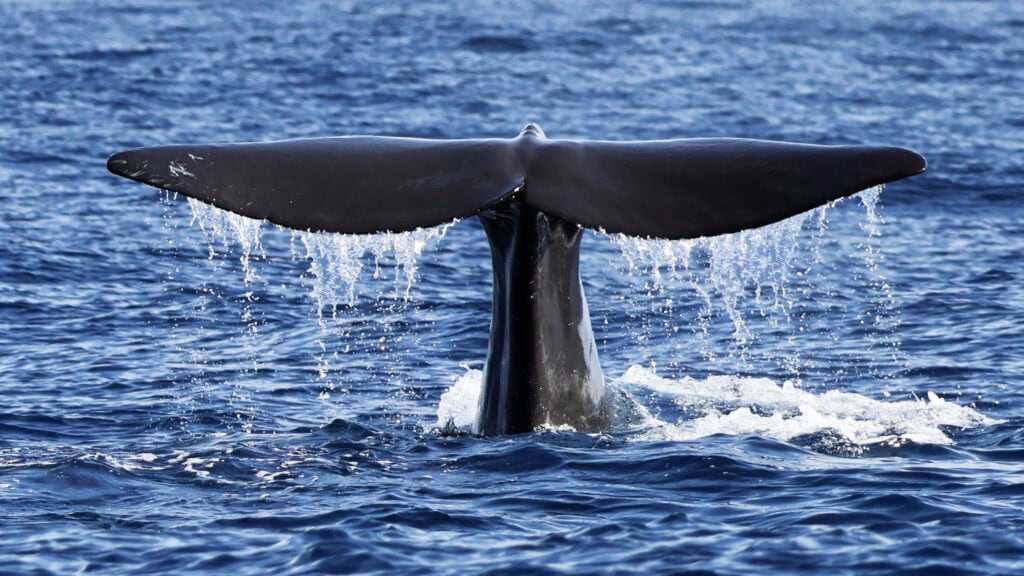
In het eerste weekend van september 2026 vindt de wederom de Internationale Walvisteldag (Global Whale Count) plaats, wat begon als een citizen science initiatief van Stichting Rugvin is in korte tijd uitgegroeid tot een wereldwijde actie.

Op verschillende plekken op de wereld tellen burgers en onderzoekers walvisachtigen: van de kusten van de Atlantische en Stille Oceaan tot de Noordzee, Waddenzee en Oosterschelde. Veel mensen weten niet dat er voor onze kust bruinvissen, dolfijnen en zelfs grotere walvissen te zien zijn. Door samen te tellen krijgen we een beter beeld van de populaties én vergroten we het bewustzijn over de schoonheid én kwetsbaarheid van het zeeleven. In Nederland wordt geteld langs de hele Noordzeekust en in de Waddenzee. Iedereen kan meedoen, ervaren of beginner, zelfs vanaf een vakantieadres aan zee! Naast dit jaarlijks terugkomend citizen science project, doet Stichting Rugvin ook haar jaarlijkse wetenschappelijke telling op specifiek de Oosterschelde door wetenschappers, studenten en Rugvin-vrijwilligers.

Links:
Walvisteldag

Kites for Palestine

Kites for Palestine

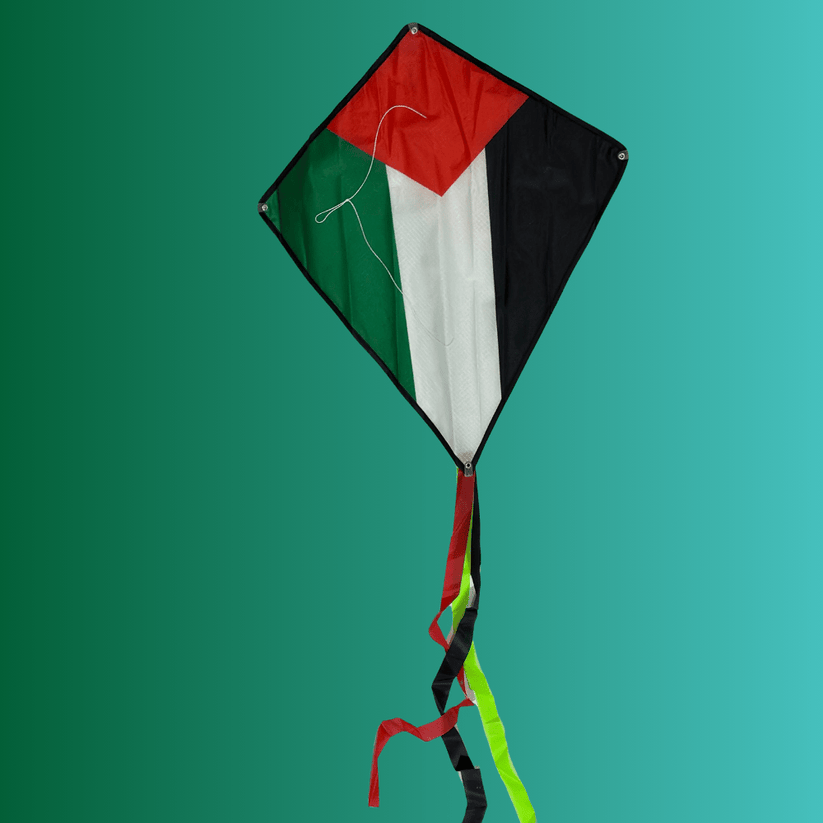
De actie ‘Kites for Palestine’ maakt deel uit van een landelijke oproep van pro-Palestijnse organisaties om op 11 locaties in Nederland te vliegeren als protest, om aandacht te vragen voor het geweld tegen kinderen in Gaza.

De vliegeractie is een reactie van onder meer de Dolle Mina’s en Plant een Olijfboom op het dreigement van Israël om kinderen in Gaza aan te vallen die met vliegers spelen. Vanaf vorige week geldt volgens Israëlische premier Benjamin Netanyahu een ‘zero tolerance policy’ voor vliegers en ballonnen. Aanleiding voor deze uitspraak waren zo’n zeven vliegers die eind augustus vanuit Gaza naar Israël waren gewaaid. Israël vertrouwde dat niet, aangezien Gazanen in 2018 vliegers met brandbare stoffen hadden opgelaten, waardoor branden uitbraken op open velden en landbouwgrond. Bij de vliegers die vorige week in Israël terechtkwamen, bleek dat uiteindelijk niet het geval: na een inspectie meldde het Israëlische leger dat alle gevonden vliegers van papier waren gemaakt, en geen gevaarlijke stoffen bij zich hadden.

Links:
Steunbetuiging aan kinderen in Gaza: tientallen vliegers bij Eye Filmmuseum

Actievoerders gaan zaterdag vliegeren voor Gaza op Stadsstrand

Kites 4 Palestine