
In de geschiedenis
Links:
Wikipedia

Links:
Wikipedia

Stay Grounded and New Economics Foundation published a study on the Frequent Flying Levy (FFL) in Europe, based on economic modeling by CE Delft and a legal assessment by AdaStone Law.
The report is published in several languages, and with partners: Possible (UK), Ecologistas en Acción (ES), Bond Beter Leefmilieu (BE), 2DegreeCelsius (RO), Rester sur Terre (FR), New Weather Institute (SW), and further collaborations. The Frequent Flying Levy is a tax levied on all airline tickets. It aims to limit excessive flights, which are usually taken by high-income passengers. It will cut air traffic without making flights more expensive for 72% of us, who don’t fly often. This progressive policy raises the tax rate of the FFL incrementally after every two single flights taken. In other words, there is no levy on the first return flight each year, a 50€ levy on the second, 100 € on the third, and so on. The FFL would replace existing ticket taxes. Currently jet-fuel is untaxed in most countries. If this tax exemption is continued, we propose as a second component a distance-based surcharge. The reason for this is that longer flights burn much more jet fuel and are therefore more polluting. This second component of the FFL would cease to be necessary, as soon as a kerosene tax is implemented. A third component is a surcharge on business/first class seats, as these take up much more space and are therefore more polluting.
Flying, the most energy-intensive and polluting form of transport, is unevenly distributed within and between countries. 1% of the world population produces 50% of aviation emissions, while 80% have never set foot on an aeroplane. In western Europe, where 80% of the highest-income households fly at least once a year, just 30% do so from the lowest-income households. Climate measures for aviation to-date are insufficient for the short- to long-term, and overly reliant on technologies that do not yet exist at scale and are not truly sustainable. It is therefore key to reduce air traffic. While a variety of measures like a kerosene tax or limits at airports are important, most of them would directly or indirectly lead to higher ticket prices. Therefore, they should be complemented by fair social policies. The Frequent Flying Levy (FFL) is a measure that could contribute to solving the aforementioned issues. This progressive tax targets excessive pollution by frequent flyers, who are mostly wealthy, while allowing access to affordable occasional flights for lower income groups. The FFL could raise substantial revenues which could be utilised for the enormous finance gaps for a just transition, mitigation and global climate finance. You can sign the petition to urge politicians to discuss the proposal for a Frequent Flying Levy and proceed with its implementation as soon as possible.
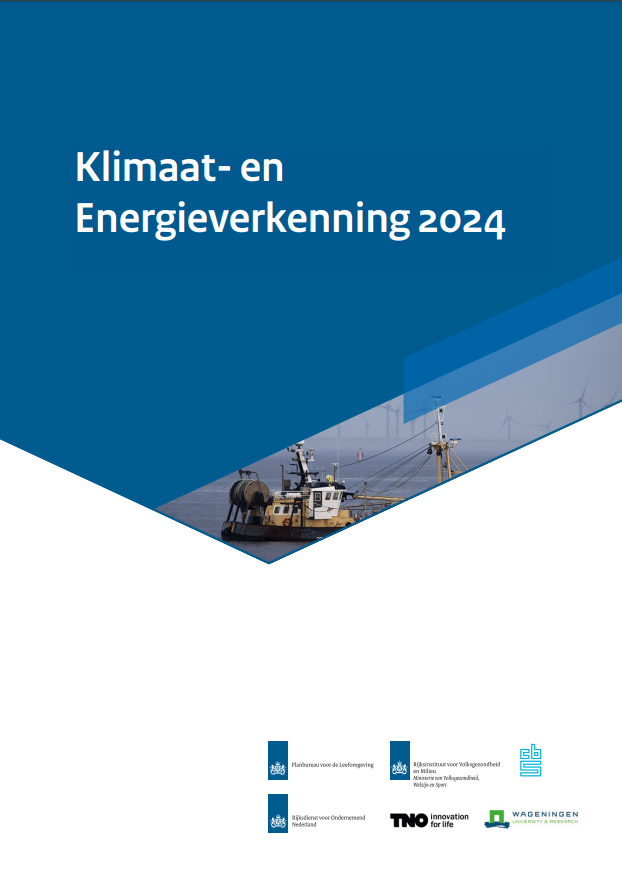
De broeikasgasuitstoot in Nederland daalt naar verwachting met 44-52 procent in 2030 ten opzichte van 1990, uitgaande van het vastgestelde en voorgenomen beleid; daarmee is de kans dat het wettelijke klimaatdoel van 55 procent emissiereductie wordt gehaald, minder dan vijf procent.
De Klimaat- en Energieverkenning 2024 (KEV 2024) van het Planbureau voor de Leefomgeving (PBL) laat verder zien dat er de afgelopen twee jaar wel veel beleid is uitgewerkt, maar dat de maximale geraamde emissiereductie in 2030 toch lager is dan in de KEV 2023 door tegenslagen in de uitvoering van beleid en geschrapte beleidsmaatregelen.
Links:
Klimaatdoel 2030 raakt uit zicht; extra beleid met snel effect nodig
Hoogst onwaarschijnlijk dat Nederland CO2-doel haalt: ‘Flink pakket maatregelen nodig’

As climate impacts intensify globally, the ‘Emissions Gap Report 2024: No more hot air … please!‘ finds that nations must deliver dramatically stronger ambition and action in the next round of Nationally Determined Contributions or the Paris Agreement’s 1.5°C goal will be gone within a few years.
The report is the 15th edition in a series that brings together many of the world’s top climate scientists to look at future trends in greenhouse gas emissions and provide potential solutions to the challenge of global warming. The report looks at how much nations must promise to cut off greenhouse gases, and deliver, in the next round of Nationally Determined Contributions (NDCs), due for submission in early 2025 ahead of COP30. Cuts of 42 per cent are needed by 2030 and 57 per cent by 2035 to get on track for 1.5°C. A failure to increase ambition in these new NDCs and start delivering immediately would put the world on course for a temperature increase of 2.6-3.1°C over the course of this century. This would bring debilitating impacts to people, planet and economies. It remains technically possible to get on a 1.5°C pathway, with solar, wind and forests holding real promise for sweeping and fast emissions cuts. To deliver on this potential, sufficiently strong NDCs would need to be backed urgently by a whole-of-government approach, measures that maximize socioeconomic and environmental co-benefits, enhanced international collaboration that includes reform of the global financial architecture, strong private sector action and a minimum six-fold increase in mitigation investment. G20 nations, particularly the largest-emitting members, would need to do the heavy lifting.
Links:
Emissions Gap Report 2024

In 2021, the UN General Assembly decide
The resolution recognizes that the substantial digital divide and data inequalities that exist among different countries and within them, can be addressed in part by improving people’s competencies to seek, receive and impart information in the digital realm. In the current ecosystem of complex and sometimes contradictory messages and meanings, it is hard to conceive of the public good being advanced, if the public is disempowered in the face of opportunities and threats. Each individual needs to be equipped with media and information literacy competencies to understand the stakes, and to contribute to and benefit from information and communication opportunities. G
People across the world are witnessing a dramatic increase in access to information and communication. While some people are starved for information, others are flooded with print, broadcast and digital content. Media and Information Literacy (MIL) provides answers to the questions that we all ask ourselves at some point. How can we access, search, critically assess, use and contribute content wisely, both online and offline? What are our rights online and offline? What are the ethical issues surrounding the access and use of information? How can we engage with media and information and communications technologies (ICTs) to promote equality, intercultural and interreligious dialogue, peace, freedom of expression and access to information? Thr
2024 Theme: The new digital frontiers of information: Media and Information Literacy for public-interest information.
Link
Global Media and Information Literacy Week
Global Media and Information Literacy Week Feature Conference 2024
De Verenigde Naties (afkorting: VN) vormen een internationale organisatie die op 24 oktober 1945 werd opgericht door 51 landen.
De VN wordt beschouwd als de opvolger van de Volkenbond (League of Nations). Het is een intergouverneme
Sinds eind jaren 1990 is de organisatie zich ook meer gaan richten op interne ontwikkelingen en hoe de Verenigde Naties mee kunnen groeien met de vraag naar een nieuwe methode van wereldwijde samenwerking. Er zijn zes bestuursorganen die de werkzaamheden van de organisatie aansturen: de Algemene Vergadering, de Economische en Sociale Raad, het Internationaal Gerechtshof, het Secretariaat, de (tegenwoordig inactieve) Trustschapsraad en het meest dwingende en bekendste orgaan van de Verenigde Naties, de Veiligheidsraad

Rosa Louise Parks-McCauley (*04-02-1913 – +24-10-2005), beter bekend als Rosa Parks, was een Amerikaans burgerrechtenac
Ze staat vooral bekend om het feit dat ze in 1955 weigerde haar zitplaats in een bus af te staan aan een blanke medepassagier. M
Links:
R
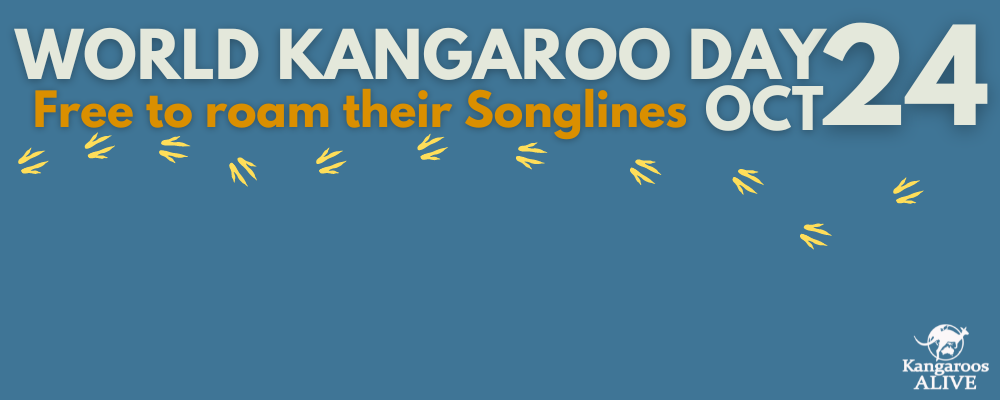
In 2020 Kangaroos Alive created World Kangaroo Day to be held every year on October 24th, the mission is to create an international day to celebrate this icon.
Links:
World Kangaroo Day
Doodgeslingerd tegen motorkap: dit is hoe Australië op kangoeroes jaagt
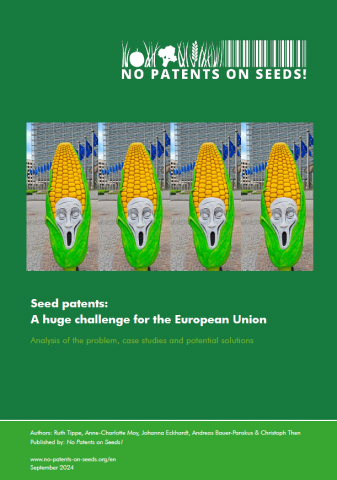
In 2023, No Patents on Seeds! conducted comprehensive research into patents on plants and seeds.
The researchers used the WIPO (World Intellectual Property Organisation) and the European Patent Office (EPO) databases for this purpose. The aim was to identify patents and filed patent applications relevant to conventional breeding. Our research identified around 80 patents on plants granted in 2023. Of these more than 20 concerned conventional breeding. Among the plant species covered were cucumber, maize, melon, oilseed rape, pepper, spinach, tomato and wheat. Patent holders include companies such as Nunhems/BASF, Enza Zaaden, KWS, Rijk Zwaan, Seminis/Bayer and ChemChina/Syngenta. A more detailed analysis found that, in particular, processes used in random mutagenesis were used to circumvent the prohibitions in the European Patent Convention (EPC), Article 53 (b), which prohibits patents on plant varieties and conventional plant breeding. In 2023, more than 70 new international patent applications included conventional breeding (out of around 300 patent applications filed for plants). Around one third out of these claim plants obtained from random mutagenesis. In addition, further research using the PINTO database3, which was established by the European Seed Association (ESA), identified 115 relevant European patents affecting 1365 plant varieties and more than 40 plant species. More than 400 varieties are affected by more than just one patent, and up to six patents can apply to a single variety.
The number of plant varieties covered by patents doubled between 2020 and 2024. The companies holding the highest numbers of patents are Bayer (Seminis/ Monsanto), BASF (Nunhems) and Rijk Zwaan. They are followed by ChemChina/Syngenta and KWS. Patents are exclusive rights to commercially exploit a technical invention. In Europe, there is currently an ongoing controversial debate in regard to patents on seeds. The EU parliament and the EU member states are trying to find a solution to stop patents being issued on biological resources needed for breeding. There is strong political consensus in the EU to not allow patents on conventional seeds. Nevertheless, the European Patent Office (EPO) continues to grant them. The EU, therefore, needs to find solutions to secure the freedom to operate for conventional breeders and, at the same time, restrict the scope of patents granted on genetically engineered plants, including seeds obtained from new genetic engineering (NGTs). This is an urgent problem which must be solved in order to safeguard the future of European plant breeding, agriculture and food production.
De escalatie van het Israëlisch-Palestijnse conflict in de Gazastrook en de internationale reacties daarop hebben het afgelopen jaar geleid tot nieuwe humanitaire, politieke en internationaalrechtelijke dieptepunten.
Het grootschalige menselijke leed, de verslechterende situatie op de Westelijke Jordaanoever en de toenemende polarisatie in de samenleving vormden voor de Adviesraad Internationale Vraagstukken (AIV) de aanleiding om een briefadvies voor de Nederlandse regering en het parlement op te stellen. De verdere escalatie in de regio, met name in Libanon en tussen Iran en Israël, evenals de strategische gevolgen voor Nederland en Europa, hebben de urgentie van dit advies vergroot.
In dit briefadvies concludeert de AIV dat externe internationale druk en diplomatie noodzakelijk zijn voor de-escalatie en conflictoplossing, maar dat deze druk tot nog toe veelal ontbreekt. De AIV buigt zich over de vraag hoe Nederland, met de relatief bescheiden middelen die het daartoe beschikbaar heeft, zijn beleid kan herijken. Nederland kan bijvoorbeeld effectiever bijdragen aan de-escalatie en duurzame conflictoplossing, aan het indammen van de huidige (regionale) geweldsspiraal en radicalisering, en aan het tegengaan van schendingen van het internationaal (humanitair) recht en schendingen van de mensenrechten die met het conflict gepaard gaan.
De door de AIV voorgestelde herijking van het Nederlandse beleid beoogt een effectievere en geloofwaardigere invulling van de rol als ‘kritische vriend van zowel Israël als de Palestijnen’. Hierbij pleit de AIV voor het aangaan van coalities met gelijkgestemde landen, zowel binnen als – waar mogelijk – buiten de EU. De nieuwe koers richt zich bovendien op de concrete aanpak om deze doelstellingen te verwezenlijken. De AIV presenteert daartoe een aantal overkoepelende beleidsuitgangspunten en doet aanbevelingen die in samenhang en gedetailleerd in het advies worden uitgewerkt:
Links:
Naar een nieuwe koers voor Nederland in het Israëlisch-Palestijnse conflict