Zoals het komt: 100 dagen in de gehandicaptenzorg – start serie (TV NPO 2 / NPO Start)

Zoals het komt: 100 dagen in de gehandicaptenzorg
Hoe gaan we als samenleving om met onze allerkwetsbaarsten?

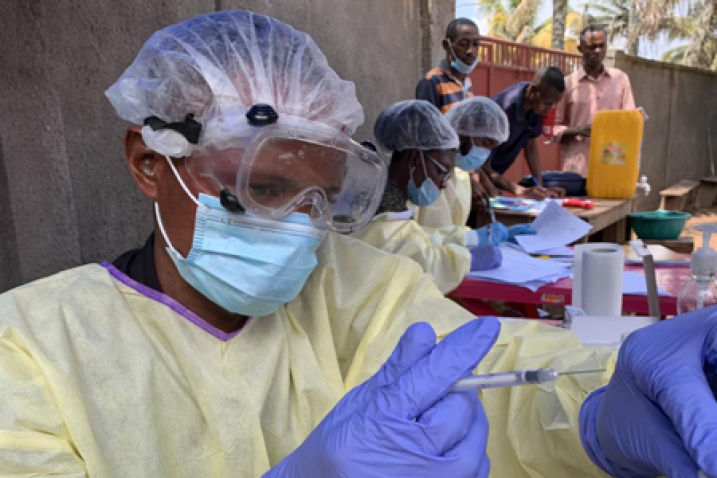
In ‘Zoals het komt: 100 dagen in de gehandicaptenzorg’ loopt Nicolaas Veul stage op een zorgpark waar mensen wonen met een ernstig verstandelijke beperking en zogeheten moeilijk verstaanbaar gedrag. Hoe ziet hun leven eruit, wat is goede zorg voor hen, welke spiegel houden zij ons voor? En blijft Nicolaas zelf wel overeind in deze uitdagende werkomgeving? Kijk de hele serie op NPO Start of elke woensdagavond om 20.25 uur op NPO 2.
Links:
Zoals het komt: 100 dagen in de gehandicaptenzorg

Day of Science, Technology and Innovation for the South

On 9 January 2024, the United Nations General Assembly adopted resolution A/RES/78/259, officially proclaiming September 16th as the International Day of Science, Technology, and Innovation for the South.

The resolution underscores the importance of leveraging scientific and technological achievements for sustainable development, aligning with the 2030 Agenda, the Addis Ababa Action Agenda, and the Sustainable Development Goals (SDGs). The resolution also invites UN member states, specialized agencies, international organizations, academia, civil society, the private sector, and other stakeholders to observe this International Day. It encourages them to present “initiatives, including cooperation projects in the areas of science, technology and innovation that contribute to the development of developing countries in those fields.” For most developing countries, achieving sustainable development has become an increasingly difficult task in a world marked by economic, social, and environmental polarization, and widespread indifference to meeting the multilaterally agreed SDGs. The growing gap between political rhetoric and reality in international forums further complicates this challenge.During the Summit on Science, Technology, and Innovation, held in Havana on 15 and 16 September 2023, the leaders of the G77 and China agreed to designate September 16 as the International Day of Science, Technology, and Innovation for the South. The summit’s Havana Declaration on Current Development Challenges: The Role of Science, Technology, and Innovation highlights the essential role of STI in tackling development challenges by fostering better cooperation, fair access to technology, and the responsible use of scientific innovations.

Links:
Day of Science, Technology and Innovation for the South

Day for Interventional Cardiology 2026

Day for Interventional Cardiology

Interventional cardio-angiology improves health, increases life expectancy and improves the quality of life.

The first coronary angioplasty was performed by Dr. Andreas Grüntzig on 16 September 1977. Since then angioplasty has been the procedure that has saved the most grams of myocardium at risk worldwide. In September 2022, the General Assembly decided to proclaim 16 September as International Day for Interventional Cardiology and invited stakeholders to observe annually the International Day for Interventional Cardiology in an appropriate manner and in accordance with national priorities, in order to raise public awareness of cardiovascular diseases and procedures, related complications, as well as prevention and care, including through education and the mass media.

Links:
Day for Interventional Cardiology

Scholieren protesten najaar 2026 / French student protests

Scholieren protesten najaar 2026

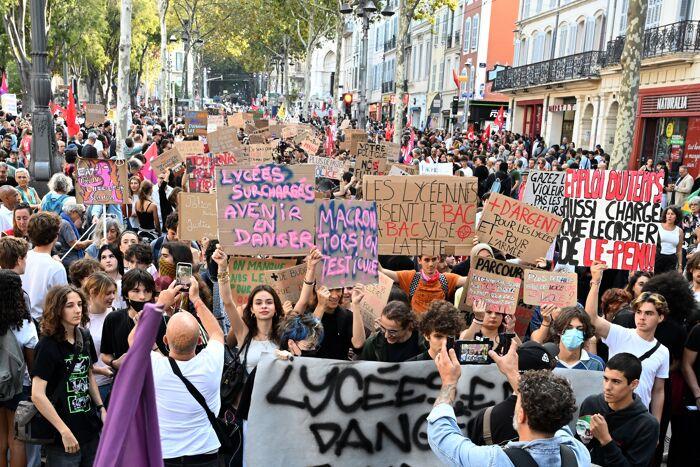
Scholieren in een voorstad van Parijs besloten 17 september 2026 de ingang van hun middelbare school te blokkeren, zij wilden een vuist maken tegen de overvolle klassen en lange schooldagen.

De scholieren stonden er niet alleen voor; zij kregen bijval van leraren die hun zorgen uitten over het tekort aan personeel en materiaal, en de hoge werkdruk. Franse middelbare scholieren maken verplicht meer lesuren dan hun leeftijdsgenoten in veel andere Europese landen. Daarnaast kampen veel Franse middelbare scholen met een tekort aan basisvoorzieningen zoals tafels en stoelen. Door een gebrek aan airconditioning lopen tijdens hittegolven de temperaturen in klaslokalen flink op, terwijl het in de winter juist ijskoud kan zijn. Scholieren wijzen op achterstallig onderhoud, wat leidt tot lekkende daken, kakkerlakken en rattenoverlast, zoals in Saint-Denis. Volgens actievoerders zijn die problemen vaak het grootst op scholen in sociaaleconomisch kwetsbare wijken. Ook Parcoursup, het platform waarmee scholieren zich aanmelden voor een vervolgopleiding, ligt onder vuur. Soms moeten scholieren maanden wachten totdat ze weten of ze worden toegelaten tot hun studie naar keuze. Volgens veel van hen zorgt het systeem voor onzekerheid en extra stress over hun toekomst. De eerste demonstratie verliep nog tamelijk gemoedelijk, met een paar vuilnisbakken die in de fik vlogen. Maar via sociale media verspreidden de beelden ervan razendsnel en protesten sloegen over naar andere steden buiten Parijs. De beweging kreeg vrijwel direct steun van de radicaal-linkse partij La France Insoumise (LFI), die een sterke aanhang onder jongeren heeft. Die steun is electoraal gezien niet onbelangrijk, omdat een deel van de scholieren volgend jaar voor het eerst mag stemmen bij de Franse presidentsverkiezingen. Rechtse politici beschuldigen de partij ervan het protest aan te wakkeren en te politiseren. Zo zei de LFI-burgemeester van Saint-Denis, Bally Bagayoko, dat geweld “in sommige gevallen gelegitimeerd is”. Die woorden, die volgens Bagayoko uit hun context zijn gehaald, leidden tot veel ophef. De centrumrechtse presidentskandidaat Bruno Retailleau vroeg zich af of LFI niet verboden zou moeten worden.

LFI-leider Mélenchon stelt juist dat zijn partij de beweging enkel steunt en niet organiseert. Hij wil dat de demonstraties geweldloos verlopen en wijst op wat hij omschrijft als de “bruutheid” van de politie. Volgens hem maakten agenten veelvuldig gebruik van traangas en wapenstokken om demonstranten uiteen te drijven. Maandag 5 oktober 2026 raakte in de Franse stad Lens een 15-jarige scholier zijn hand kwijt nadat hij een flitsgranaat had opgeraapt die door de oproerpolitie was gegooid. Bijna 200 leerlingen en leraren (06-10-2026) zijn inmiddels gewond geraakt. Ondanks de ongeregeldheden blijven de demonstranten doorgaan. Op 6 oktober ging het dus om zeker 250.000 mensen die de straat op gingen. Volgens een van de vakbonden waren dat er zelfs 450.000. Zondag 4 oktober heeft premier Lecornu een brief geschreven waarin hij belooft deze week met concrete toezeggingen voor scholieren te komen, onder meer om schoolgebouwen beter bestand te maken tegen de gevolgen van klimaatverandering. Daarnaast wordt in de begroting, die nog door het parlement moet worden goedgekeurd, 1,2 miljard euro extra uitgetrokken voor het onderwijs. Ook kondigde hij aan dat op middelbare scholen tot en met vrijdag geen lessen gegeven worden in de hoop dat scholen en leerlingen dan met elkaar in gesprek gaan. Maar de angst is dat de geest inmiddels al uit de fles is en dat de protestbeweging kan uitgroeien tot een veel bredere volksbeweging. Dat komt ook doordat er in Frankrijk veel frustratie is over de hoge brandstofprijzen. Zo heeft de Gele Hesjes-beweging, die in 2018 Frankrijk grotendeels lamlegde, aangekondigd op 17 oktober opnieuw de straat op te gaan.

Links:
Union Etudiante

Liveblog : Scholierenprotest Wallonië en Frankrijk

Studentenprotesten breiden zich als een olievlek uit over Frankrijk. ‘Ze nemen ons niet serieus omdat we vijftien zijn, maar de politie maakt ons niet bang’

Over 560 schools disrupted as high school protests continue in France

Opnieuw grote protesten én geweld in Frankrijk, wat zit erachter?

Demonstrators wounded as police break up Lisbon and Porto housing protest camps

Waarom Europese jongeren in opstand komen (en het in Nederland stil blijft)

2026-09-15, Lief dagboek

Dinsdag; Wat eten we vandaag?; Ruimtewapenwedloop; BTW groente en fruit; Wereld Lymfklierkankerdag; FreeMoneyDay; Prinsjesdag / Troonrede.

Deze afbeelding heeft een leeg alt-attribuut; de bestandsnaam is dagboek.png

Wat eten we vandaag?:

Klik op afbeelding voor origineel

Knipselkrant:


https://a3veen.tumblr.com/post/827807188514930688/het-kroonjuweel-dat-er-steeds-niet-komt-0-btw-op

Agenda:

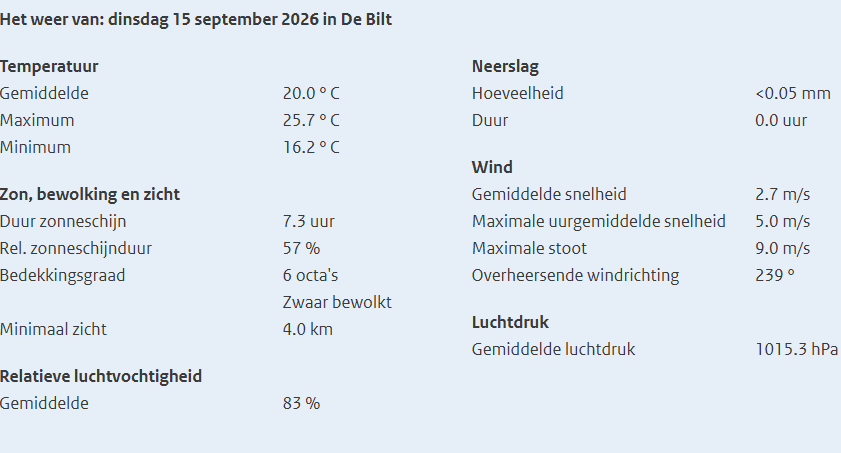
Weer:

Links:
In de geschiedenis

#WLAD2026 World Lymphoma Awareness Day / Wereld Lymfklierkankerdag 2026

Wereld Lymfklierkankerdag

15 September marks World Lymphoma Awareness Day (WLAD), and this year, we are focused on empowering people living with lymphoma and care partners approach tough conversations with greater confidence.

Being diagnosed with lymphoma or CLL can be overwhelming – physically, emotionally, personally and professionally. According to the Lymphoma Coalition’s 2024 Global Patient Survey, 67% of people living with lymphoma reported emotional effects like anxiety, depression and fear of the cancer coming back or getting worse. Yet many aren’t talking to their healthcare teams or seeking support. For World Lymphoma Awareness Day 2026, the global community is coming together through the campaign, Navigating Lymphoma and CLL Together. This year’s campaign shines a light on the challenges people may experience throughout diagnosis, treatment, survivorship and beyond. It also recognises the important role patient organisations play as trusted guides, providing reliable information, practical support, education, and compassion at every stage of the journey.

Links:
Lymphoma Awareness Day

#FreeMoneyDay 2026

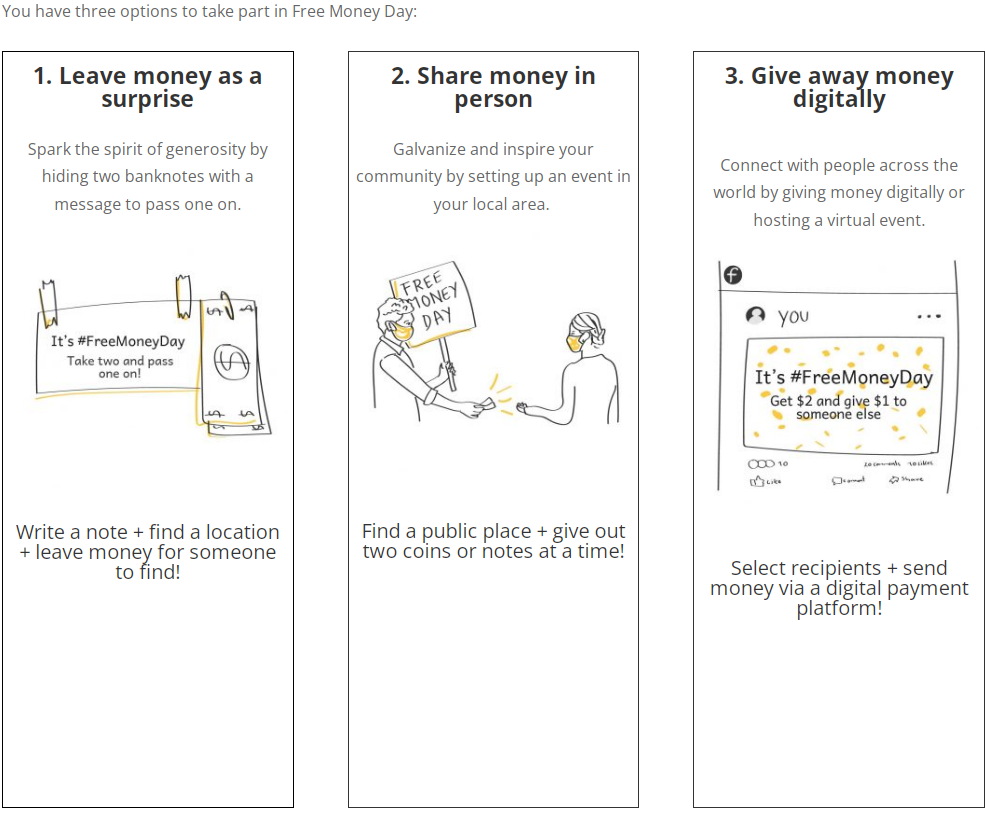
Het idee voor de Free Money Day is afkomstig van het Post Growth Institute, Een internationale organisatie die onderzoekt hoe een bloeiende en duurzame economie zonder winstoogmerk kan worden gecreëerd.

Er werd voor 15 september gekozen omdat op 15 september 2008 de Amerikaanse zakenbank Lehman Brothers uitstel van betaling vroeg. Dat was één stapje verwijderd van hun faillissement. En de uiteindelijke val van deze bank wordt gezien als het begin van de financiële crisis in 2008. Mensen geboren voor 2000 zullen dit, en de gevolgen hiervan, zich nog zeer levendig kunnen herinneren. Als je meedoet aan deze werelddag dan is het de bedoeling dat jij aan een wildvreemde 2 munten of biljetten geeft en hen vraagt om de helft door te geven aan iemand anders. Free Money Day kun je zien als een sociaal experiment; wat gebeurt er als je geld aanbiedt aan mensen die je niet kent. Maar het is ook een dag om gesprekken te beginnen over de voordelen van economieën op basis van delen. Om meer kritisch te denken over de relatie die we hebben met geld.

Links:
Free Money Day

Five years after introduction of an opt-out consent system for organ donation; lessons learned from England and the Netherlands – publication

Five years after introduction of an opt-out consent system for organ donation

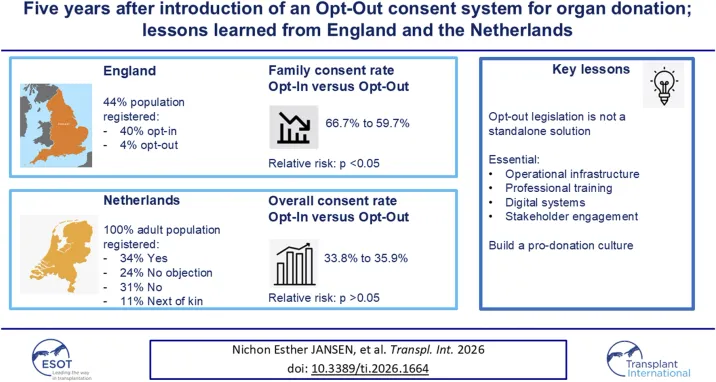
Five years after changing from opt-in to opt-out consent systems in England and the Netherlands, the report ‘Five years after introduction of an opt-out consent system for organ donation; lessons learned from England and the Netherlands‘ shows the results of the examination of the impact on donor registrations, consent rates, donor numbers, and reflect on lessons learned.

Opt-out legislation was implemented in May 2020 in England and July 2020 in the Netherlands. In England, 44% of the population is now registered; 40% recording an opt-in decision and 4% an opt-out decision. In the Netherlands, mandated donor registration resulted in the entire adult population having their decision recorded: “Yes, I want to be a donor” (34%), “No objection” (24%), or “No, I don’t want to be a donor” (31%), while 11% leave the “Decision to next of kin”. Despite these structural changes, the consent categories created by opt-out legislation (“deemed” consent in England and “No objection” in the Netherlands) remain challenging in practice, with fewer than 50% of families agreeing to donation. In England, the family consent rate declined from 69% to 57% between 2020 and 2025 and the donor numbers remain below pre-pandemic levels. In contrast, the Netherlands experienced a modest increase in family consent rates and donor numbers compared to the opt-in consent system. Opt-out legislation provides an important policy framework, but sustained system-level commitment remains essential.

Links:
Nieuwe donorwet levert beperkt aantal extra donoren op: ‘Categorie ‘geen bezwaar’ blijft uitdagend’

2014, Donorweek

The Elimination Project – publication

The Elimination Project

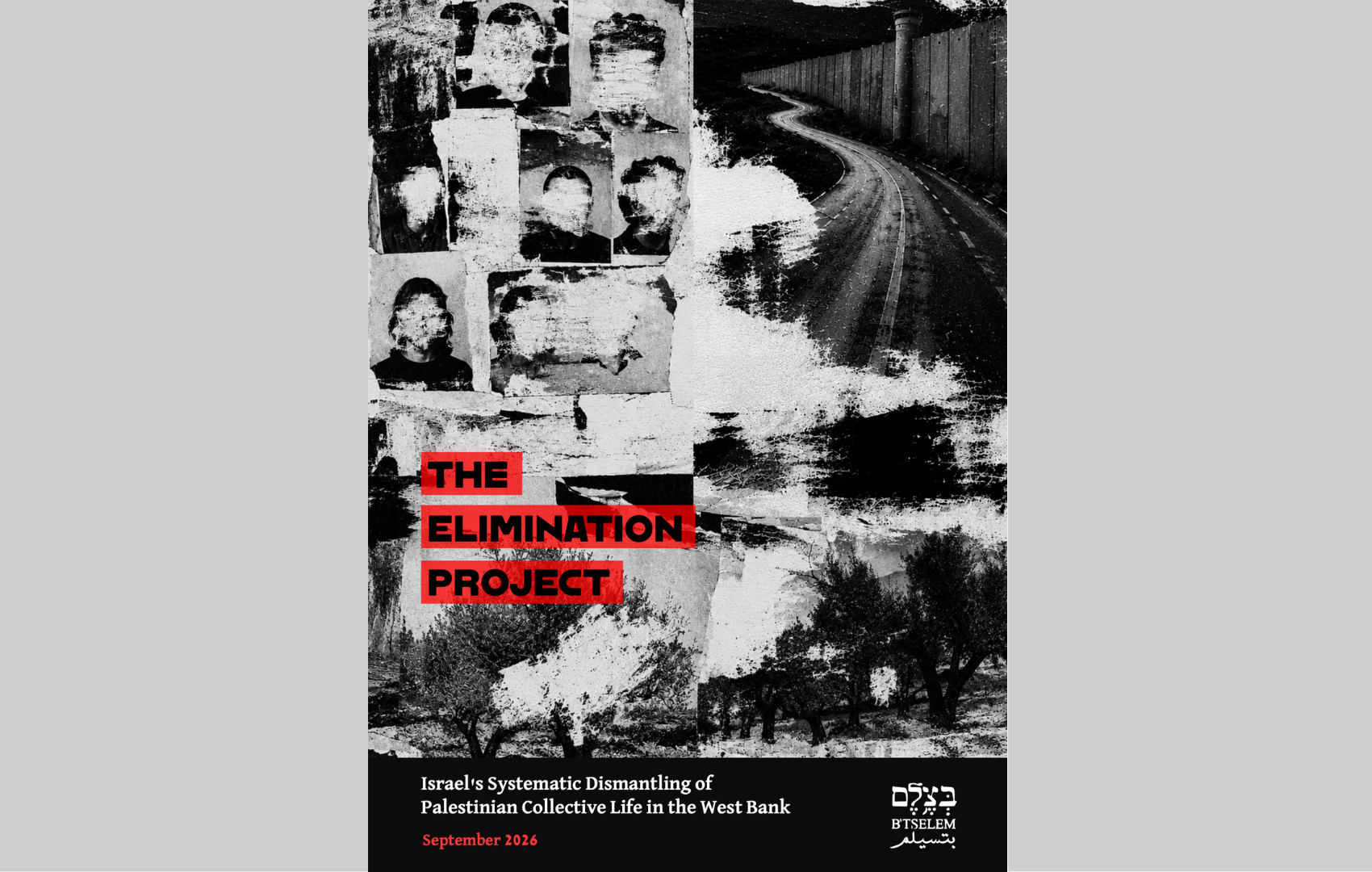
Israel’s Systematic Dismantling of Palestinian Collective Life in the West Bank.

Since the current Israeli government took office at the end of 2022, and even more so since October 2023, Israel has dramatically escalated its assault on all aspects of Palestinian life in the West Bank. At any moment, Palestinians may be exposed to violence by soldiers or armed settler militias, arrested and imprisoned, subjected to abuse and humiliation, and sometimes even killed. The Elimination Project draws on more than 2,000 testimonies B’Tselem collected from Palestinians since October 2023 and over three decades of documenting the Israeli apartheid regime’s human rights abuses in the West Bank. The report looks at the current reality not as a collection of isolated incidents or specific harms, but as part of a comprehensive mechanism of elimination that works to dismantle the conditions for continued Palestinian existence in the West Bank, while deepening Jewish control and supremacy in an irreversible manner. An examination of the current reality in the West Bank reveals that the project of elimination is now being implemented more openly, directly and violently than before, and increasingly relies on cooperation between official state authorities and settler militias operating in the West Bank with state backing and support.

Links:
The Elimination Project

B’Tselem: ‘Israël elimineert Palestijns leven op de Westoever’