
In de geschiedenis
Links:
Wikipedia

Links:
Wikipedia

De Free and Open source Software Developers’ European Meeting (FOSDEM) is een niet-commercieel tweedaags evenement dat ieder jaar georganiseerd wordt door vrijwilligers van de FOSS-gemeenschap om het gebruik van vrije en opensourcesoftware te bevorderen.
FOSDEM vindt plaats op het terrein van de ULB te Brussel. De talks & tutorials zijn vrij toegankelijk en werden in het verleden gegeven door grote namen als Richard M. Stallman en Jimbo Wales. Het doel van FOSDEM is tevens een mogelijkheid te vormen voor softwareontwikkelaars om “in real life” samen te komen, kennis te maken met andere projecten en op de hoogte te komen van de laatste nieuwe ontwikkelingen in de FOSS-wereld. In 2000 organiseerde Raphael Bauduin uit België een meeting voor FOSS–ontwikkelaars. Hij noemde het eerst Open Source Developers European Meeting (OSDEM). Om vrije software-ontwikkelaars niet tegen het hoofd te stoten is de meeting in 2001 hernoemd naar FOSDEM. In 2001 werd FOSDEM georganiseerd op de Campus de la Plaine, sinds 2002 wordt FOSDEM gehouden op de Campus Solbosch.
Links:
FOSDEM 2025
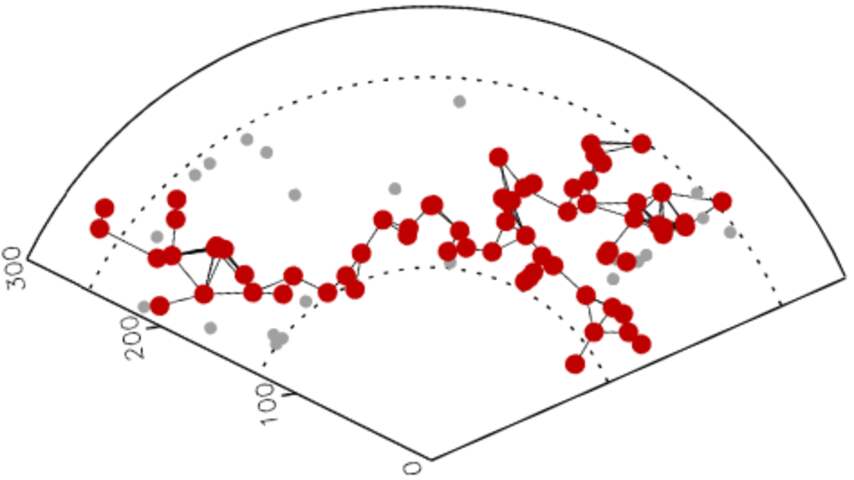
Wetenschappers hebben het grootste object in het heelal tot nu toe gevonden.
Quipu, zoals de superstructuur wordt genoemd, is een gigantisch lang snoer van clusters van sterrenstelsels, bij elkaar maar liefst 200 biljard zonsmassa (1 biljard is 10¹⁵) en 400 megaparsec lang, da’s 1,3 miljard lichtjaar. Quipu is een woord uit de Inca-taal en het heeft iets te maken met meten. Het onderzoek werd uitgevoerd door wetenschappers van het prestigieuze Max Planck Instituut in Duitsland en zij hebben deze superstructuur ontdekt, die bestaat uit afzonderlijke clusters en superclusters van sterrenstelsels, die allemaal gravitationeel met elkaar verbonden zijn. Naast Quipu zijn er nu nog vier andere superstructuren bekend, te weten Shapley, Serpens-Corona Borealis, Hercules en Sculptor-Pegasus.
Vrijdag; Wat eten we vandaag?; Gaza−Israël oorlog 2023 – …; planetoïde Bennu; Zorgfonds; De slimste mens NL; Dag voor Straatkinderen; Zebra Dag.

Wat eten we vandaag?:
Knipselkrant:
Agenda:
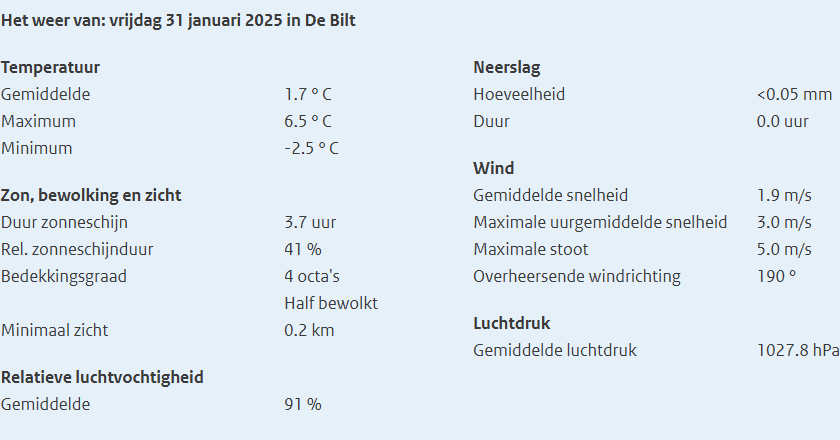
Weer:
Links:
In de geschiedenis
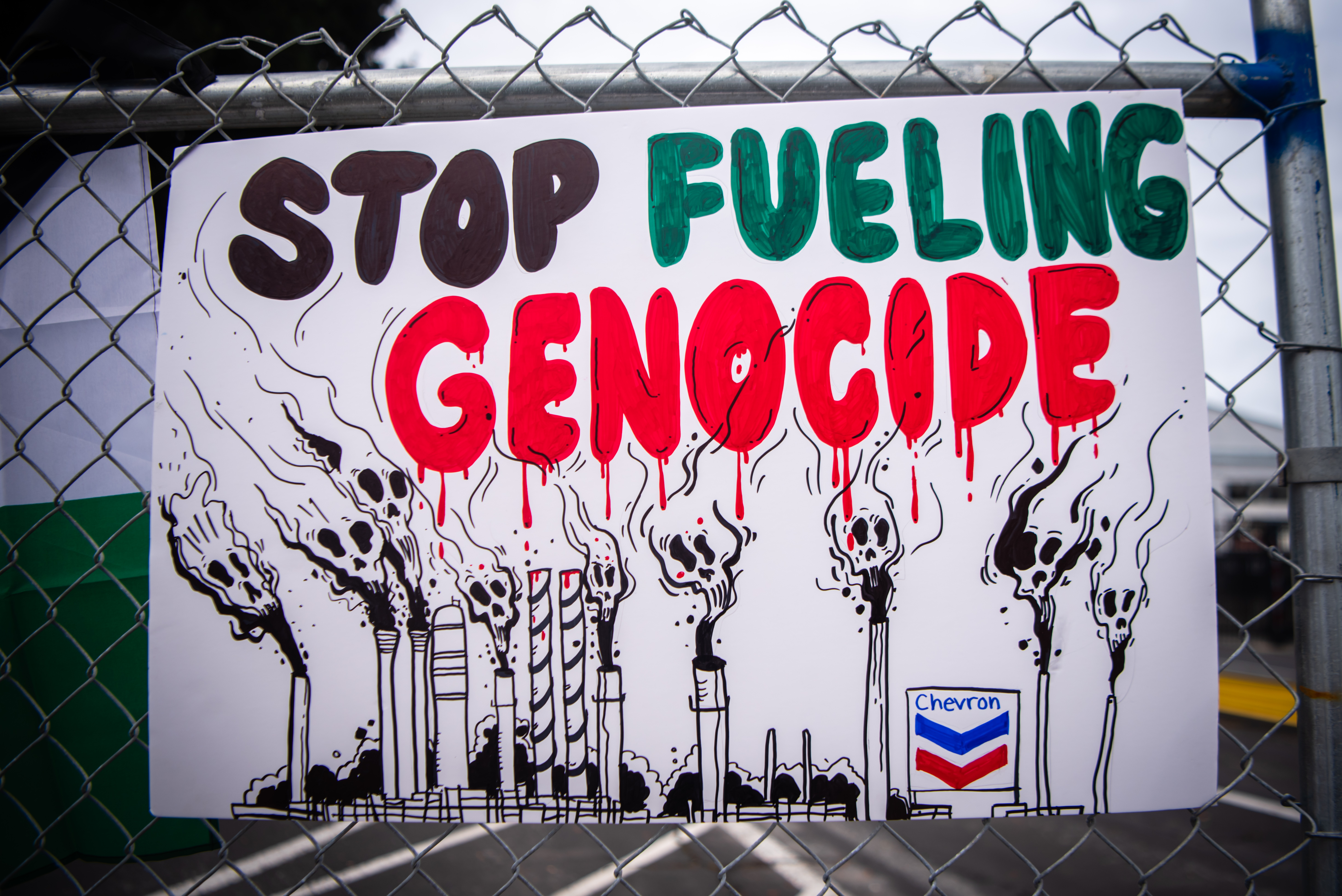
Chevron runs natural gas extraction and pipelines off the shore of Palestine/Israel, making it a major partner in Israeli energy apartheid, the military blockade on Gaza, and the illegal exploitation of Palestinian land and resources.
Join Palestinian civil society and a growing international coalition calling on Chevron to end its support of genocide and apartheid in Palestine. Chevron is the largest producer of natural gas for Israel and the largest multinational corporation with a significant stake in Israel’s energy sector. It operates and partially owns the largest active Israeli gas fields, Tamar and Leviathan, and the smaller and undeveloped Dalit field, all of which are located in the Eastern Mediterranean Sea, west of Haifa. The gas from Tamar is processed in a rig that is located farther south, off the coast of Isdud/Ashdod. In 2023, Chevron made an estimated $1.5 billion in revenue from Tamar and Leviathan gas sales alone, mostly from exports to Egypt and Jordan. Chevron partially owns the Mari B gas field off the coast of the Gaza Strip, but it has been depleted and inactive since 2013. Chevron also operates and partially owns the East Mediterranean Gas (EMG) pipeline, which runs from Israel to Egypt off the coast of the Gaza Strip. As the operator of these gas fields and the pipeline, Chevron is in charge of all operations of these projects, including planning, construction, production, and supply. The Caspian Pipeline Consortium in Russia, which supplies crude oil to Israel, and the main Kazakh companies that supply this oil, are also partially owned by Chevron. Between 2021 and December 2024, Chevron spent nearly $28.5 million on lobbying the U.S. government, including on energy issues related to Israel. Chevron entered the Israeli fossil gas market in 2020 with the acquisition of Noble Energy; it can choose to sell off this investment at any time.
Links:
Boycott Chevron
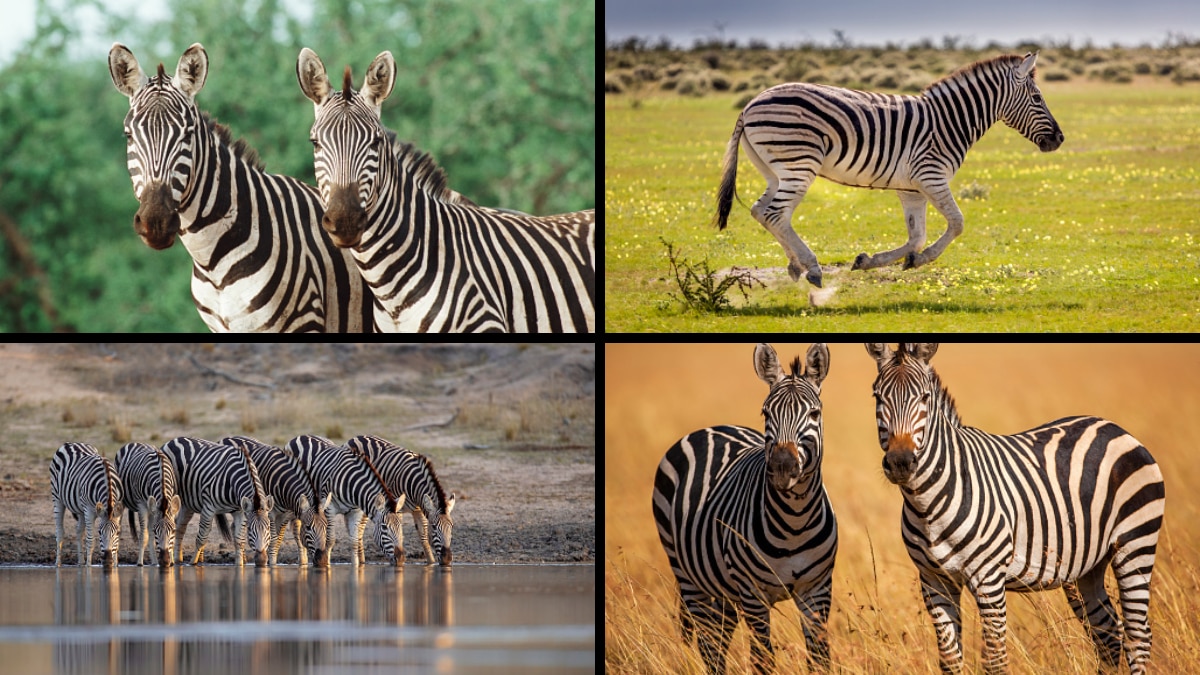
Een zebra is een paardachtige (familie: Equidae) afkomstig uit het midden en zuiden van Afrika, de dieren staan vooral bekend om hun zwart-witte strepenpatroon.
Algemeen gezien zijn het erg sociale dieren. Zebra’s leven met verschillende harems bijeen in een grotere kudde. De zebra is een herbivoor. Er bestaan drie soorten zebra’s: de steppezebra, de grévyzebra en de bergzebra. De mens is er nooit echt in geslaagd ze te domesticeren, in tegenstelling tot paarden en ezels, hun naaste verwanten. Hun paniekinstinct bij onraad bleek moeilijk af te leren.
Links:
Zebra Day 2024: What Threatens the Survival of These Majestic Creatures?
International Zebra Day 2025: Date, Significance, And Why It Is Celebrated?

2009 marked the 75th anniversary of the canonisation of John Bosco, the “Father and Teacher of Youth”, to mark the anniversary, Jugend Eine Welt launched Street Children’s Day the same year.
The “Street Children’s Day” is commemorated every year on the January 31st and should highlight the situation of these children and young people and raise funds for projects run by the Salesians of Don Bosco and the Salesian Sisters of Don Bosco in favour of street children worldwide. A „Street Children‘s Day“ information package is sent to parishes, interested teachers and youth groups at the beginning of January. The package included material for a service for children, general background information on the subject of street children and suggestions for campaigns. This material is also available online (in German). Since the first Street Children’s Day in 2009 it gained more and more attention in Austrian media, especially in 2011 when the auxiliary bishop of Vienna Franz Scharl cleaned shoes on the streets to commemorate the day.
Links:
Stree
Links:
Wikipedia

Vroege Vogels is een live-radioprogr
In het radioprogramma wordt het gesproken woord omlijst door licht klassieke muziek en salonmuziek. He
Een team vrijwilligers plant zo’n 3000 bomen op een bedrijventerrein onder de rook van Schiphol. En verder: Een vrij leven, de stormvloed van 1825, groene industrie, het jaar van de torenvalk en korstmossen. De column is deze week van Dolf Jansen.
Donderdag; Wat eten we vandaag?; Vuurwerk; Asteroide 2024 YR4; Werelddag Verwaarloosde Tropische Ziekten; Day of Non-violence and Peace / Mahatma Gandhi; Poëzieweek / Gedichtendag; International Film Festival Rotterdam; De staat van ons klimaat.
Wat eten we vandaag?:

Knipselkrant:
Agenda:
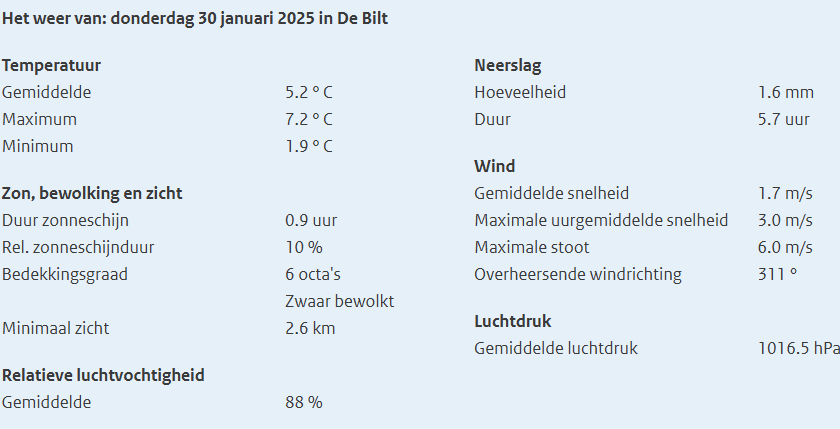
Weer:
Links:
In de geschiedenis