World Nuclear Industry Status Report 2026 – publicatie / publication

Op 29 september 2026 verscheen het World Nuclear Industry Status Report 2026.

Belangrijkste conclusie over kernenergie wereldwijd: weinig nieuws, het nucleaire verval zet door. Het aandeel nucleair in de globale electriciteitsvoorziening daalde gestaag verder tot onder de 9 %. Weliswaar steeg het aantal kerncentrales en ook de hoeveel stroom die deze opwekten. Maar de vraag naar elektriciteit groeide nog harder. En dus daalt het aandeel.

Links:
Nucleair verval zet door, WNISR rapport 2026 vandaag verschenen

International Astronautical Congress 2026

The 77th International Astronautical Congress

Every year, the International Astronautical Federation with the support of the International Academy of Astronautics and the International Institute of Space Law (IISL), holds the International Astronautical Congress (IAC) which is hosted by one of the national society members of the IAF.

They are an annual meeting of the actors in the discipline of space, and are generally held in late September or early October. They consist of plenary sessions, lectures and meetings. The IAC is attended by the agency heads and senior executives of the world’s space agencies. As the Second World War came to an end, the United States and the Soviet Union held different and competing political worldviews. As the Cold War began to take shape, communication between the two countries became less frequent. Both countries turned their focus to achieving military superiority over the other. Six years after the Iron Curtain fell, the International Astronautical Federation (IAF) was formed by scientists from all over Europe in the field of space research in order to collaborate once more. During the years of the Space Race, the IAF was one of the few forums where members of both East and West Europe could meet during the annual International Astronautical Congresses.

The 77th International Astronautical Congress (IAC 2026) will take place in Antalya, Türkiye, from 5–9 October 2026 — marking the first time in history that the event will be hosted in Türkiye. Known for its rich cultural heritage, warm hospitality, breathtaking Mediterranean coastline, and vibrant innovation ecosystem, Antalya will offer a unique backdrop to one of the world’s most prestigious space gatherings. This year’s edition of the IAC is hosted by the Turkish Space Agency (TUA) and co-hosted by the SAHA Istanbul Aerospace Cluster. The IAC 2026 theme, The World Needs More Space, frames a programme inviting visionary ideas, innovative technologies, and pioneering research. In an age where the exploration and utilization of outer space are more crucial than ever, our motto emphasizes the imperative of maintaining a secure, accessible, and collaborative environment in the cosmos.

The congress will serve as a platform to highlight the importance of space as a shared resource that must be preserved for peaceful use, fostering international cooperation across all nations, regardless of their developmental status. The core focus of “The World Needs More Space” is to advocate for the sustainable and equitable exploration of space. As more countries and diverse stakeholders join the global space economy, it is essential to ensure that space remains an open frontier for all. The IAC 2026 will address pressing issues surrounding space security, exploration, and the ethical implications of our activities beyond Earth. The IAC 2026 promises to be an unforgettable gathering that will shape the future of space exploration and utilization. We invite you to join us in Antalya and contribute to the dialogue on how we can collectively ensure that the cosmos remains a realm of opportunity, inspiration, and unity for generations to come.

Links:
International Astronautical Congress

2026-09-28, Lief dagboek

Maandag; Wat eten we vandaag?; Woningcrisis in Spanje; Schiphol; Werelddag tegen de Hondsdolheid; Day for Universal Access to Information; Welke ervaringen hebben Sinti, Roma en reizigers met discriminatie; International Astronautical Congress.

Deze afbeelding heeft een leeg alt-attribuut; de bestandsnaam is dagboek.png

Wat eten we vandaag?:

Klik op afbeelding voor origineel

Knipselkrant:


Agenda:

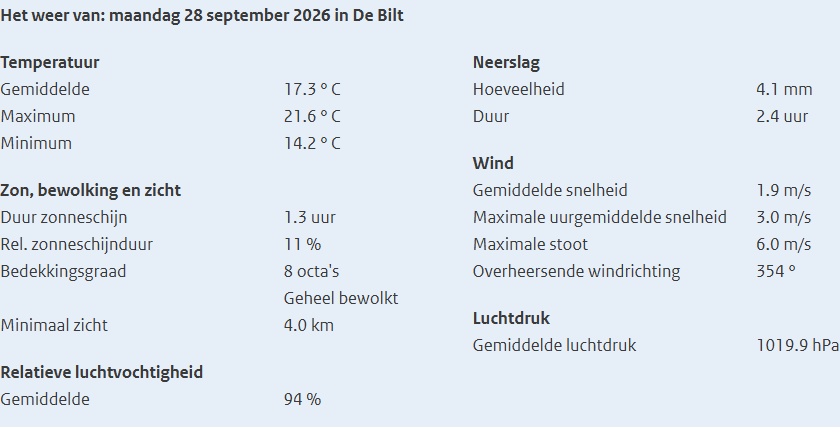
Weer:

Links:
In de geschiedenis

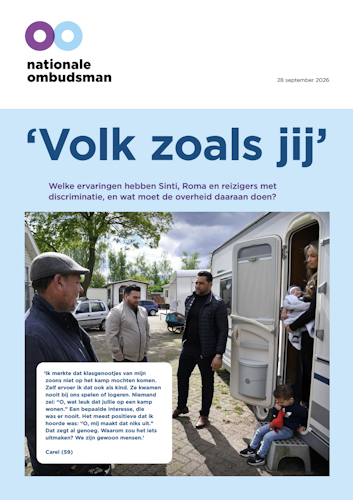
‘Volk zoals jij’ : Welke ervaringen hebben Sinti, Roma en reizigers met discriminatie, en wat moet de overheid daaraan doen? – publicatie

Volk zoals jij

Nationale ombudsman in rapport ‘Volk zoals jij : Welke ervaringen hebben Sinti, Roma en reizigers met discriminatie, en wat moet de overheid daaraan doen?‘: Sinti, Roma en reizigers worden stelselmatig gediscrimineerd.

Negen jaar nadat de Nationale ombudsman voor het eerst vaststelde dat de overheid onvoldoende rekening hield met de mensenrechten van Sinti, Roma en reizigers, is hun positie nauwelijks verbeterd. Zij krijgen nog altijd te maken met discriminatie en uitsluiting, ook door de overheid zelf. Nationale ombudsman Reinier van Zutphen roept het kabinet op tot actie. “Er is schokkend weinig voortgang geboekt. Ik mis bij de overheid het gevoel van urgentie dat hierbij nodig is.”

Links:
Nationale ombudsman: Sinti, Roma en reizigers worden stelselmatig gediscrimineerd

#AccessToInfoDay Day for Universal Access to Information / #RightToKnow Day 2026

Day for Universal Access to InformationThe International Day for Universal Access to Information (IDUAI) was proclaimed on 15 October 2019 at the 74th UN General Assembly to be held on 28 September, following the adoption of the 38 C/Resolution 57.

Initially the day (commonly called the Access to Information Day) was designated by the UNESCO General Conference. The decision to celebrate and promote 28 September as the International Right to Know Day was taken on the last day of a Freedom of Information litigation conference held 26-28 September 2002 in Sofia, Bulgaria. Representatives of Freedom of Information (FOI) organizations from 15 countries took part – Albania, Armenia, Bosnia and Herzegovina, Bulgaria, Georgia, Hungary, India, Latvia, Macedonia, Mexico, Moldova, Rumania, Slovakia, South Africa, and USA, as well as representatives of international organizations active in the FOI field. On 28 September 2002, the FOI activists established the International Freedom of Information Advocates Network (FOIAnet), Access to Information Programme (AIP) being its co-founder and active member. The members of the newly found FOIAnet agreed to collaborate in promotion of the individual right of access to information and open, transparent governance and adopted a Memorandum setting forth the goals and activities of the network. Today, the members of the FOIAnet are over 200 organizations and civil groups from around the globe which exchange knowledge and experience and undertake international initiatives for better freedom of information standards. FOI activists around the globe organize a variety of events and initiatives on 28 September to raise awareness on the right of information and to campaign for open, democratic societies in which there is full citizen empowerment and participation in government.

Conferences, trainings, competitions, awards ceremonies, rock and pop concerts, theatre performances, movies, launch of info-requesting campaigns and new web sites, focused publications, etc. aim to further promote this fundamental human right and encourage citizens, journalists and NGOs in their search for government held information. In some countries, the Right to Know Day elaborated in Right to Know Weeks. Music has been composed especially for the occasion. In November 2015, UNESCO declared September 28th as the “International Day for Universal Access to Information” and was first held on 28 September 2016.The UNESCO resolution creating the day was pushed by African civil society groups seeking greater information transparency. Currently only 17 African Union me mber states have adopted national right to information laws, and groups like Open Government Partnership hope that the recognition of the right to information will “provide an important platform for all stakeholders at national level to discuss the adoption and effective implementation of national right to information laws in line with continental and international standards and obligations.” However, African civil society groups like MISA Zimbabwe have noted that states like Zimbabwe which do have Right to Information laws still have a long way to go to ensure they improve governance. In 2016, MISA Zimbabwe used Access to Information Day to criticise Zimbabwe’s poor information transparency provisions, noting that, “While Zimbabwe was one of the first African countries to adopt an access to information law in the form of the Access to Information and Protection of Privacy Act (AIPPA), the law in question is a far cry from its purported import and impact.”

Links:
Day for Universal Access to Information

Right To Know Day

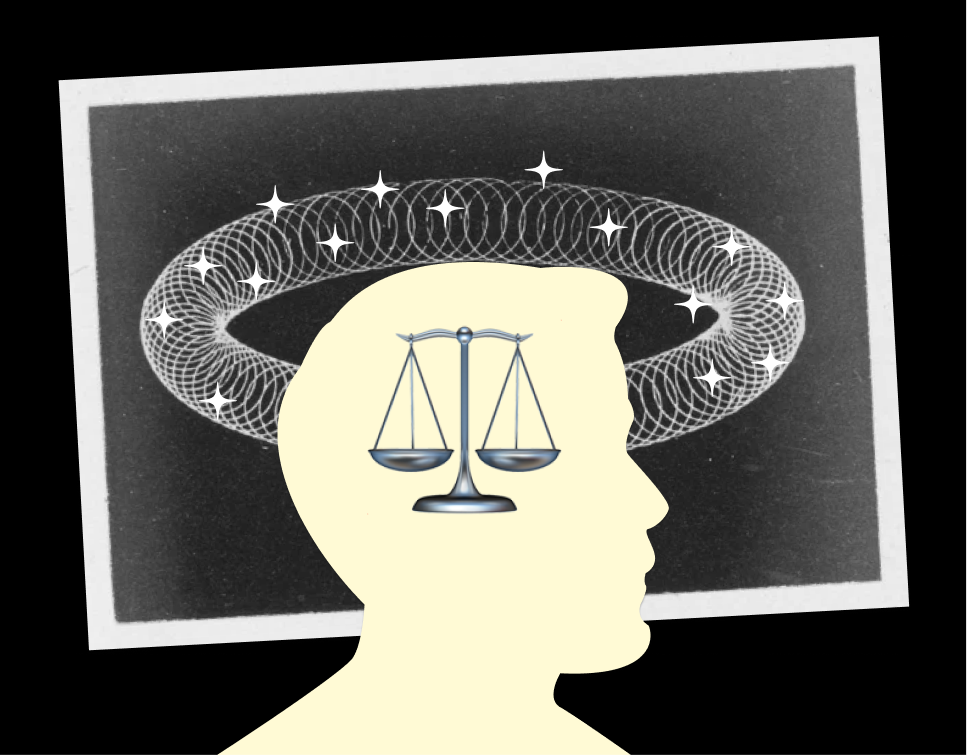
Can AI be used to violate human rights? – publication

Nieuw onderzoek laat zien: generatieve AI schendt mensenrechten

Article ‘Can AI be used to violate human rights? Models are not reliably resistant to uses that violate human rights‘.

Historically, the capacity of a nation or institution to violate human rights has been capped by its ability to administrate. A large workforce of human clerks and bureaucrats contains individuals that hesitate, resist, or whistleblow—and it will be harder to find committed workers the more egregious the offense. AI changes all this. When both administration and accountability can be outsourced to non-judgmental, automated systems, executive power is no longer affected by moral resistance. This makes human rights violations both easier to commit and harder to contest. In the Netherlands, an algorithm employed by the national tax authority illegitimately reclaimed childcare benefits from mostly minority families for 14 years without intervention. In the USA, Amazon has repeatedly been accused of employing AI-based surveillance to monitor workers and interfere with unionization efforts. The Chinese province of Xinjiang has been reported to use AI to monitor and arbitrarily detain citizens based on their expressed thoughts, religious practices, and personal communications.

Still, the automated discrimination or oppression at the center of these examples requires significant effort and resources. The same cannot be said for modern large language models. General-purpose AI like ChatGPT and Google Gemini can be applied to large-scale information processing tasks with only an API key and verbal instructions, and the sorting, scoring, surveilling, and processing of people is exactly the type of large-scale information processing task these models excel at. These practices are violations of the Universal Declaration of Human Rights (UDHR), which defines global standards for the treatment of all people in all nations. However, since the UN leaves member states to interpret the UDHR themselves, there is no guidance on what AI uses violate these rights, and no clear international policy on what LLM developers should and should not allow. This is an issue—if a deployer of an LLM-based administration system intends to use it to violate human rights, and the model complies with the request, there is no clear point of intervention.

Of course, using AI for these purposes would, in many jurisdictions, be illegal. That means less than it might seem to: of the models we previously tested, none consistently objected to practices that are forbidden under European legislation. Model developers leave deployers and users responsible, specifying what the model may be used for through usage policies, typically without fully restricting its functionality. Much governance and policy attention has centered on preventing the production of Chemical, Biological, Radiological & Nuclear (CBRN) weapons, cyber offense, and Child Sexual Abuse Material (CSAM), but when it comes to broader human rights, model developers are effectively left to decide for themselves what is and isn’t acceptable to offer. Open-weights models, which can be retrained, jailbroken, and deployed at will, introduce additional complications, since access to them cannot be restrained or modified after distribution.

Bureaucracy-fueled diffusion of responsibility is not a new issue—its role in large-scale human rights violations has long been a topic of intense study. Spreading a potential violation across many small administrative tasks sets individuals up to feel like they’re just maintaining a system rather than playing a role in moral harm. Offloading decisionmaking to AI systems allows people to sidestep accountability in much the same way. Increasingly capable AI gradually replacing individual judgment in human institutions could, over time, reduce our capacity to shape our governments, regulate the economy, and influence other societal systems, a phenomenon described as gradual disempowerment. Without clear standards for human rights preservation in AI systems, we run the risk of societal harms without being able to hold anyone liable, losing the oversight necessary for regulation, and concentrating power in the hands of whoever controls AI.

All this makes it relevant to know how difficult current AI developers make it to discriminate or oppress people. We set out to test: to what degree do present-day AI systems comply with instructions that violate human rights?

Links:
Nieuw onderzoek laat zien: generatieve AI schendt mensenrechten

World Rabies Day / Werelddag tegen de Hondsdolheid 2026

World Rabies Day

World Rabies Day is held every year on September 28, this date was chosen as it is the anniversary of the death of Louis Pasteur – the first person to successfully create a vaccine against rabies.

World Rabies Day is coordinated by Global Alliance for Rabies Control (GARC) and it has been commemorated every year on September 28 since 2007. World Rabies Day aims to raise awareness and advocate for rabies elimination globally. It is an event designed to be inclusive, uniting people, organizations, and stakeholders across all sectors against rabies – because together we can eliminate rabies!

World Rabies Day 2026 theme, “Stronger Together,” highlights a simple truth: rabies elimination is only possible when we work together. From local communities and veterinary professionals to governments, healthcare workers, educators, and global partners, we all have role to play in making a world free from rabies a reality. Although many communities have eliminated rabies, too many challenges remain: Gaps in communication, fragmented systems, and duplicated efforts can slow progress. The 2026 theme calls on all stakeholders to strengthen partnerships and align efforts across human and animal health systems. When we work together, we can:

  • Expand access to life-saving dog vaccinations.
  • Improve rabies surveillance and reporting systems.
  • Strengthen public awareness and education.
  • Support policies that protect both people and animals.
  • Build sustainable community-led solutions.

Rabies elimination depends on connected systems. Stronger partnerships create stronger outcomes.

Links:
World Rabies Day

Valpreventieweek NL 2026

veiligheidnl

In de Valpreventieweek doet Veiligheid.nl één krachtige oproep: zet senioren in beweging voor valpreventie!

Veiligheid.nl richt zich hierbij op belangrijke stakeholders binnen de ketenaanpak valpreventie. Zij kunnen er namelijk voor zorgen dat ouderen na het invullen van de Valrisicotest in actie komen én na het volgen van een valpreventieve beweeginterventie in beweging blijven. Zo wordt samen een grote stap gezet richting minder valongevallen en meer zelfstandigheid voor senioren. In 2026 staat de week in het teken van ‘Valpreventie: essentieel voor vitaal ouder worden’. Samen zetten we de stap naar een integrale aanpak.

Links:
Valpreventieweek

Niet vallen kun je trainen: ‘Valpreventie draait om langer zelfstandig blijven’