
2025-09-09, Lief dagboek
Dinsdag; Wat eten we vandaag?; Global Sumud Flotilla; Gaza−Israël oorlog 2023 – …; Day to Protect Education from Attack.

Wat eten we vandaag?

Knipselkrant:
Agenda:
Weer:

Links:
In de geschiedenis

Dinsdag; Wat eten we vandaag?; Global Sumud Flotilla; Gaza−Israël oorlog 2023 – …; Day to Protect Education from Attack.
Wat eten we vandaag?
Knipselkrant:
Agenda:
Weer:
Links:
In de geschiedenis
In this Hendrik de Waard lecture, experimental physicist Kjeld Beeks shows how cutting-edge nuclear research is redefining the present and shaping the future, while reflecting on its societal and ethical implications.
From GPS to quantum experiments, precise timekeeping drives modern life. Atomic clocks are already extraordinarily accurate, yet researchers are now aiming higher with a nuclear clock that measures time using the motion of an atomic nucleus. The isotope thorium-229, uniquely possessing a laser-accessible low-energy state, lies at the centre of this effort. When embedded in transparent crystals and probed with vacuum-ultraviolet light, this nuclear transition provides a reference less sensitive to environmental noise than electronic transitions. Current work focuses on engineering host materials, controlling and quenching excitations, and understanding how crystal defects shape nuclear behaviour; effectively building a nuclear clock. This breakthrough could enable innovations in navigation, sensing, and communications, as well as unlock new insights in fields such as relativity, dark matter, and fundamental constants. Yet, nuclear science unfolds within a societal landscape shaped by both benefits and controversies.

Since 1967, the annual celebrations of International Literacy Day (ILD) have taken place on 8 September around the world to remind policy-makers, practitioners, and the public of the critical importance of literacy for creating more literate, just, peaceful, and sustainable society.
Literacy is a fundamental human right for all. It opens the door to the enjoyment of other human rights, greater freedoms, and global citizenship. Literacy is a foundation for people to acquire broader knowledge, skills, values, attitudes, and behaviours to foster a culture of lasting peace based on respect for equality and non-discrimination, the rule of law, solidarity, justice, diversity, and tolerance and to build harmonious relations with oneself, other people and the planet. Despite progress, at least 739 million youth and adults worldwide still lack basic literacy skills in 2024. At the same time, 4 in 10 children are not reaching minimum proficiency in reading, and 272 million children and adolescents were out of school in 2023. In 2025, International Literacy Day (ILD) will be celebrated under the theme of “Promoting literacy in the digital era.”
Links:
International Literacy Day

The Day to Protect Education from Attack was established by a unanimous decision of the UN General Assembly, calling on UNESCO and UNICEF to raise awareness of the plight of millions of children living in countries affected by conflict.
The resolution A/RES/74/275 proclaiming the Day was presented by the State of Qatar and co-sponsored by 62 countries. The General Assembly resolution affirms that governments have the primary responsibility to provide protection and ensure inclusive and equitable quality education at all levels to all learners, especially those in vulnerable situations. It further emphasizes the need to intensify efforts and increase funding to promote safe and protective school environments in humanitarian emergencies by taking all feasible measures to protect schools, learners and educational personnel from attack, refrain from actions that impede children’s access to education, and facilitate access to education in situations of armed conflict. UNESCO and UNICEF will facilitate the annual observance of the Day in close collaboration with partners within and outside the UN system. Working on the frontlines in conflict-affected countries, the UN entities have long assisted Member States in strengthening their capacity to provide access to quality educational opportunities for all in times of crisis.
Links:
Wikipedia

Medium Day is a free, live, online conference where the Medium community is brought together to celebrate the power of writing through dozens of livestream sessions and activities throughout the day.
You can expect to learn how writers crafted their most popular stories, how they found real-world opportunity through their work, and how they elevated their expertise through their writing practice. You’ll also discover how publications offer a home for your work through their supportive communities of passionate readers, writers, and editors. And you’ll hear from Medium Staff in a variety of behind-the-scenes sessions showcasing our tools, case studies, and new releases.
Links:
Medium Day 2025
Maandag; De Rode Lijn / Gaza; verantwoordelijkheid staten voor klimaatverandering; StarTrekDay; Literacy Day; Week van Lezen en Schrijven; Verspillingsvrije Week; Wereld Suïcide Preventie Week; The Sky at Night.
Knipselkrant:
Agenda:
Weer:
Links:
In de geschiedenis

Van 8 tot en met 15 september 2025 is de Week van lezen en schrijven, dan wordt extra aandacht gevraagd voor beperkte basisvaardigheden.
Dat gebeurt met het Nederlandse publiek, taalnetwerken, gemeenten en bedrijven. Vele partners, bedrijven, gemeenten en organisaties organiseren activiteiten tijdens de Week van lezen en schrijven. Van theatervoorstellingen tot open inloopdagen. En van puzzeltochten tot het uitdelen van letterkoekjes. En ook lokale radiostations zetten zich ervoor in. Dit jaar doen veel lokale radiostations mee met de Week van lezen en schrijven. Ervaringsdeskundigen van Stichting ABC en adviseurs van Stichting Lezen en Schrijven worden in het hele land bevraagd door plaatselijke programmamakers. We zijn blij met die betrokkenheid, want uit onderzoek blijkt dat mensen die moeite hebben met lezen graag naar lokale radio luisteren om op de hoogte te blijven van wat er in hun regio speelt. In Nederland hebben 3 miljoen mensen van 16 tot en met 75 jaar moeite met lezen, schrijven en/of rekenen. Daardoor hebben ze ook vaak moeite met een computer of een smartphone.
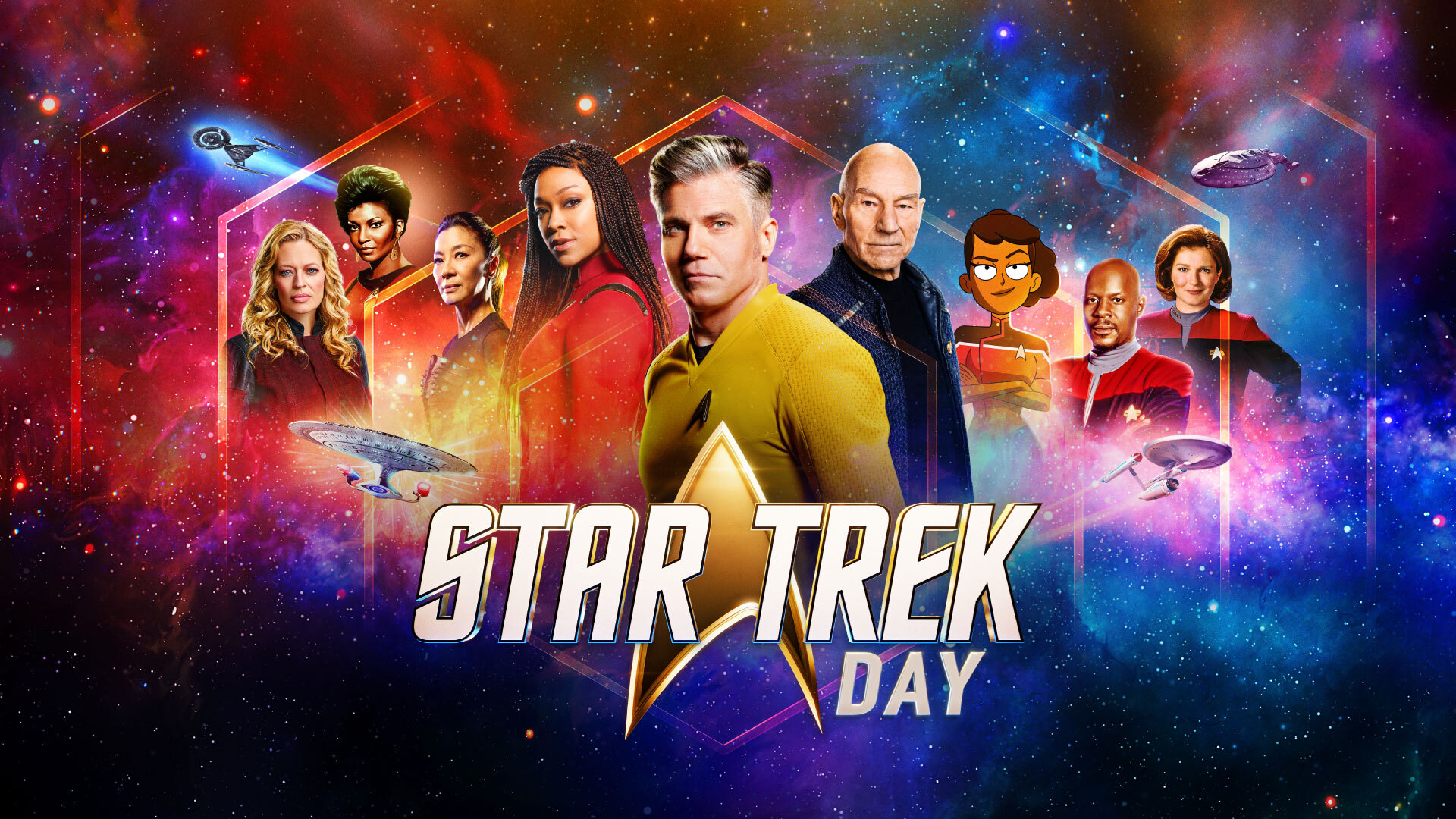
Star Trek Day is an annual informal commemorative day on September 8, referencing the broadcast premiere of the original Star Trek series on that day in 1966.
The day is celebrated by fans across the world to acknowledge the cultural impact of the Star Trek franchise. On September 8, 1966, Star Trek debuted for the first time on television with “The Man Trap,” the pilot episode of “Star Trek: The Original Series“, introducing the world to Captain James T. Kirk (William Shatner), Spock (Leonard Nimoy) and their crewmates as they explored the galaxy on the starship USS Enterprise. Star Trek is an American science fiction media franchise created by Gene Roddenberry, which began with the eponymous 1960s television series and became a worldwide pop-culture phenomenon. The franchise has expanded into various films, television series, video games, novels, and comic books, becoming one of the most recognizable and highest-grossing media franchises of all time. The franchise began with Star Trek: The Original Series, which debuted in the US on September 8, 1966, and aired for three seasons on NBC. It was first broadcast on September 6, 1966, on Canada’s CTV network. It followed the voyages of the crew of the USS Enterprise, a space exploration vessel built by the United Federation of Planets in the 23rd century, on a mission “to explore strange new worlds, to seek out new life and new civilizations, to boldly go where no man has gone before”. In creating Star Trek, Roddenberry was inspired by C. S. Forester‘s Horatio Hornblower series of novels, Jonathan Swift‘s 1726 novel Gulliver’s Travels, the 1956 film Forbidden Planet, and television westerns such as Wagon Train.
Links:
Wikipedia