The World Bank set out to transform health care for the poor in Africa. It drove patients deeper into poverty. – publication

A surge in private equity funding for hospitals left a trail of crushing debts, patient detentions and broken promises.

A surge in private equity funding for hospitals left a trail of crushing debts, patient detentions and broken promises.
Links:
Wikipedia
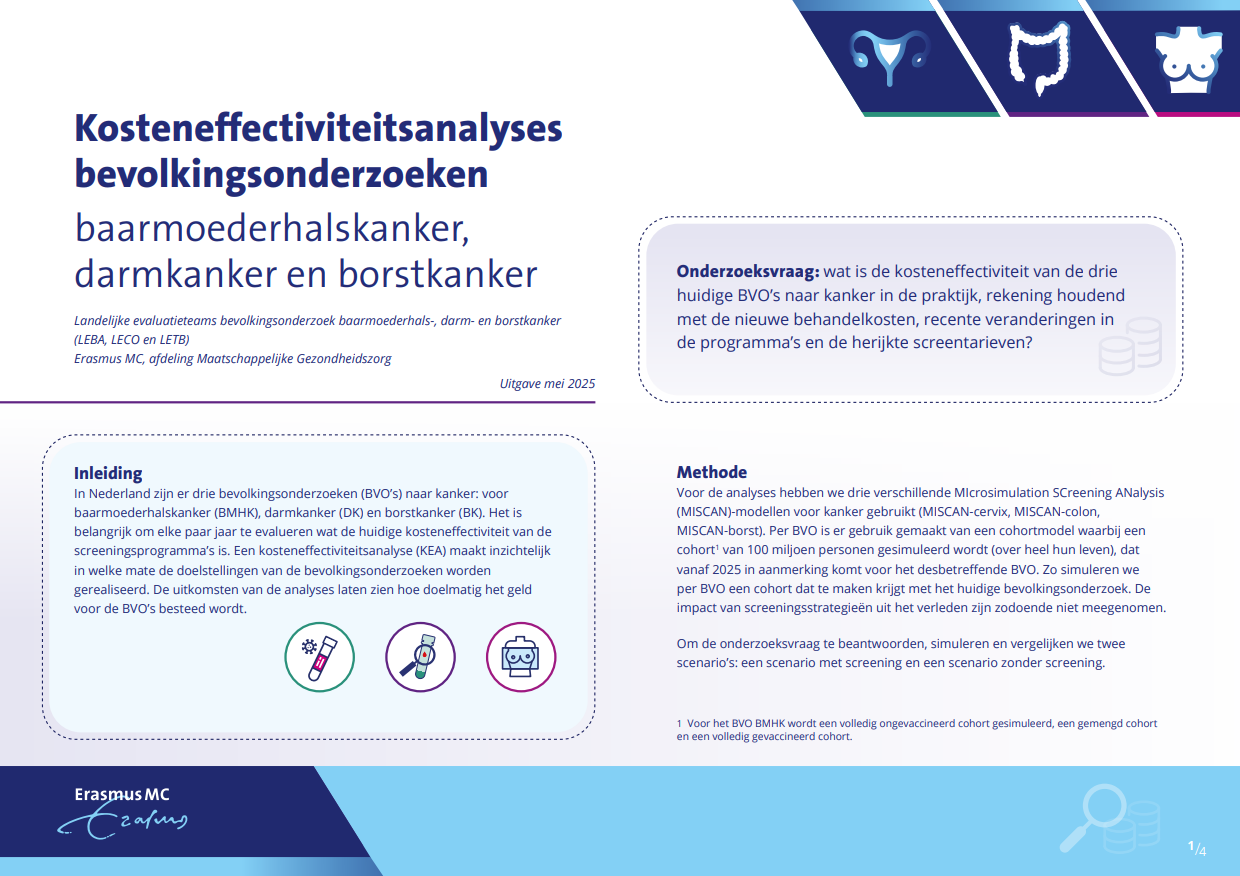
Hoe eerder darmkanker wordt opgespoord, hoe succesvoller de behandeling is en hoe kleiner de kans is om aan de ziekte te overlijden.
Daarom wordt in Nederland het bevolkingsonderzoek darmkanker aangeboden. En dat doet zijn werk goed, blijkt uit een evaluatie van Erasmus MC in opdracht van het RIVM. Het risico om te overlijden aan darmkanker daalde met 45 procent bij degenen die deelnamen aan het bevolkingsonderzoek naar darmkanker. Dat blijkt uit een evaluatie van het bevolkingsonderzoek door het Erasmus MC in opdracht van het RIVM. Erasmus analyseerde de uitkomsten van de screening vanaf de start van het bevolkingsonderzoek in 2014 tot nu. In Nederland ontvangen mensen van 55 tot en met 75 jaar elke twee jaar een oproep voor het bevolkingsonderzoek darmkanker. Een ontlastingstest spoort bloed op dat kan duiden op darmkanker of een voorstadium daarvan. Zo kan darmkanker vroeg ontdekt of zelfs voorkomen worden. Dit vergroot de kans op een succesvolle behandeling. Toch is het aantal deelnemers de afgelopen jaren gedaald. In 2023 deed slechts 67,2 procent van de genodigden mee aan de ontlastingstest. Vooral mannen maken er minder gebruik van, terwijl uit de cijfers blijkt dat er bij hen vaker darmkanker wordt gevonden. Het doel van het onderzoek is dan ook om darmkanker te voorkomen en de sterfte en ziektelast te verminderen.
Links:
Bevolkingsonderzoek verlaagt sterfte aan darmkanker met bijna 45 procent – ErasmusMC
Bevolkingsonderzoek verlaagt sterfte aan darmkanker met bijna 45 procent – RIVM
‘Duizenden sterfgevallen voorkomen door bevolkingsonderzoek borst-, darm- en baarmoederhalskanker’

De Deventer Boekenmarkt is een jaarlijks evenement die wordt gehouden op de eerste zondag van augustus op de Welle in Deventer en wordt gezien als de grootste boekenmarkt van Europa.
Er zijn in totaal circa 875 kramen met honderdduizenden boeken, tijdschriften, kaarten en aanverwante. Ruim 6 kilometer markt met deelname van vele gerenommeerde boekhandelaren en antiquariaten uit het hele land. De markt begint om 09:30 en duurt tot 17:30, om 07:00 verschijnen echter al de eerste liefhebbers.
Links:
Deventer Boekenmarkt
The International Seabed Authority (ISA) welcomes members of the Council for Part II of its 30th session. Until 18 July, the Council will continue negotiations on the draft regulations for the exploitation of mineral resources in the international seabed area — the final component of the ISA Mining Code.
Links:
The 30th Session of the International Seabed Authority
The Council of the International Seabed Authority opens the first part of its thirtieth session
Greenpeace: The deep sea mining industry is crumbling and desperate
Statement by Senckenberg Society for Nature Research, 6 June 2025
Statement by Senckenberg Ocean Species Alliance, 10 June 2025
Letter by WWF International, Oceans North, EJF, Greenpeace International and DSCC, 25 June 2025
Maandag; Wat eten we vandaag?; Afdelingslunch; Treaty on the Prohibition of Nuclear Weapons; 30th Session of the International Seabed Authority.

Wat eten we vandaag?:

Afdelingslunch:
Om het begin van de zomervakantieperiode te vieren werd er een afdelingslunch bij een eetcafé georganiseerd en genoten.
Agenda:
Weer:
Links:
In de geschiedenis
Zondag; Wat eten we vandaag?; BRICS Summit; Vroege Vogels.
Wat eten we vandaag?:

Agenda:
Weer:
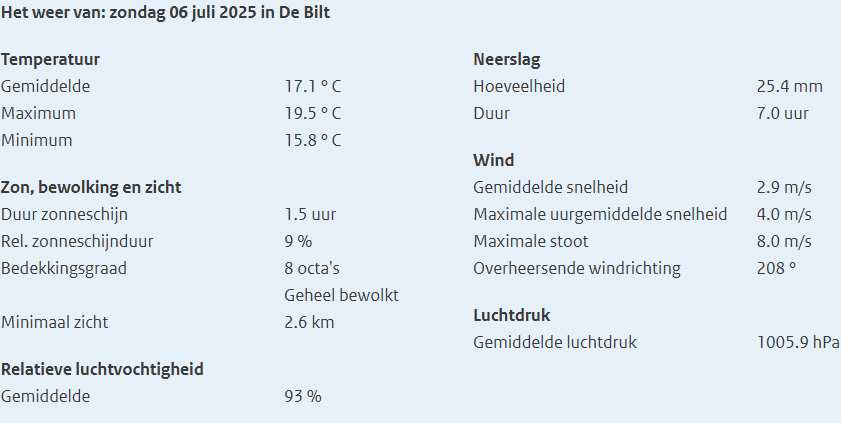
Links:
In de geschiedenis
The Treaty on the Prohibition of Nuclear Weapons (TPNW), or the Nuclear Weapon Ban Treaty, is the first legally binding international agreement to comprehensively prohibit nuclea
It was adopted on 7 July 2017, opened for signature on 20 September 2017, and entered into force on 22 January 2021. For those nations that are party to it, the treaty prohibits the development, testing, production, stockpiling, stationing, transfer, use and threat of use of nuclear weapons, as well as assistance and encouragement to the prohibited activities. For nuclear armed states joining the treaty, it provides for a time-bound framework for negotiations leading to the verified and irreversible elimination of its nuclear weapons programme. A mandate adopted by the United Nations General Assembly on 23 December 2016 scheduled two sessions for negotiations: 27 to 31 March and 15 June to 7 July, 2017. The treaty passed on schedule on 7 July with 122 in favour, 1 against (Netherlands), and 1 official abstention (Singapore). Sixty-nine nations did not vote, among them all of the nuclear weapon states and all NATO members except the Netherlands.
Lin
United Nations Conference to Negotiate a Legally Binding Instrument to Prohibit Nuclear Weapons, Leading Towards their Total Elimination
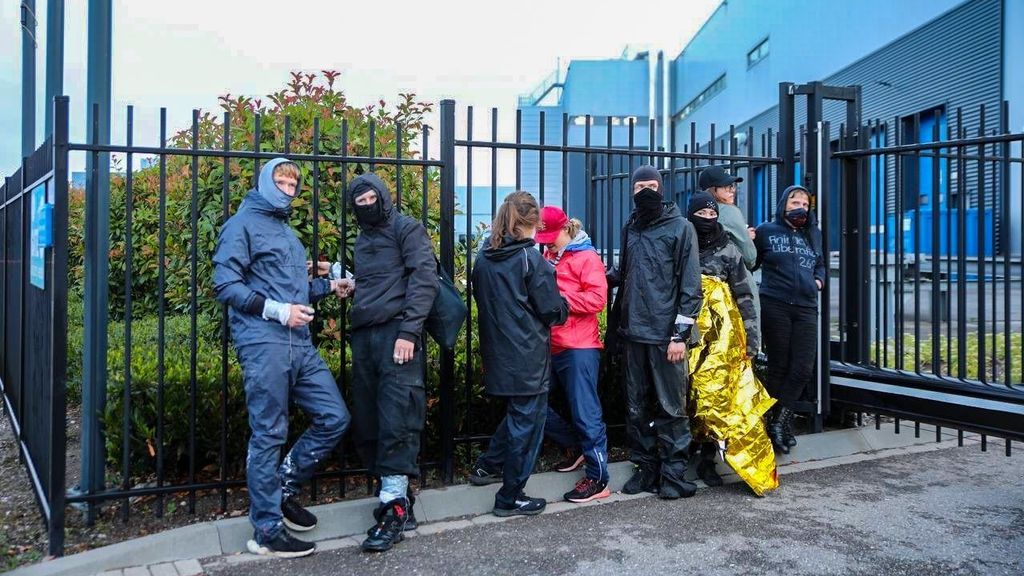
In de nacht van zondag 6 op maandag 7 juli 2025 bezetten 39 dierenactivisten slachterijen van VanDrie Group.
De actievoerders hadden zich vastgeketend op het terrein en zijn binnengegaan in de slachterijen. Hierdoor ligt de productie op de locaties stil. Het gaat om leden van de Franse dierenrechtenorganisatie 269 Libération Animale. Ze protesteren tegen geweld tegen dieren. De slachterijen discrimineren volgens de actievoerders dieren alleen omdat het dieren zijn en denken dat ze kunnen doden om geld te verdienen. Dat is niet goed en moet gestopt worden. De bezetters benadrukken dat het belangrijk is om de bedrijven op de plekken waar de dieren zijn te raken, omdat het protest anders niet serieus wordt genomen.
Links:
Dierenactivisten bezetten drie Apeldoornse slachthuizen
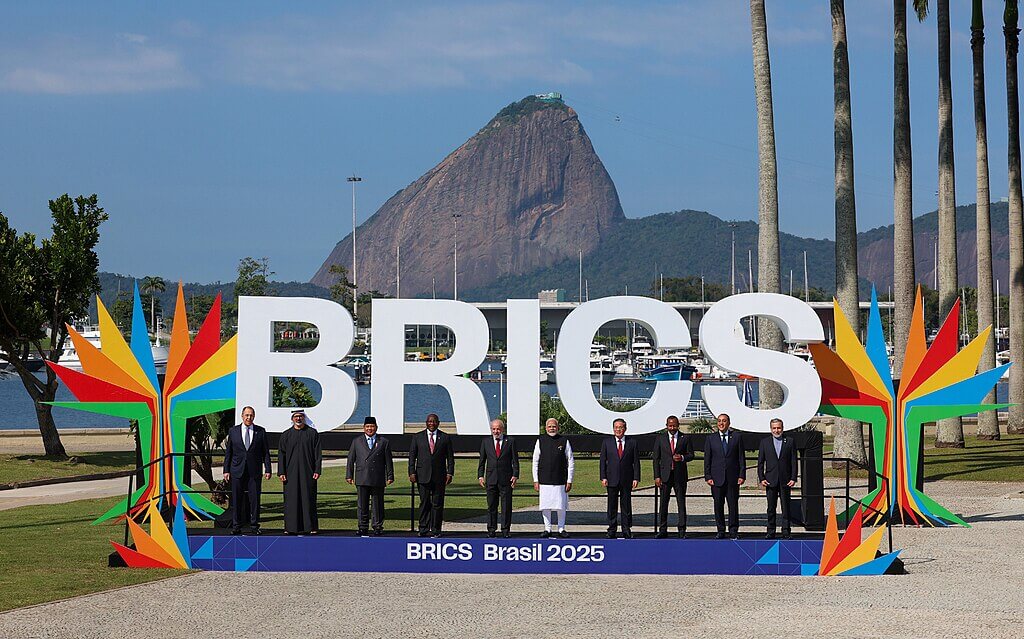
The 2025 BRICS summit was the seventeenth annual BRICS summit, held in Rio de Janeiro, Brazil.
BRICS is an intergovernmental organization comprising ten countries Brazil, Russia, India, China, South Africa, Egypt, Ethiopia, Indonesia, Iran and the United Arab Emirates. The BRICS cooperation mechanism was launched in 2006, initially comprising Brazil, Russia, India, and China; South Africa joined in 2011. This is the first BRICS summit to feature Indonesia after being admitted on 8 January 2025. Between 28 and 29 April 2025, the foreign ministers of BRICS member states met in Rio de Janeiro, Brazil, ahead of the leaders’ summit. Although the ministers failed to release a joint communique, they voiced concern over the rise of protectionist trade practices under the Trump administration in the United States. Chinese leader Xi Jinping did not attend the summit for the first time since succeeding Hu Jintao as CCP General Secretary in 2012. Russian President Vladimir Putin attended the meeting only virtually due to an arrest warrant from the International Criminal Court for war crimes during the Russian invasion of Ukraine. As of July 2025, the BRICS grouping accounts for over 45% of global GDP (nominal) and over 50% at PPP, represents more than half of the world’s population, and controls significant shares of global energy reserves, industrial capacity, and critical mineral resources. The idea of a BRICS-like group can be traced back to Russian foreign minister Yevgeny Primakov and to the two forums RIC (Russia, India, China) and IBSA (India, Brazil, South Africa). BRIC was originally a term coined by British economist Jim O’Neill and later championed by his employer Goldman Sachs in 2001 to designate the group of emerging markets.
The first summit in 2009 featured the founding countries of Brazil, Russia, India, and China, where they adopted the acronym BRIC and formed an informal diplomatic club where their governments could meet annually at formal summits and coordinate multilateral policies. In April 2010, South Africa attended the 2nd BRIC summit as a guest. In September 2010 they joined the organization which was then renamed BRICS, and attended the 3rd BRICS summit in 2011 as a full member. Iran, Egypt, Ethiopia, and the United Arab Emirates attended their first summit as member states in 2024 in Russia. Indonesia officially joined as a member state in early 2025, becoming the first Southeast Asian member. The acronym BRICS+ (in its expanded form BRICS Plus) has been informally used to reflect new membership since 2024. Some in the West consider BRICS institutions an alternative to institutions such as those led by nations of the G7 bloc, which are among the world’s leading economies. Others describe the grouping as an incoherent joining of countries around increasing anti-Western and anti-American objectives. Together BRICS has implemented competing initiatives such as the New Development Bank, the BRICS Contingent Reserve Arrangement, BRICS PAY, the BRICS Joint Statistical Publication and the BRICS basket reserve currency. In its first 15 years BRICS has established almost 60 intra-group institutions, and think tanks to dialogues, covering agenda in 34 subjects. The original five members and Indonesia are also part of the G20. BRICS has received both praise and criticism from numerous commentators and world leaders.
Links:
BRICS Summit 2025
Brazilië en China trekken spoorlijn van 3000 kilometer door het Amazonewoud