Vroege Vogels Radio | 13 juli 2025 (Radio 1 NPO)

Vroege Vogels is een live-radioprogramma, tv-programma en online community van BNNVARA over natuur en milieu.

In het radioprogramma wordt het gesproken woord omlijst door licht klassieke muziek en salonmuziek. Het radioprogramma werd in 1978 voor het eerst uitgezonden door de VARA en is een van de langst lopende en best beluisterde radioprogramma’s van de publieke omroep. Het wordt elke zondagmorgen uitgezonden tussen 07:00 en 10:00 op NPO Radio 1. De beginmuziek is een bewerking van Vivaldi’s “Piccolo Concerto in C major” (RV 443).

Op zoek naar haaien in de Noordzee, een frisse blik op de Drentse AA en een bezoek aan een groot nest jonge ijsvogels. En verder: de 33 gidssoorten van Amersfoort, de roggelelie, tuinvlindertelling, in gesprek met Ivo de Wys en het boek Wij Beren. De column is deze week van Nikki Dekker. Vroege Vogels Radio wordt gepresenteerd door Menno Bentveld vanuit het Groene Huis te Amersfoort.

Links:
Vroege Vogels (na afloop terugluisteren)

Kwaku Summer Festival 2025

Het Kwaku Summer Festival (voorheen het Kwakoe Zomerfestival) wordt sinds 1975 bijna elk jaar tijdens een aantal weekeinden in de zomer gehouden in het Nelson Mandelapark in Amsterdam-Zuidoost.

Het is van origine een Surinaams festival, maar het heeft zich ontwikkeld tot een multicultureel festival. Het festival is ontstaan in 1975 als voetbaltoernooi, georganiseerd door Stichting Jongeren Centrum Kwakoe tijdens het 700-jarig bestaan van Amsterdam. Het speelde zich aanvankelijk af op de sportvelden van SV Bijlmer, op de locatie van het huidige Bijlmerplein in Amsterdam Zuidoost. In 1983 verhuisde het festival naar de huidige locatie in het Nelson Mandelapark dat in die tijd Bijlmerpark heette. Eind jaren negentig dienden zowel het jongerencentrum Kwakoe als de organisatie van het festival een vergunningaanvraag in. De festivalorganisatie Stichting Kwakoe Events onder leiding van Winston Kout kreeg de vergunning toegewezen en heeft het festival sindsdien georganiseerd. Van een louter Surinaams feest, voor arme Surinamers uit de Bijlmerhoogbouw die geen geld hebben om op vakantie te gaan, ontwikkelde het festival zich sindsdien tot een multicultureel festival dat zich ook op Antillianen en Afrikanen richt. Sinds de invoering van betaalde entree wordt helaas de oorspronkelijke doelgroep zo goed als buitengesloten.

Links:
Kwaku Summer Festival

50 jaar Kwakoe

Day of Combating Sand and Dust Storms 2025

Dust Cycle Processes

Recognizing that sand and dust storms and their negative impacts at different scales are issues of international concern, the United Nations General Assembly proclaimed 12 July as the International Day of Combating Sand and Dust Storms (A/RES/77/294).

The United Nations General Assembly, furthermore, stressed the need for cooperation at the global and regional levels, with a view to preventing, managing and mitigating the effects of sand and dust storms through the enhancement of early warning systems and the sharing of climate and weather information to forecast sand and dust storms. The General Assembly affirmed that resilient action to combat and reduce sand and dust storms requires a better understanding of the severe multidimensional impacts of sand and dust storms, including the deterioration of the health, well-being and livelihood of people, increased desertification and land degradation, deforestation, loss of biodiversity and land productivity, threatening food security, and their impact on sustainable economic growth.

Links:
Day of Combating Sand and Dust Storms

Festival Hongerige Wolf 2025

Festival Hongerige Wolf is eenvoudig ongerept en grondvestelijk vernieuwend, verwacht geen line-up met alleen maar grote namen maar zwerf met ons mee door het onbekende landschap en ontdek de ruwe schoonheid van nieuwe muziek en de vindingrijkheid van de voorstellingen: bandjes, theater, beeldende kunst, literatuur, strobalen én lekker eten – je vindt het allemaal op Festival Hongerige Wolf.

Zwerf door en voorbij het festivaldorp en beleef de weidse natuur, de gastvrijheid van de dorpsbewoners en de optredens. Elke avond, als de bands op het Schapenveld ten einde lopen, gaat het feest door op de Betonplaat, waar je tot in de kleine uurtjes kunt dansen of rond het kampvuur kunt zitten.

Links:
Festival Hongerige Wolf

World Population Day / Wereldbevolkingsdag 2025

World Population Day is an annual event, observed on July 11 every year, which seeks to raise awareness of global population issues.

The event was established by the Governing Council of the United Nations Development Programme in 1989. It was inspired by the public interest in Five Billion Day on July 11, 1987, the approximate date on which the world’s population reached five billion people. World Population Day aims to increase people’s awareness on various population issues such as the importance of family planninggender equalitypovertymaternal health and human rights. The day was suggested by Dr. K.C.Zachariah in which population reached five billion when he worked as Sr Demographer at World Bank. In November 2020, UNFPA, together with the governments of Kenya and Denmark, convened a high-level conference in Nairobi to accelerate efforts to achieve these unmet goals. On World Population Day, advocates from around the world call on leaders, policymakers, grassroots organizers, institutions and others to help make reproductive health and rights a reality for all.

While press interest and general awareness in the global population surges at the increments of whole billions of people, the world population increases by 100 million approximately every 14 months. It took hundreds of thousands of years for the world population to grow to 1 billion – then in just another 200 years or so, it grew sevenfold. In 2011, the global population reached the 7 billion mark, it stands at almost 7.9 billion in 2021, and it’s expected to grow to around 8.5 billion in 2030, 9.7 billion in 2050, and 10.9 billion in 2100. This dramatic growth has been driven largely by increasing numbers of people surviving to reproductive age, and has been accompanied by major changes in fertility rates, increasing urbanization and accelerating migration. These trends will have far-reaching implications for generations to come.

The recent past has seen enormous changes in fertility rates and life expectancy. In the early 1970s, women had on average 4.5 children each; by 2015, total fertility for the world had fallen to below 2.5 children per woman. Meanwhile, average global lifespans have risen, from 64.6 years in the early 1990s to  72.6 years in 2019. In addition, the world is seeing high levels of urbanization and accelerating migration. 2007 was the first year in which more people lived in urban areas than in rural areas, and by 2050 about 66 per cent of the world population will be living in cities. These megatrends have far-reaching implications. They affect economic development, employment, income distribution, poverty and social protections. They also affect efforts to ensure universal access to health care, education, housing, sanitation, water, food and energy. To more sustainably address the needs of individuals, policymakers must understand how many people are living on the planet, where they are, how old they are, and how many people will come after them.


Links:
World Population Day – 11 July

UNFPA State of World Population 2024

International Conference on Population and Development

World Population Day – United Nations Population Fund

5 Mythen zu Überbevölkerung und Bevölkerungswachstum

Tuinvlindertelling 2025

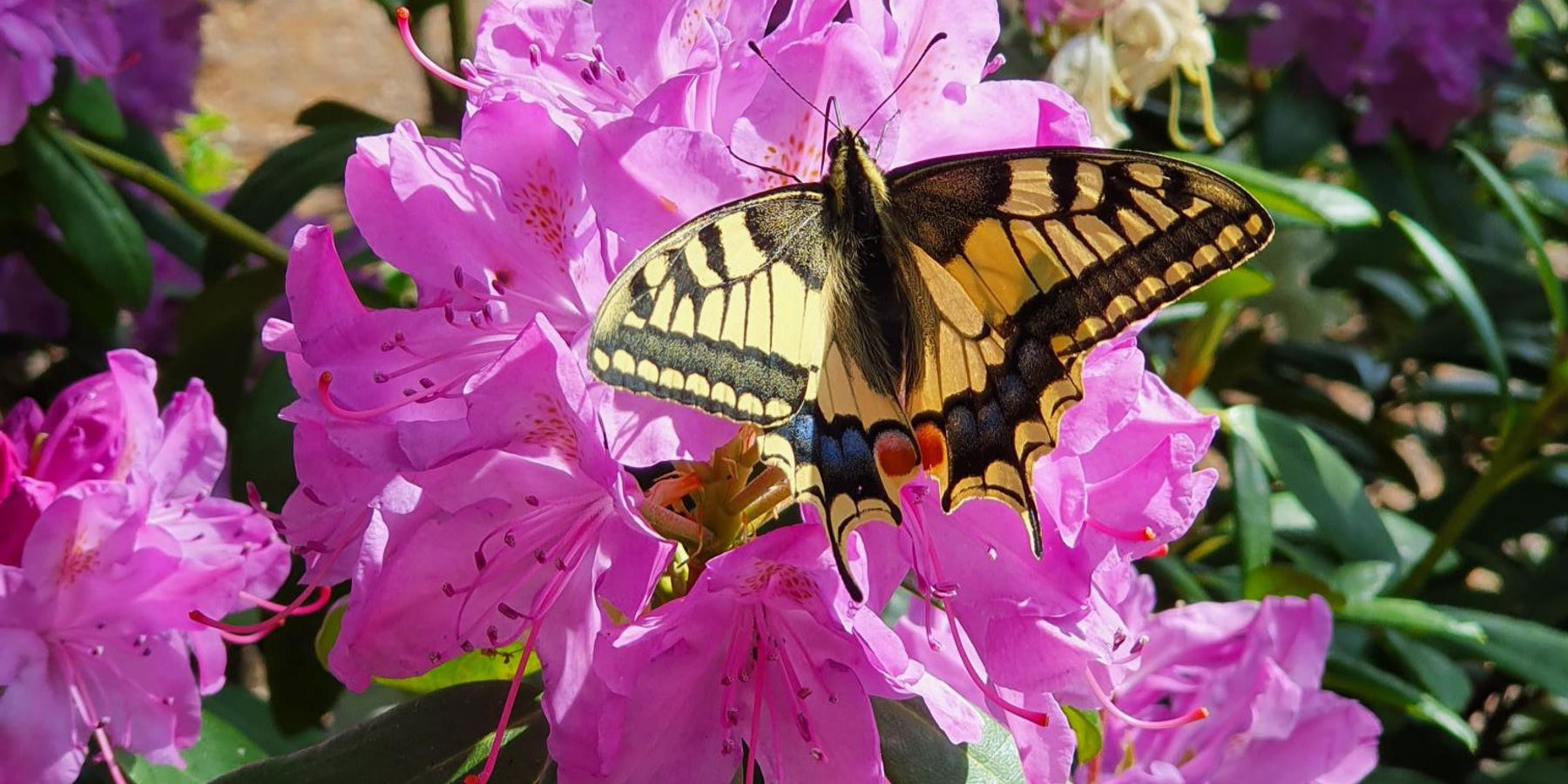
Welke soorten vlinders vliegen er in jouw tuin? Tel mee met de tuinvlindertelling en help de vlinders beter in kaart te brengen!

Loop tijdens de tellingdagen een rondje door de tuin en noteer gedurende 15 minuten alle vlinders die je ziet. Maar tel deze waarnemingen niet bij elkaar op, want dan kan het zijn dat je vlinders twee keer telt. Geef van elke vlindersoort het hoogste aantal door in het telformulier dat je tegelijk hebt gezien. Voorbeeld: je ziet eerst 3 dagpauwogen tegelijk. Tien minuten later zijn er weer 2 dagpauwogen. Dan geef je door: 3 dagpauwogen. Zie je later op de dag of één van de andere teldagen weer vlinders? Dan kun je die doorgeven via een nieuwe telling. Heb je een vlinder gezien die niet in de tellijst staat? Dat kan; we tellen alleen de meest voorkomende soorten tuinvlinders. Je hoeft deze waarneming dan niet in te vullen. Belangrijk: als je geen vlinders ziet is het ook belangrijk om dit door te geven. Deze data zijn net zo belangrijk als tellingen waar wel vlinders gezien zijn. Vul dan ‘0 dagvlinders gezien’ in in het telformulier.

Links:
Tuinvlindertelling