#StarTrekDay 2025

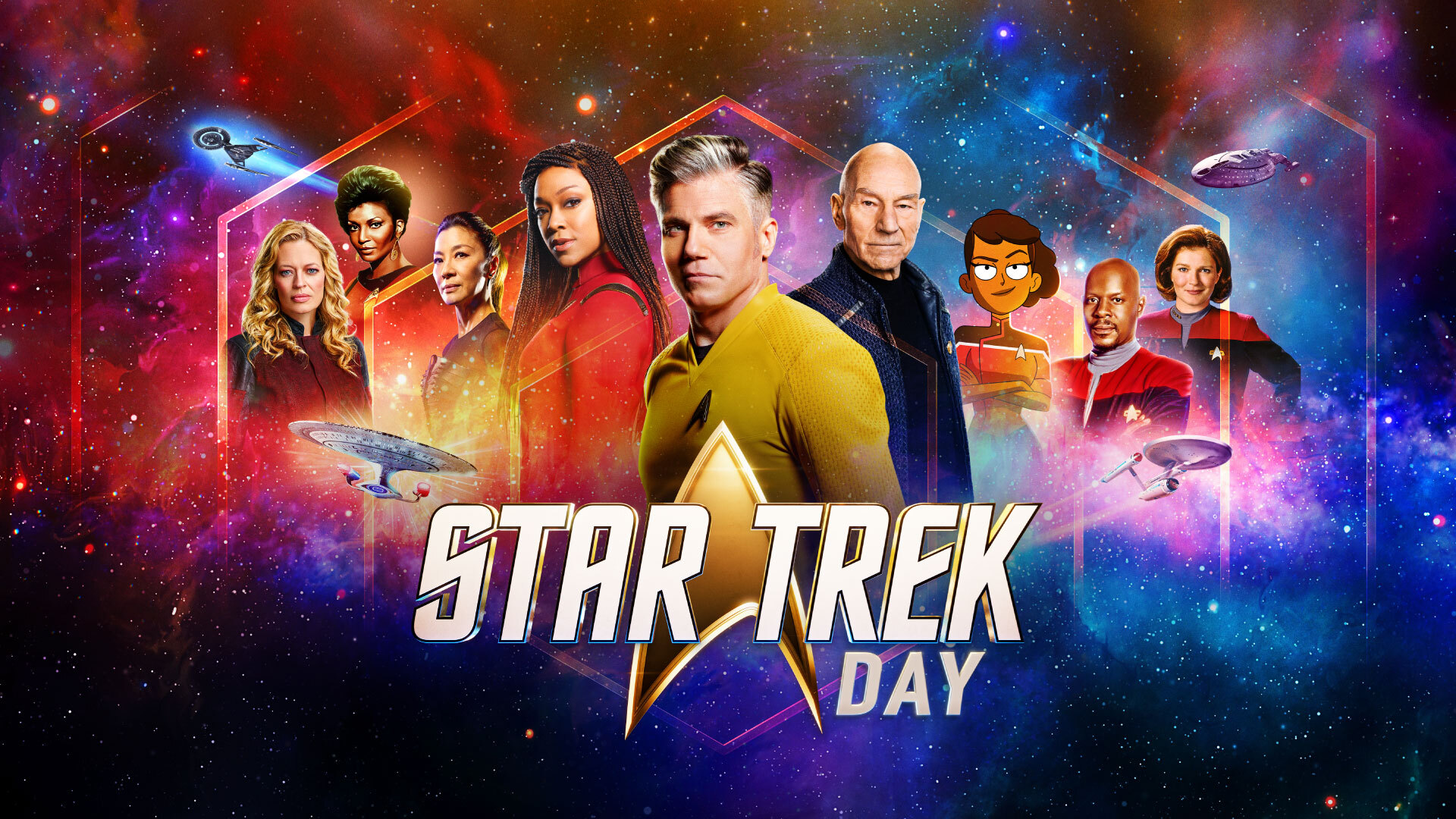
Star Trek Day is an annual informal commemorative day on September 8, referencing the broadcast premiere of the original Star Trek series on that day in 1966.

The day is celebrated by fans across the world to acknowledge the cultural impact of the Star Trek franchise. On September 8, 1966, Star Trek debuted for the first time on television with “The Man Trap,” the pilot episode of “Star Trek: The Original Series“, introducing the world to Captain James T. Kirk (William Shatner), Spock (Leonard Nimoy) and their crewmates as they explored the galaxy on the starship USS Enterprise. Star Trek is an American science fiction media franchise created by Gene Roddenberry, which began with the eponymous 1960s television series and became a worldwide pop-culture phenomenon. The franchise has expanded into various filmstelevision seriesvideo gamesnovels, and comic books, becoming one of the most recognizable and highest-grossing media franchises of all time. The franchise began with Star Trek: The Original Series, which debuted in the US on September 8, 1966, and aired for three seasons on NBC. It was first broadcast on September 6, 1966, on Canada’s CTV network. It followed the voyages of the crew of the USS Enterprise, a space exploration vessel built by the United Federation of Planets in the 23rd century, on a mission “to explore strange new worlds, to seek out new life and new civilizations, to boldly go where no man has gone before”. In creating Star Trek, Roddenberry was inspired by C. S. Forester‘s Horatio Hornblower series of novels, Jonathan Swift‘s 1726 novel Gulliver’s Travels, the 1956 film Forbidden Planet, and television westerns such as Wagon Train.

Links:
Celebrate Star Trek Day in the Captain’s Chair With Pop Up Events and More
Star Trek 60th Year

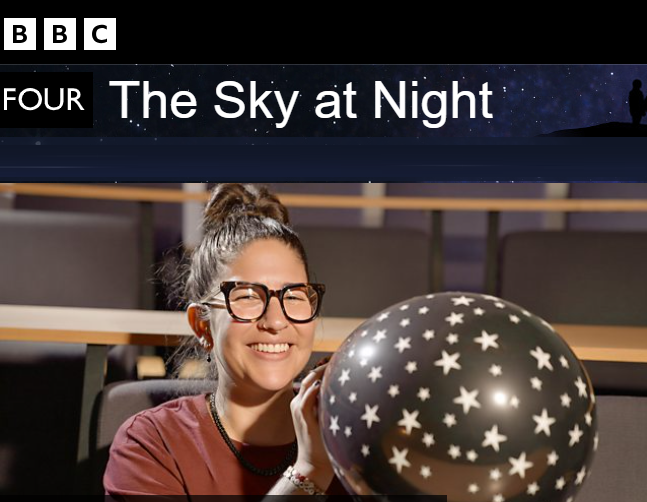
The Sky at Night – The Expanding Universe (TV BBC Four)

The Sky at Night is a monthly documentary television programme on astronomy produced by the BBC.

The show had the same permanent presenter, Patrick Moore, from its first broadcast on 24 April 1957 until 7 January 2013. The latter date was a posthumous broadcast, which followed Moore’s death on 9 December 2012. This made it the longest-running programme with the same presenter in television history. Many early episodes are missing, either because the tapes were wiped, thrown out, or because the episode was broadcast live and never recorded in the first place. Beginning with the 3 February 2013 edition, the show was co-presented by Lucie Green and Chris Lintott. Since December 2013 Maggie Aderin-Pocock has been a presenter. The programme’s opening and closing theme music is “At the Castle Gate”, from the incidental music to Pelléas et Mélisande, written in 1905 by Jean Sibelius, performed by the Royal Philharmonic Orchestra and conducted by Sir Thomas Beecham.

This episode:
The team explores one of the greatest discoveries of modern astronomy – that our universe is expanding – and the new questions it raises about how the cosmos works.

In the 1920s, astronomers studying galaxies realised they were moving away from us, with the most distant ones receding the fastest. The
conclusion was revolutionary: space itself was stretching, and the universe was expanding in every direction. But once this discovery was made, a new challenge emerged – how fast is the universe expanding, and what could that tell us about its age, size and ultimate fate?

Chris Lintott travels to the University of Oxford to explore one of the most extraordinary tools astronomers use to answer these questions – the cosmic microwave background (CMB), the faint afterglow of the Big Bang. Working with Professor David Alonso, Chris learns how scientists use the CMB as a starting point for measuring cosmic expansion. He discovers how the Simons Observatory, a network of telescopes in Chile, is creating the sharpest map yet of this ancient light. These observations promise to refine our understanding of the expansion rate and may shed light on a long-standing puzzle known as the ‘Hubble tension’, where different measurements of expansion don’t agree.

Meanwhile, Maggie Aderin-Pocock investigates a different cosmic speedometer: supernovae, or exploding stars. Meeting Dr Philip Wiseman at the University of Southampton, she learns how type 1a supernovae, which shine with a predictable brightness, can be used to measure cosmic distances. A discovery in the 1990s revealed something astonishing – not only is the universe expanding, but the expansion is accelerating. The Vera Rubin Observatory, with its enormous mirror and world-record-breaking camera, is about to survey the southern skies, capturing supernovae in unprecedented numbers. With its data, astronomers hope to refine how fast the universe’s expansion has accelerated over billions of years.

George Dransfield takes on the most mysterious part of the story – dark energy. Coined to explain the force driving the acceleration, dark energy remains entirely unknown. At the University of Portsmouth, George meets Dr Seshadri Nadathur, who is part of the Dark Energy Spectroscopic Instrument (DESI) project. By mapping tens of millions of galaxies across 11 billion years of cosmic history, DESI is building the largest 3D map of the universe ever made. This map is revealing subtle patterns in how galaxies are distributed, providing new insights into how fast the universe has expanded over time – and whether dark energy itself has changed throughout cosmic history. Together, these projects reveal both the power and the limits of our current models of cosmology. Different methods of measuring expansion don’t line up, and far from being a mistake, this mismatch may be a vital clue that new physics is waiting to be discovered.

As ever, Pete Lawrence is on hand with his guide to the skies this month, including how to catch Saturn’s rare ring and moon events, as well as highlights of the autumn equinox.

With cosmic clues building from the earliest light of the Big Bang to the faint glow of distant supernovae, the programme takes viewers on a journey through one of the most profound questions in science: how fast is our universe expanding, and what might that reveal about its past, present and future?

Links:
The Sky at Night

Wereld Suïcide Preventie Week 2025


Van maandag 8 tot en met zondag 14 september 2025 is het Wereld Suïcide Preventie Week, waarin in heel Nederland extra aandacht wordt gevraagd voor suïcidepreventie.

Dat is nog steeds hard nodig: elke 45 seconden stapt er iemand op de wereld uit het leven. In Nederland overlijden gemiddeld 5 mensen per dag door suïcide. Dit cijfer krijgen we alleen samen omlaag. Praten over zelfdoding en het vinden van woorden is niet altijd even makkelijk, maar kan het verschil maken voor iemand die kampt met suïcidale gedachten. Hoe start je zo’n gesprek? Welke woorden gebruik je? Dat is best even zoeken. Daarom roept 113 iedereen deze week op: ga op zoek naar woorden en start het gesprek over zelfdoding. Meer dan 500 organisaties omarmen het thema ‘Op zoek naar woorden’ en maken deze week suïcidepreventie zichtbaar. Denk aan gemeenten, GGD’en, ziekenhuizen, onderwijsinstellingen, geestelijke gezondheidszorg.

Links:
Wereld Suïcide Preventie Week 2025

Rode Lijn-demonstratie in Amsterdam

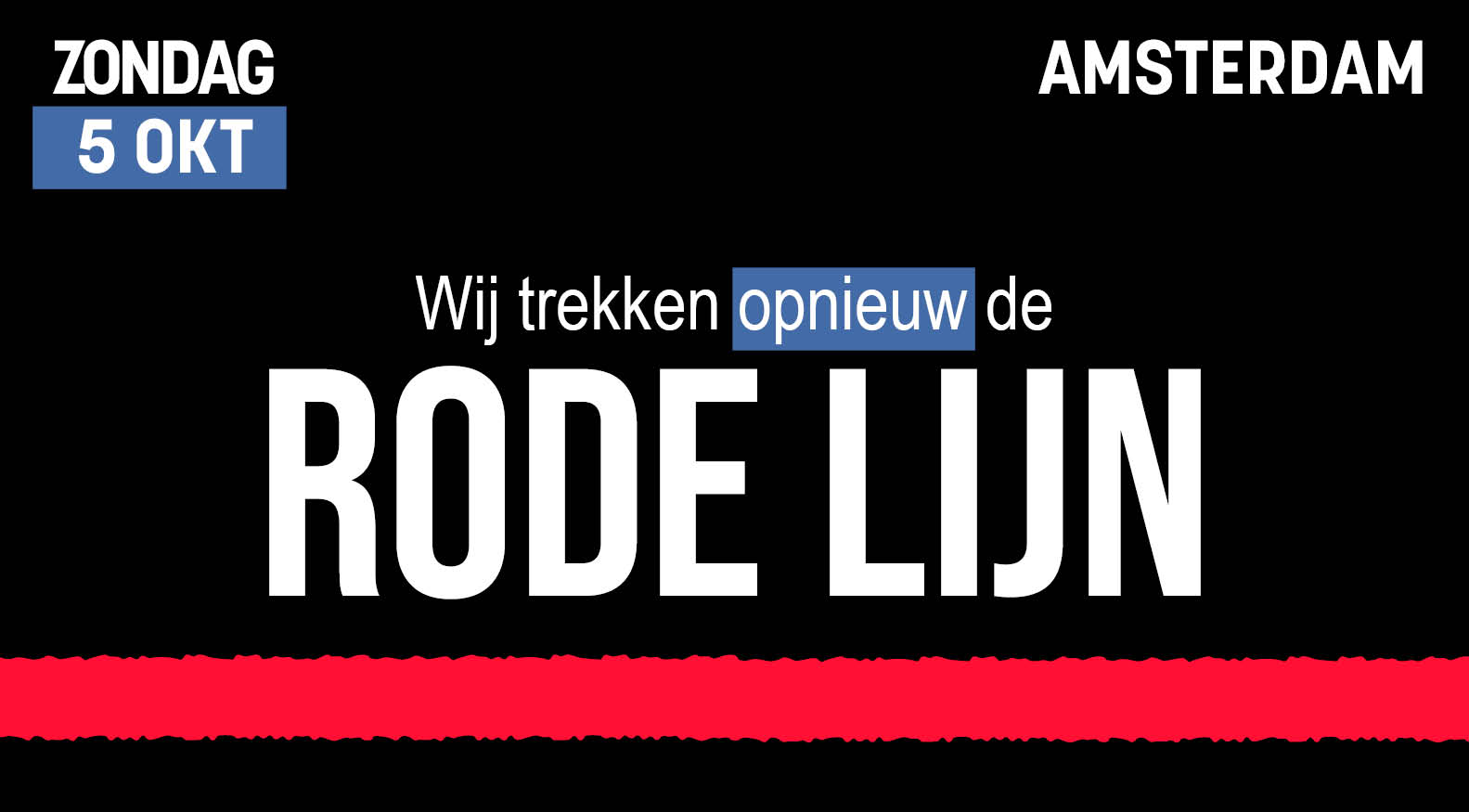
Vlak voor de verkiezingen van 29 oktober 2025 wordt opnieuw de Rode Lijn getrokken om politici te laten zien: Nederland is klaar met passiviteit en medeplichtigheid!

Palestijnen worden uitgehongerd. Hun levens en cultuur vernietigd. Het overgrote deel van Nederland eist daarom sancties. Tégen genocide, tégen bezetting. Tégen apartheid. Ondertussen blijft Den Haag doof en blind. Geen echte actie. Geen koerswijziging. Alleen medeplichtigheid. Aan de Rode Lijn-demonstratie werken tientallen organisaties mee, zoals Palestijnse Gemeenschap in Nederland, Artsen voor Gaza, Amnesty International, BDS Nederland, Dutch Scholars for Palestine, Een Ander Joods Geluid, Erev Rav, Oxfam Novib, PAX, Plant een Olijfboom, Save the Children en The Rights Forum. Net als bij de eerdere demonstraties worden maatschappelijke organisaties, culturele instellingen en iedereen die in actie wil komen tegen genocide opgeroepen om zich aan te sluiten.

Links:
Nieuwe Rode Lijn-demonstratie in Amsterdam

Rode lijn-protest voor Gaza op zondag 5 oktober in Amsterdam

Zondag 5 oktober: nieuwe Rode Lijn-demonstratie in Amsterdam

Doe mee – Trek opnieuw de rode lijn

Liveblog Rode Lijn-protest

Zij trokken in Amsterdam een rode lijn voor Gaza bij het grootste protest in 20 jaar: ‘Er is zoveel solidariteit en diversiteit’

Extinction Rebellion en PILP: klacht tegen politie vanwege onrechtmatig cameratoezicht tijdens Rode Lijn

Star Trek 60th Year

The year of 2026 marks a historic chapter for Star Trek as the legendary franchise will celebrate its 60th anniversary on Star Trek Day on Sept. 8, 2026.

The 60th celebrations will begin in January 2026, featuring notable partnerships, new launches and memorable moments throughout the year. On September 8, 1966, Star Trek debuted for the first time on television with “The Man Trap,” the pilot episode of “Star Trek: The Original Series“, introducing the world to Captain James T. Kirk (William Shatner), Spock (Leonard Nimoy) and their crewmates as they explored the galaxy on the starship USS Enterprise. Star Trek is an American science fiction media franchise created by Gene Roddenberry, which began with the eponymous 1960s television series and became a worldwide pop-culture phenomenon. The franchise has expanded into various filmstelevision seriesvideo gamesnovels, and comic books, becoming one of the most recognizable and highest-grossing media franchises of all time. The franchise began with Star Trek: The Original Series, which debuted in the US on September 8, 1966, and aired for three seasons on NBC. It was first broadcast on September 6, 1966, on Canada’s CTV network. It followed the voyages of the crew of the USS Enterprise, a space exploration vessel built by the United Federation of Planets in the 23rd century, on a mission “to explore strange new worlds, to seek out new life and new civilizations, to boldly go where no man has gone before”. In creating Star Trek, Roddenberry was inspired by C. S. Forester‘s Horatio Hornblower series of novels, Jonathan Swift‘s 1726 novel Gulliver’s Travels, the 1956 film Forbidden Planet, and television westerns such as Wagon Train.

Links:
Star Trek Boldly Goes into its 60th Year with Fan-Centric Anniversary Celebrations Throughout 2026

2025-09-07, Lief dagboek

Zondag; Wat eten we vandaag?; Soedan; Day of Clean Air for blue skies; Walvisteldag; Dag van de Ziekte van Duchenne; Vroege Vogels; Totale maansverduistering; Amsterdam City Swim; Stop de criminaliseringswet.

Deze afbeelding heeft een leeg alt-attribuut; de bestandsnaam is dagboek.png

Wat eten we vandaag?

Klik op afbeelding voor origineel

Knipselkrant:


Agenda:

Weer:

Links:
In de geschiedenis

Sudan: A War of Atrocities – publication


“A war of atrocities:” Sudan civilians deliberately targeted, UN Fact-Finding Mission reports international crimes on large-scale.

Rival forces in Sudan are deliberately targeting the devastated nation’s civilian population, committing atrocities including war crimes on a large scale, the Independent International Fact-Finding Mission for the Sudan said in its report ‘Sudan: ‘A War of Atrocities’ . Some acts may also amount to the crimes against humanity, including persecution and extermination. The report to the UN Human Rights Council found that both the Sudanese Armed Forces (SAF) and the Rapid Support Forces (RSF) were responsible not only for direct and large-scale attacks against civilians, but also for the extensive destruction of essential infrastructure for survival, including medical centres, markets, food and water systems, and displacement camps.

Links:
A War of Atrocities

VN-rapport: moord, verkrachting en slavernij in Soedanese stad al-Fashir