“Gaza Genocide: a collective crime” – Report of the Special Rapporteur on the situation of human rights in the Palestinian territories occupied since 1967 – publication
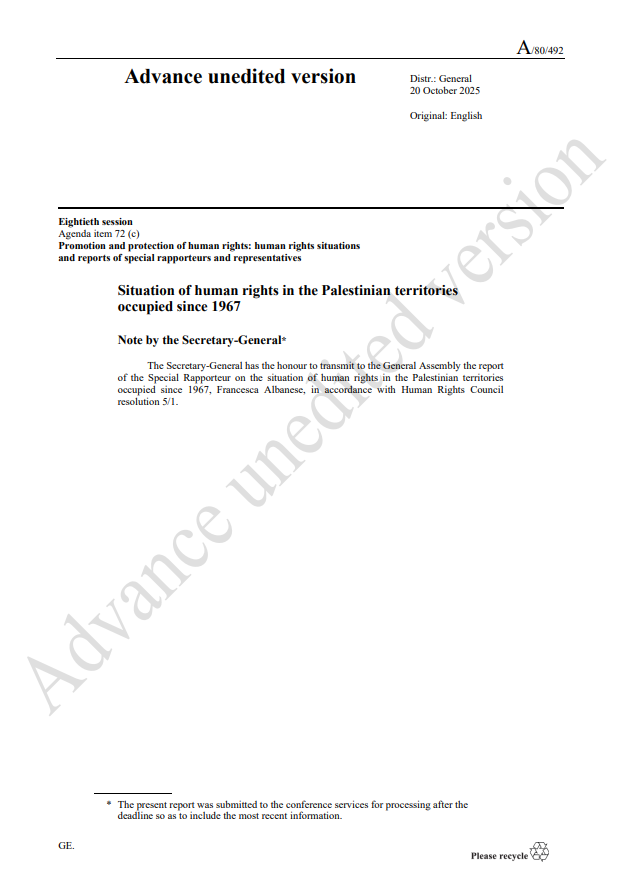
Gaza Genocide: a collective crime

The ongoing genocide in Gaza is a collective crime, sustained by the complicity of influential Third States that have enabled longstanding systemic violations of international law by Israel, Francesca Albanese – Special UN Rapporteur on the situation of human rights in the Palestinian territories occupied since 1967 – writes in her report ‘Gaza Genocide: a collective crime‘.

Framed by colonial narratives that dehumanize the Palestinians, this live-streamed atrocity has been facilitated through Third States’ direct support, material aid, diplomatic protection and, in some cases, active participation. It has exposed an unprecedented chasm between peoples and their governments, betraying the trust on which global peace and security rest. The world now stands on a knife-edge between the collapse of the international rule of law and hope for renewal. Renewal is only possible if complicity is confronted, responsibilities are met and justice is upheld.

Links:
VN-rapporteur Francesca Albanese stelt vast: ook Nederland medeschuldig aan genocide in Gaza

Francesca Albanese Documents Listing

Eerlijk voedsel of dure leugens? (TV PdZ livecast)

Verkiezingsdebat over voedselmarketing en betaalbare boodschappen – pubquiz editie!

De experts van Foodwatch ontrafelen samen met jullie de waarheid achter ons eten. In interactieve quizrondes testen we kennis, proeven we producten en ontdekken we hoe marketing en etiketten ons vaak misleiden. Mooie praatjes en slimme trucs kosten ons niet alleen geld, maar ook gezondheid. Niet alleen het publiek wordt getest: ook politici krijgen dezelfde vragen voorgeschoteld en gaan met elkaar in debat over hun antwoorden en plannen. Hoe maken we gezond eten betaalbaar, eerlijk en voor iedereen toegankelijk? Want loze beloften vullen geen borden.

Links:
Eerlijk voedsel of dure leugens?

Loze beloften kun je niet eten – goedkopere boodschappen nu! – petitie / e-mailactie

2025-10-20, Lief dagboek

Maandag; Wat eten we vandaag?; ICE agenten kunnen worden gearresteerd in en rond Chicago; Sponsor een extreemrechts demonstrant voor het goede doel!; Wereld Osteoporosedag; World Statistics Day; Continu onderzoek burgerperspectieven; ICALEPCS; Open Access Week; Ter Apel AZC te vol.

Deze afbeelding heeft een leeg alt-attribuut; de bestandsnaam is dagboek.png

Wat eten we vandaag?:

Klik op afbeelding voor origineel

Knipselkrant:


Agenda:

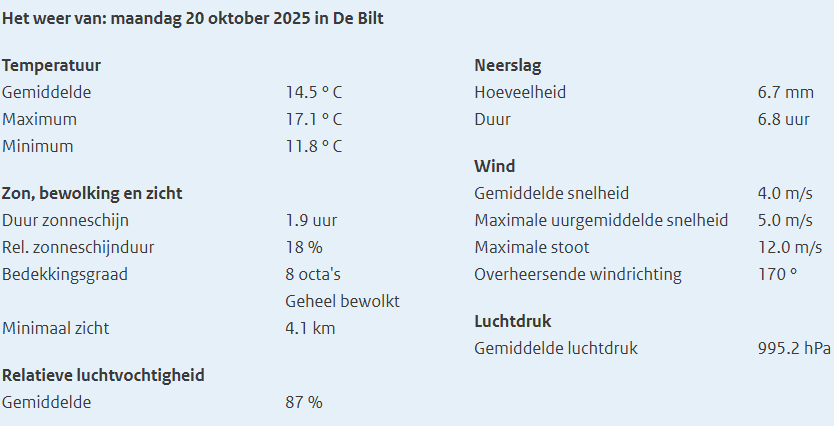
Weer:

Links:
In de geschiedenis

#InternationalSlothDay Dag van de Luiaard 2025

Sloth International day

Third Saturday in October is World Sloth Day, to celebrate these enigmatic creatures and raise awareness for their species, some of which are critically endangered.

International Sloth Day was established in 2010 by AIUNAU, an animal welfare group based in Colombia. We have put together some facts about these strange animals in the hopes that more awareness about the species will bring about improved protection for them.

Links:
Sloth Day

Sloth International day

Wereld Osteoporosedag 2025

Osteoporose is het gevolg van afgenomen botmassa en verstoring van de botmatrix, hierdoor is de botdichtheid verlaagd.

Dit leidt tot een afname van de sterkte van de botten en een verhoogd risico op botbreuken, van met name de wervelkolom, heup, pols, bovenarm en bekken. Het risico op breuken neemt toe met de leeftijd; het betreft met name personen die ouder dan 75 jaar zijn. Een op de twee vrouwen en een op de vijf mannen van 50 jaar of ouder zal ten minste een botbreuk ten gevolge van osteoporose oplopen. De kosten voor de gezondheidszorg zijn enorm: voor heel Europa zo’n 30 miljard euro.

Links:
Wereld Osteoporose Dag 20 oktober

Osteoporose-behandeling

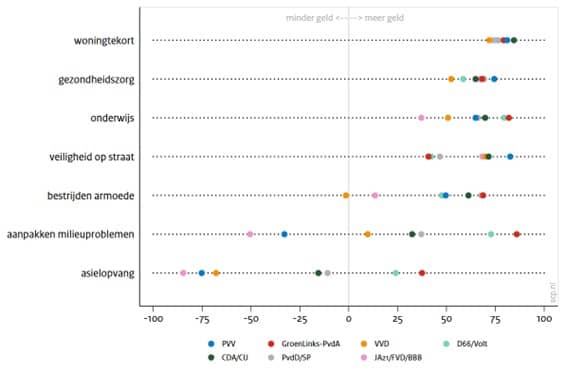
Continu onderzoek burgerperspectieven – deel 3 : Nederlanders machteloos en gefrustreerd over het land en de politiek in aanloop naar de verkiezingen – publicatie

Geld uitgeven aan doeleinden naar stemintentie, bevolking 18+, augustus 2025

Met het Continu Onderzoek Burgerperspectieven (COB) onderzoekt het Sociaal en Cultureel Planbureau (SCP) sinds 2008 de stemming van Nederlanders over de maatschappij en de politiek, de derde editie van 2025 bestaat uit twee delen.

Het eerste deel gaat in op de stemming over het land. Hierin besteden we aandacht aan wat mensen verwachten van een nieuw kabinet en hun houdingen over politiek en democratie. Hiervoor is kwantitatief en kwalitatief opinieonderzoek uitgevoerd. Aan het kwantitatieve onderzoek deden 2.289 respondenten mee.

In het tweede deel gaan we dieper in op de achtergronden van maatschappelijk onbehagen. Op basis van open antwoorden in de periode 2008-2025, focusgroepen en een enquête hebben we gekeken waarom mensen het de verkeerde kant op vinden gaan en wat dit met hen doet. Een deel van dit onderzoek is uitgevoerd in samenwerking met onderzoekers van de Universiteit van Amsterdam.

Een meerderheid van de Nederlanders (59%) vindt dat het de verkeerde kant opgaat met ons land. Veel mensen voelen machteloosheid en zijn gefrustreerd over de samenleving en de politiek. Dat blijkt uit onderzoek van het Sociaal en Cultureel Planbureau (SCP) naar de stemming in Nederland. Mensen denken dat ze zelf weinig kunnen doen aan de maatschappelijke problemen in ons land. Zij vinden dat de politiek met oplossingen moeten komen, maar in hun ogen gebeurt dat niet of wordt niet het goede gedaan. Nederlanders hopen dat een nieuw kabinet goed gaat samenwerken om de problemen in Nederland wel op te lossen.

Links:
Burgerperspectieven 2025 Bericht 1

Burgerperspectieven 2025 Bericht 2

59 procent van de Nederlanders vindt dat het land de verkeerde kant opgaat: ‘Veel mensen voelen machteloosheid’

World Statistics Day 2025

World Statistics Day

At its 41st Session in February 2010, the United Nations Statistical Commission proposed celebrating 20 October as World Statistics Day (Decision 41/109).

Acknowledging that the production of reliable, timely statistics and indicators of countries’ progress is indispensable for informed policy decisions and monitoring implementation of the Millennium Development Goals, the General Assembly adopted on 3 June 2010 resolution 64/267, which officially designated 20 October 2010 as the first ever World Statistics Day under the general theme “Celebrating the many achievements of official statistics.” In 2015, with resolution 69/282, the General Assembly decided to designate 20 October 2015 as the second World Statistics Day under the general theme “Better data, better lives,” as well as to celebrate World Statistics Day every five years on 20 October.

Theme 2025: ‘Driving change with quality statistics and data for everyone’, this year’s commemoration of World Statistics Day alongside the United Nations’ 80th anniversary highlights the crucial role that reliable data plays in global progress. Statistics have been foundational not only to the UN’s operations but also to addressing worldwide challenges such as peacekeeping, sustainable development, climate change, and public health. The global statistical community exemplifies international cooperation, bringing together professionals from all regions to establish standards, share methodologies, and ensure accurate, timely data. Trusted statistics enable policymakers, businesses, and citizens to navigate complexity and make informed decisions, helping to reveal critical issues and drive meaningful change.

Reliable data underpins effective policymaking, economic planning, and societal development, especially in today’s complex world. Trust in statistical systems fosters transparency and ethical use of data, while collaboration across countries and experts promotes innovation and best practices. Equally important is building data literacy within communities, making statistics accessible and understandable to all. This empowerment helps bridge the gap between data producers and users, promoting inclusivity and better policy outcomes. With evolving technology and new tools, the potential to collect, analyze, and visualize data continues to expand, offering fresh opportunities to advance sustainable development and social equity worldwide.

Links:
World Statistics Day

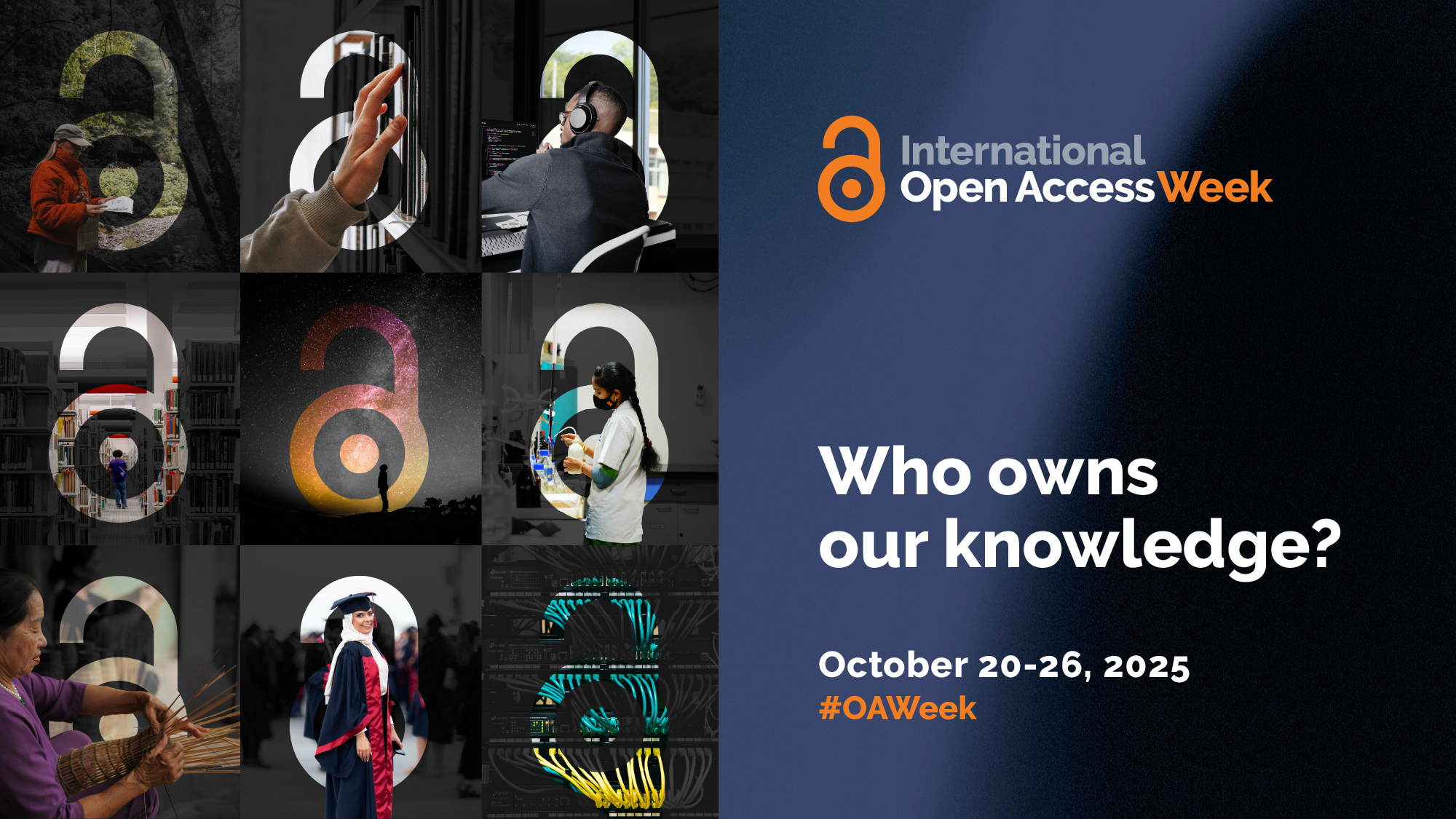
#OAweek Open Access Week 2025

Open Access Week 2025

Open Access Week is an annual scholarly communication event focusing on open access and related topics, taking place globally during the last full week of October in a multitude of locations both on- and offline.

Typical activities include talks, seminars, symposia, or the announcement of open access mandates or other milestones in open access. Open Access Week is organized by SPARC in partnership with the Open Access Week Advisory Committee. Open Access Week is an opportunity for the academic and research community to continue to learn about the potential benefits of Open Access, to share what they’ve learned with colleagues, and to help inspire wider participation in helping to make Open Access a new norm in scholarship and research. Open Access to information – the free, immediate, online access to the results of scholarly research, and the right to use and re-use those results as you need – has the power to transform the way research and scientific inquiry are conducted. It has direct and widespread implications for academia, medicine, science, industry, and for society as a whole. Open Access Week is an invaluable chance to connect the global momentum toward the open sharing of knowledge with the advancement of policy changes and the importance of social issues affecting people around the world. The event is celebrated by individuals, institutions and organizations around the world.

2025 Theme: Who Owns Our Knowledge? 2025 theme asks a pointed question about the present moment and how, in a time of disruption, communities can reassert control over the knowledge they produce. It also challenges us to reflect on not only who has access to education and research but on how knowledge is created and shared, where it has come from, and whose voices are recognized and valued.

Links:
Open Access Week