Wereld Romani Taaldag / World Day of Romani Language 2025

World Day of Romani LanguageUNESCO riep in 2015 de Wereld Romani Taaldag uit voor het behoud van de Romaanse taal en cultuur.

UNESCO benadrukt vandaag dat uiteindelijk elke taal belangrijk is want een taal is een gemeenschappelijke bron die kan helpen om een breder en dieper inzicht te krijgen in de leefwijze en gedachtewereld van andere volken en in hun culturele erfgoed. De Roma taal, of Romani Chib, werd in 1971 tijdens het eerste World Romani Congress uitgeroepen tot officiële taal en behoort tot de minderheidstalen. Tot dusver hebben 16 lidstaten van de Raad van Europa Romani officieel als een minderheidstaal onder het Europees Handvest voor regionale talen of talen van minderheden erkend. Deze oude taal met al haar dialecten is erg belangrijk voor de Roma. Romani wordt gezien als de verbindende factor voor communicatie, identiteit, socialisatie en culturele integratie voor de naar schatting 10 tot 12 miljoen Roma die in Europa wonen.

Wanneer Romani in Europa integraal wordt gepromoot en gebruikt zal dit naar verwachting een bijdrage kunnen leveren aan het versterken van de Roma-identiteit. Roma is het meervoud van Rom en betekent “mensen” of “echtgenoot” in het Romani. In Nederland wordt een onderscheid gemaakt tussen Sinti en Roma (ten onrechte ook ‘zigeuners’ genoemd, dit woord heeft voor velen een negatieve bijklank en wordt door veel Roma als discriminerend ervaren), het verschil heeft te maken met datum van vestiging in Nederland. Met Roma wordt bedoeld de groep mensen die voornamelijk uit Oost-Europa komen en zich in de negentiende en twintigste eeuw in Nederland vestigden. Met Sinti bedoelen we de mensen die uit Frankrijk en Duitsland komen en die zich tussen 1900 en 1920 hier hebben gevestigd. De Sinti en Roma worden al vanaf de dertiende eeuw gesignaleerd in Nederland.

Links:
World Day of Romani Language

Baromètre de la Solidarité internationale / Barometer Internationale Solidariteit 2025

11.11.11

L’opinion des Belges sur les différents enjeux de solidarité internationalee.

Le CNCD-11.11.11 publie, en collaboration avec Le Vif, le Baromètre 2025 de la solidarité internationale, afin de sonder l’avis des Belges sur les grands enjeux internationaux. Il révèle que près d’un Belge sur deux est favorable à une augmentation de l’aide au développement et plus d’un Belge sur deux à la régularisation des sans-papiers, que deux Belges sur trois souhaitent intégrer des mesures miroirs dans les accords de commerce et que plus de huit Belges sur dix sont favorables à une taxe sur les grosses fortunes en Belgique et à une « taxe Zucman » à l’échelle mondiale. Par ailleurs, près de six Belges sur dix soutiennent le Green Deal européen et quatre Belge sur dix soutiennent l’augmentation des dépenses militaires, mais sept Belges sur dix refusent que cela se fasse au détriment de la protection sociale.

Links:
Baromètre 2025 de la solidarité internationale

Het Buitenspeelalarm 05-11-2025

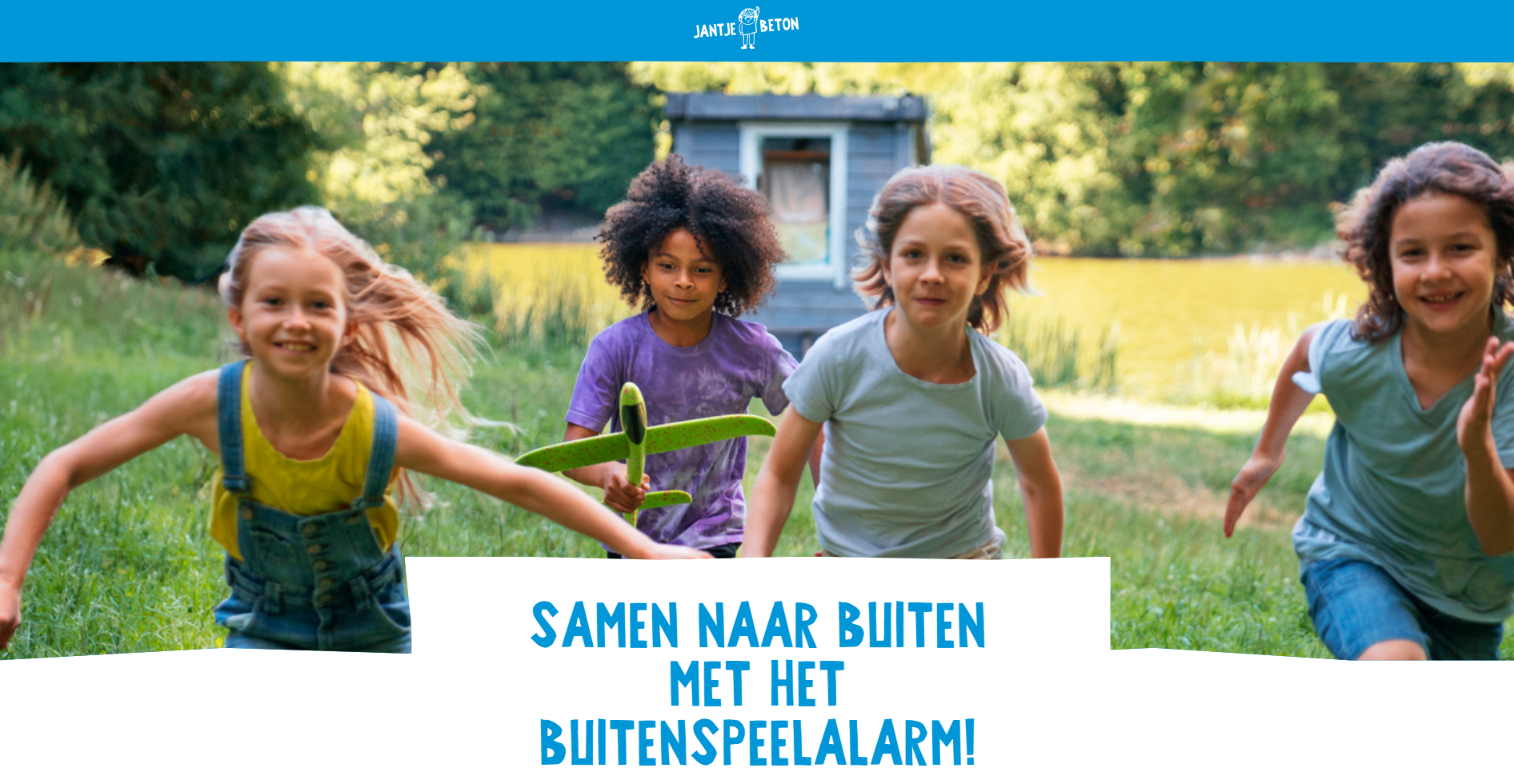
Jantje Beton, een organisatie die zich inzet voor jeugdvoorzieningen in Nederland, organiseert de campagne ‘Het Buitenspeelalarm’ op iedere eerste woensdag van de maand.

Hiermee wil Jantje Beton wij een krachtig signaal afgeven tegen de dreigende ‘binnenzitgeneratie’. Niet buitenspelen zorgt namelijk voor meer overgewicht, slechtziendheid, depressiviteit en slapeloosheid onder kinderen. Dit moet veranderen! Méér dan 400.000 kinderen in Nederland spelen nooit buiten. Er ontstaat een hele generatie aan binnenzitters. Dat is niet gezond. Jantje Beton maakt zich grote zorgen en slaat alarm! Vind jij buitenspelen ook superbelangrijk? Meld je dan aan voor het Buitenspeelalarm. Iedere eerste woensdag van de maand ontvang jij een extra herinnering om samen met je kind naar buiten te gaan of je kind naar buiten te sturen! Het alarm is niet alleen een melding, maar je ontvangt ook leuke tips, speelplekken en allerlei andere zaken om lekker naar buiten te gaan!

Links:
Het Buitenspeelalarm

Het nummer ‘Koekoek’ wil kinderen stimuleren naar buiten te gaan

Visie 2040 : Europees actieplan voor hogesnelheidstreinen – publicatie

Europees actieplan voor hogesnelheidstreinen

De Europese Commissie heeft een uitgebreid vervoerspakket goedgekeurd, het zal onder meer de uitrol van het Europese hogesnelheidsspoorwegnet versnellen.

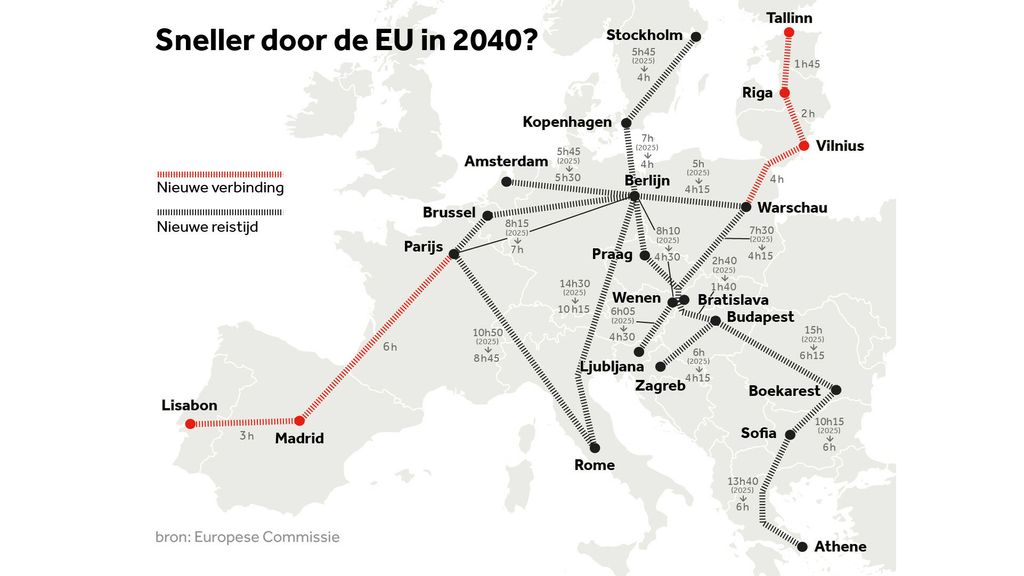
Concurrentievermogen en duurzaamheid zijn de leidende beginselen van dit pakket, dat tot doel heeft het vervoerssysteem van de EU efficiënter, onderling verbonden, toegankelijker, schoner en veerkrachtiger te maken. De gepresenteerde maatregelen hebben betrekking op twee belangrijke gebieden: het spoor, waar Europa al het voortouw neemt op het gebied van duurzaamheid, en brandstoffen, waar Europa nu meer moet investeren in zijn energietransitie. Het nieuwe actieplan voor hogesnelheidstreinen bevat de stappen die nodig zijn om tegen 2040 een sneller, interoperabeler en beter verbonden Europees netwerk tot stand te brengen. Het heeft tot doel de reistijden te verkorten en het spoor een aantrekkelijker alternatief te maken voor korteafstandsvluchten, waardoor het aantal passagiers toeneemt en de regionale economieën en het toerisme worden gestimuleerd. Voortbouwend op het trans-Europees vervoersnetwerk (TEN-T) voorziet het plan in de aansluiting van grote knooppunten met snelheden van 200 km/u en meer. Passagiers kunnen van Berlijn naar Kopenhagen reizen in vier uur in plaats van de huidige zeven uur , en van Sofia naar Athene in zes uur in plaats van de huidige 13 uur en 40 minuten. Nieuwe grensoverschrijdende verbindingen zullen ook snellere en eenvoudigere reizen mogelijk maken, zoals Parijs-Lissabon via Madrid en betere verbindingen tussen de Baltische hoofdsteden.

Links:
Commissie versterkt concurrentievermogen van Europa met nieuwe plannen voor hogesnelheidstreinen en duurzame brandstoffen voor lucht- en scheepvaart

Connecting Europe at High-Speed: Cities and Railways unite for a European high-speed rail network

In 6 uur van Parijs naar Madrid: EU zet in op netwerk van snelle treinverbindingen

‘Van Brussel naar Barcelona moet even vanzelfsprekend worden als van Antwerpen naar Gent’: Europa komt met plan

EU onthult transportpakket van 550 miljard euro om hogesnelheidstrein te versnellen

Emissions Gap Report 2025 – publication

Emissions Gap Report 2025

United Nations Environment Programme (UNEP) ‘Emissions Gap Report 2025: Off Target‘ finds that available new climate pledges under the Paris Agreement have only slightly lowered global temperature rise over the course of this century, leaving the world heading for a serious escalation of climate risks and damages.

The sixteenth edition of the Emissions Gap Report finds that global warming projections over this century, based on full implementation of Nationally Determined Contributions (NDCs), are now 2.3-2.5°C, while those based on current policies are 2.8°C. This compares to 2.6-2.8°C and 3.1°C in last year’s report. However, methodological updates account for 0.1°C of the improvement, and the upcoming withdrawal of the US from the Paris Agreement will cancel another 0.1°C, meaning that the new NDCs themselves have barely moved the needle. Nations remain far from meeting the Paris Agreement goal to limit warming to well-below 2°C, while pursuing efforts to stay below 1.5°C. Reductions to annual emissions of 35 per cent and 55 per cent, compared with 2019 levels, are needed in 2035 to align with the Paris Agreement 2°C and 1.5°C pathways, respectively. Given the size of the cuts needed, the short time available to deliver them and a challenging political climate, a higher exceedance of 1.5°C will happen, very likely within the next decade. The report finds that this overshoot must be limited through faster and bigger reductions in greenhouse gas emissions to minimize climate risks and damages and keep returning to 1.5°C by 2100 within the realms of possibility – although doing so will be extremely challenging. Every fraction of a degree avoided means lower losses for people and ecosystems, lower costs, and less reliance on uncertain carbon dioxide removal techniques to return to 1.5°C by 2100. Since the adoption of the Paris Agreement ten years ago, temperature predictions have fallen from 3-3.5°C. The required low-carbon technologies to deliver big emission cuts are available. Wind and solar energy development is booming, lowering deployment costs. This means the international community can accelerate climate action, should they choose to do so. However, delivering faster cuts requires would require navigating a challenging geopolitical environment, delivering a massive increase in support to developing countries, and redesigning the international financial architecture.

Links:
Emissions Gap Report 2025

Agenda 10-11-2025 – COP30 United Nations Climate Change Conference Belém – November 2025

YouTube Quietly Erased More Than 700 Videos Documenting Israeli Human Rights Violations – publication

YouTube Quietly Erased More Than 700 Videos Documenting Israeli Human Rights Violations

The tech giant YouTube deleted the accounts of three prominent Palestinian human rights groups — a capitulation to Trump sanctions.

YouTube surreptitiously deleted all these videos in early October by wiping the accounts that posted them from its website, along with their channels’ archives. The accounts belonged to three prominent Palestinian human rights groups: Al-Haq, Al Mezan Center for Human Rights, and the Palestinian Centre for Human Rights. The three human rights groups’ account terminations cumulatively amount to the erasure of more than 700 videos, according to an Intercept tally. The deleted videos range in scope from investigations, such as an analysis of the Israeli killing of American journalist Shireen Abu Akleh, to testimonies of Palestinians tortured by Israeli forces and documentaries like “The Beach,” about children playing on a beach who were killed by an Israeli strike. Some videos are still available through copies saved on the Internet Archive’s Wayback Machine or on alternate platforms, such as Facebook and Vimeo. The wiping only affected the group’s official channels; videos which were produced by the nonprofits but hosted on alternate YouTube channels remain active. No cumulative index of videos deleted by YouTube is available, however, and many appear to not be available elsewhere online.

Links:
YouTube Quietly Erased More Than 700 Videos Documenting Israeli Human Rights Violations

YouTube verwijdert 700 video’s met documentatie van Israëlische misdaden

Towards a future space-based, highly scalable AI infrastructure system design – publication

Project Suncatcher explores powering AI in space

Exploring a space-based, scalable AI infrastructure system design: Project Suncatcher is a moonshot exploring a new frontier: equipping solar-powered satellite constellations with TPUs and free-space optical links to one day scale machine learning compute in space.

Artificial intelligence (AI) is a foundational technology that could reshape our world, driving new scientific discoveries and helping us tackle humanity’s greatest challenges. Now, we’re asking where we can go to unlock its fullest potential. The Sun is the ultimate energy source in our solar system, emitting more power than 100 trillion times humanity’s total electricity production. In the right orbit, a solar panel can be up to 8 times more productive than on earth, and produce power nearly continuously, reducing the need for batteries. In the future, space may be the best place to scale AI compute. Working backwards from there, our new research moonshot, Project Suncatcher, envisions compact constellations of solar-powered satellites, carrying Google TPUs and connected by free-space optical links. This approach would have tremendous potential for scale, and also minimizes impact on terrestrial resources. We’re excited about this growing area of exploration, and our early research, shared in a preprint paper “Towards a future space-based, highly scalable AI infrastructure system design,”, which describes our progress toward tackling the foundational challenges of this ambitious endeavor — including high-bandwidth communication between satellites, orbital dynamics, and radiation effects on computing. By focusing on a modular design of smaller, interconnected satellites, we are laying the groundwork for a highly scalable, future space-based AI infrastructure. Project Suncatcher is part of Google’s long tradition of taking on moonshots that tackle tough scientific and engineering problems. Like all moonshots, there will be unknowns, but it’s in this spirit that we embarked on building a large-scale quantum computer a decade ago — before it was considered a realistic engineering goal — and envisioned an autonomous vehicle over 15 years ago, which eventually became Waymo and now serves millions of passenger trips around the globe.

Links:
Exploring a space-based, scalable AI infrastructure system design

Google bouwt datacenters in de ruimte

2025-11-04, Lief dagboek

Dinsdag; Wat eten we vandaag?; COP30 / Emissions Gap Report; Allereerste live stream; 2025 United States elections; Dutch Podcast Awards.

Deze afbeelding heeft een leeg alt-attribuut; de bestandsnaam is dagboek.png

Wat eten we vandaag?:

Klik op afbeelding voor origineel

Knipselkrant:


Agenda:

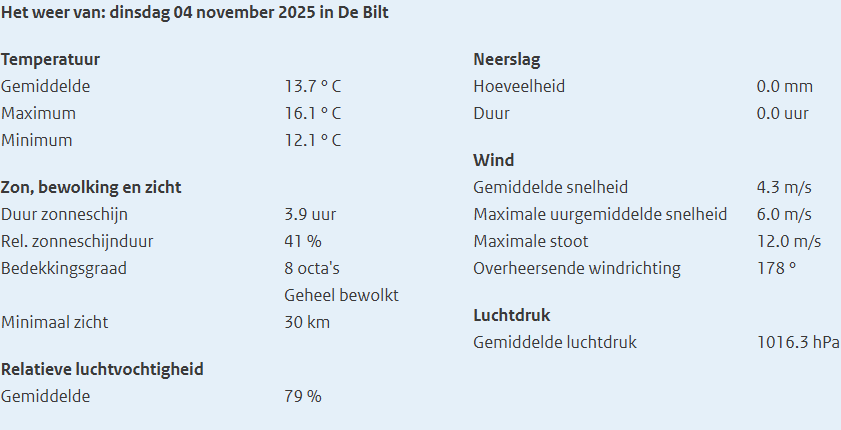
Weer:

KNMI weerrapport

Links:
In de geschiedenis