



- Dit evenement is voorbij.
Royal Institution Christmas Lectures 2024 (BBC Four / BBC iPlayer)
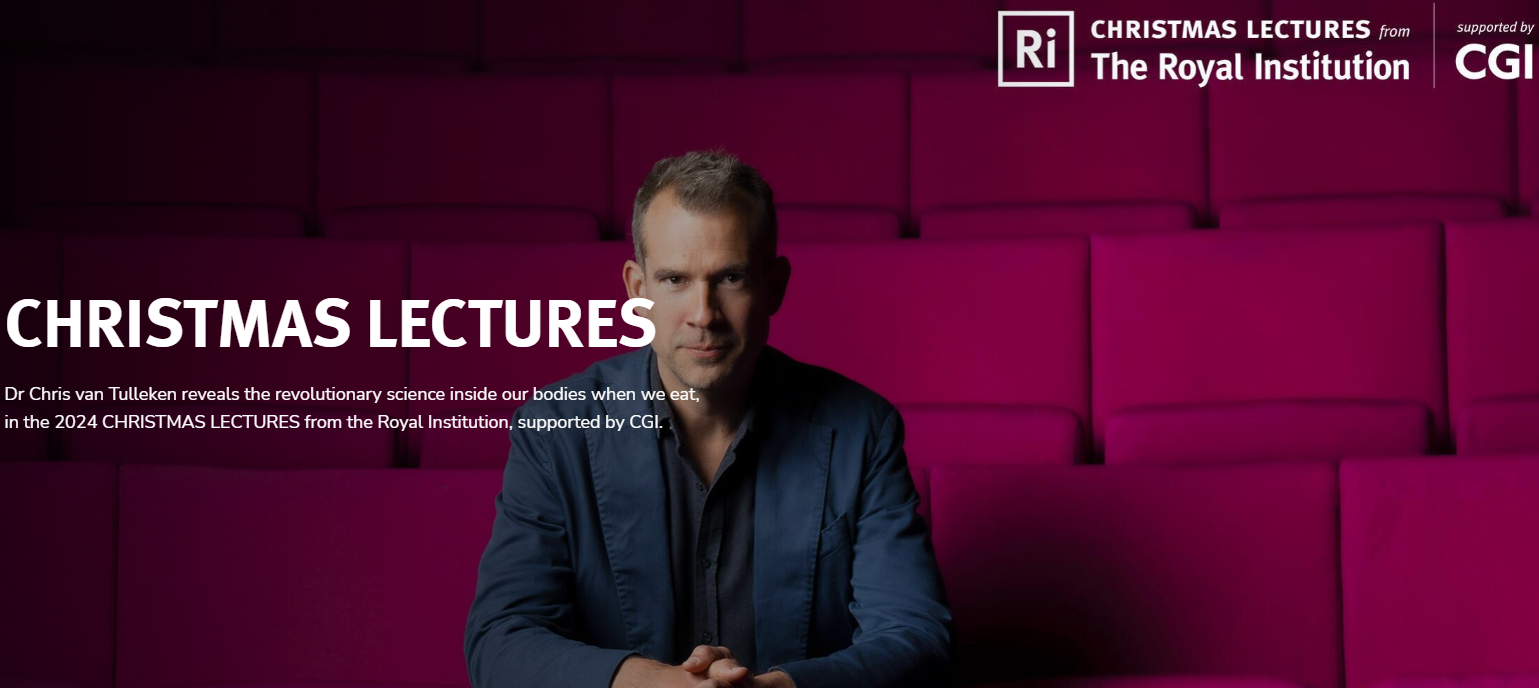
The Royal Institution Christmas Lectures are a series of lectures on a single scientific topic each, which have been held at the Royal Institution in London each year.
The lectures present subjects to a general audience, including young people, in an informative and entertaining manner. Michael Faraday conceived and initiated the Christmas Lecture series in 1825, at a time when organised education for young people was scarce. Many of the Christmas Lectures were published. In the 2024 Royal Institution Christmas Lectures, practising NHS doctor and leading science presenter Chris van Tulleken will delve deep inside our bodies to explore how the food we eat has a fundamental impact on our own health and that of our planet.
Food has fundamentally shaped human evolution – what we eat and how we eat it has had a massive effect on both the structure and functioning of our bodies and brains. In the 2024 CHRISTMAS LECTURES, infectious diseases doctor Chris van Tullekenwill be teaching us the truth about food in all its gory glory!
Lecture One: Sunday 29 December:
What actually happens when we eat? Chris opens the Lectures by literally taking us through the whole journey from tastebuds to toilet. We’ll also be welcoming our first obligatory animal guest of the lectures, but will it be the last…
Lecture Two: Monday 30 December:
99% of the atoms in our body come from just four elements: oxygen, carbon, hydrogen, and nitrogen. Chris will kick off the second Lecture by demonstrating how these elements work together to keep us alive. We’ll then explore the staggering levels of energy generated when producing the fuel of our cells: ATP.
Lecture Three: Tuesday 31 December:
In the final Lecture of our series, Chris will uncover how our modern food system has been hacked. We’ll have seen the benefits of processed food throughout the lectures, but Chris will reveal the drawbacks of processed food and what the future of the food industry could look like.