



- Dit evenement is voorbij.
Advanced Composite Solar Sail System
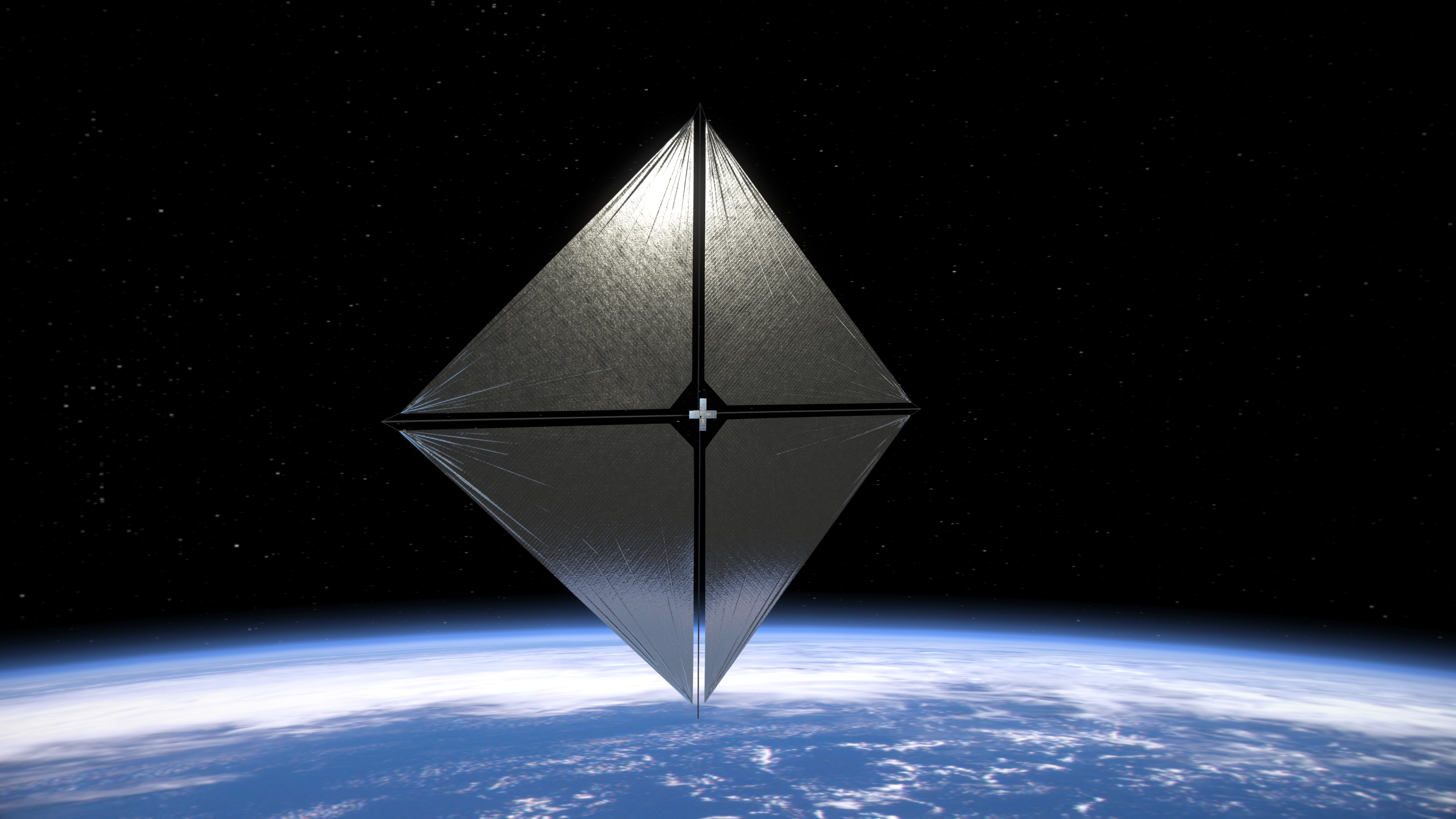
A NASA mission testing a new way of navigating our solar system is ready to hoist its sail into space – not to catch the wind, but the propulsive power of sunlight, the Advanced Composite Solar Sail System is targeting launch on Tuesday, April 23, 2024 (Wednesday, April 24 in New Zealand, the launch window opens at 00:00 April 24 MEST), aboard a Rocket Lab Electron rocket from the company’s Launch Complex 1 on the Mahia Peninsula of New Zealand.
Rocket Lab’s Electron rocket will deploy the mission’s CubeSat about 1,000 kilometers above Earth – more than twice the altitude of the International Space Station. To test the performance of NASA’s Advanced Composite Solar Sail System, the spacecraft must be in a high enough orbit for the tiny force of sunlight on the sail – roughly equivalent to the weight of a paperclip resting on your palm – to overcome atmospheric drag and gain altitude. After a busy initial flight phase, which will last about two months and includes subsystems checkout, the microwave oven-sized CubeSat will deploy its reflective solar sail. The weeks-long test consists of a series of pointing maneuvers to demonstrate orbit raising and lowering, using only the pressure of sunlight acting on the sail. After reaching its Sun-synchronous orbit the spacecraft will begin unrolling its composite booms, which span the diagonals of the polymer sail, measuring about 80 square meters. Spacecraft-mounted cameras will capture the sail’s big moment, monitoring its shape and symmetry during deployment. With its large sail, the spacecraft may be visible from Earth if the lighting conditions are just right. Once fully expanded and at the proper orientation, the sail’s reflective material will be as bright as Sirius, the brightest star in the night sky.
Links:
NASA to Hoist Its Sail: Solar Sail Mission Gets Ready for Launch
NASA Next-Generation Solar Sail Boom Technology Ready for Launch