



- Dit evenement is voorbij.
Detection of ferrihydrite in Martian red dust records ancient cold and wet conditions on Mars – publication
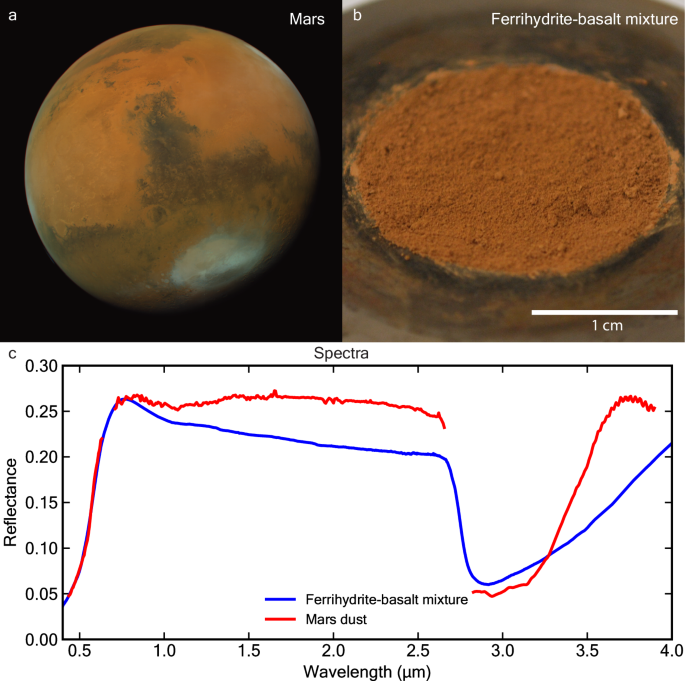
Mars is widely known for its rusty red color — many people even refer to it as just the “Red Planet” — but research suggests the chemistry behind Mars’ rosy hue may actually hold important information.
For decades, spacecraft and rovers have gathered data pointing to a familiar explanation behind Mars’ redness: the rusting of iron minerals, namely iron oxide, in the planet’s dust. That’s the same compound that gives your standard “rust” on Earth its red color. Scientists already knew that on Mars, over billions of years, iron oxide has been ground into dust and carried across the planet by powerful winds, a process still shaping the Martian landscape today. However, not all iron oxides are the same, so experts have long debated the precise nature of Martian rust. Understanding how this rust formed offers a crucial glimpse into the planet’s past environment — was it once warm and wet, or always cold and dry? And, more importantly, did it ever support life?
Links:
What makes Mars the ‘Red’ Planet? Scientists have some new ideas