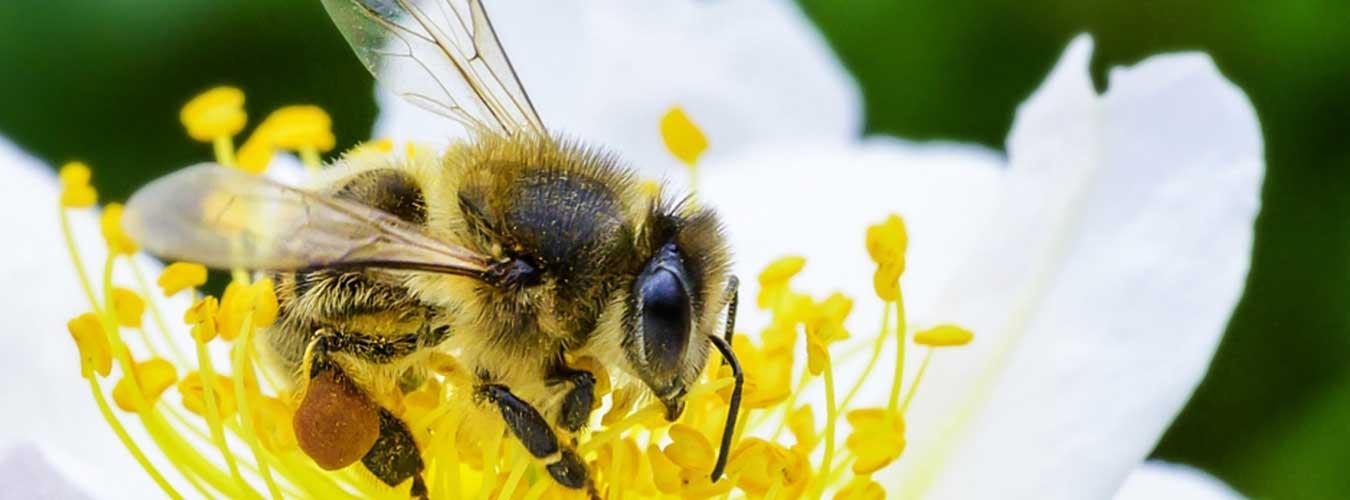
World Bee Day is celebrated on May 20, on this day Anton Janša, the pioneer of beekeeping, was born in 1734.
The purpose of the international day is to acknowledge the role of bees and other pollinators for the ecosystem. The UN Member States approved Slovenia’s proposal to proclaim 20 May as World Bee Day in December 2017. Bees are flying insects closely related to wasps and ants, known for their role in pollination and, in the case of the best-known bee species, the western honey bee, for producing honey and beeswax. Bees are a monophyletic lineage within the superfamily Apoidea and are presently considered a clade, called Anthophila. There are over 16,000 known species of bees in seven recognized biological families. They are found on every continent except Antarctica, in every habitat on the planet that contains insect-pollinated flowering plants. Bees and other pollinators, such as butterflies, bats and hummingbirds, are increasingly under threat from human activities. Pollinators allow many plants, including many food crops, to reproduce. Not only do pollinators contribute directly to food security, but they are key to conserving biodiversity – a cornerstone of the Sustainable Development Goals. They also serve as sentinels for emergent environmental risks, signaling the health of local ecosystems. Invasive insects, pesticides, land-use change and monocropping practices may reduce available nutrients and pose threats to bee colonies. To raise awareness of the importance of pollinators, the threats they face and their contribution to sustainable development, the UN designated 20 May as World Bee Day. 20 May coincides with the birthday of Anton Janša, who in the 18th century pioneered modern beekeeping techniques in his native Slovenia and praised the bees for their ability to work so hard, while needing so little attention.
Links:
World Bee Day 20 May
World Bee Day
Honey bee behaviours within the hive: Insights from long-term video analysis
Bees can remember human faces — and 7 other surprising facts about these important insects
Bijentelling
Ingestible hydrogel microparticles improve bee health after pesticide exposure